








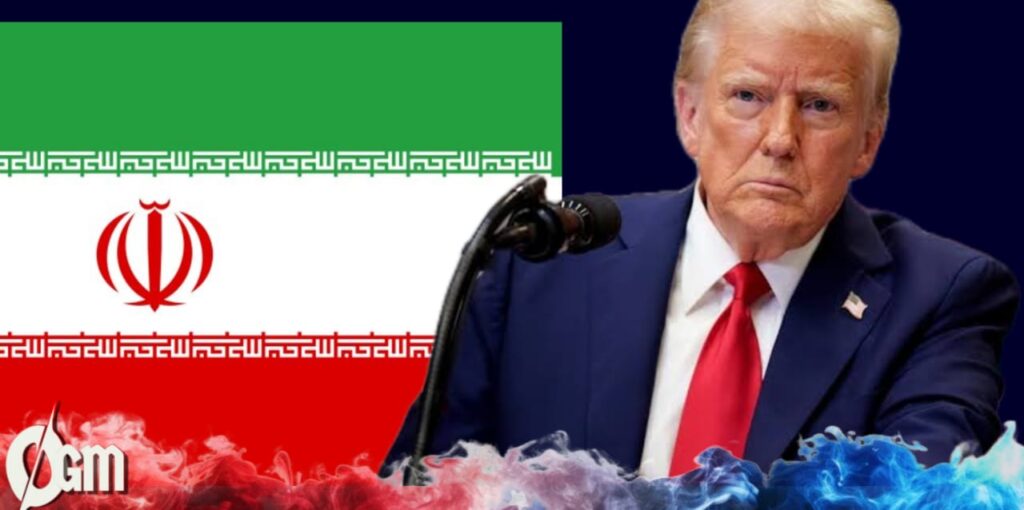
President Donald Trump ignited a fresh wave of global alarm on Sunday by suggesting that regime change in Iran might be a necessary step if the current leadership fails to “Make Iran Great Again.” His provocative remarks followed U.S. military strikes on three nuclear-related sites in Iran, a move that has already jolted the fragile geopolitical balance in the Middle East.
“It’s not politically correct to use the term, ‘Regime Change,’ but if the current Iranian Regime is unable to MAKE IRAN GREAT AGAIN, why wouldn’t there be a Regime change??? MIGA!!!” Trump posted on Truth Social. The president also claimed that U.S. precision strikes had caused “monumental damage” to Iran’s nuclear infrastructure, insisting the word “obliteration” was “accurate.”
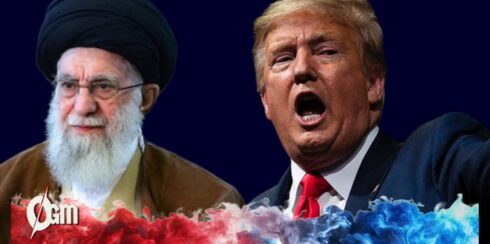
While key figures in his administration have tried to downplay any talk of toppling the Iranian government, Trump’s social media rhetoric continues to cast doubt over the ultimate aim of U.S. actions, especially after he previously hinted at targeting Supreme Leader Ayatollah Ali Khamenei directly.
U.S. Officials: “We’re Not at War with Iran—Only Its Nuclear Program”
In a concerted effort to temper speculation about a full-scale war or a covert plan for regime change, senior Trump administration officials emphasized that the strikes were limited and strategic. “This mission was not and has not been about regime change,” Defense Secretary Pete Hegseth said at a press briefing. “The President authorized a precision operation to neutralize threats posed by Iran’s nuclear program and to defend our forces and allies.”
Vice President J.D. Vance echoed this message, stating on NBC’s Meet the Press that the U.S. is “not at war with Iran” but rather “at war with Iran’s nuclear ambitions.” He suggested the strikes could create space for renewed diplomacy, even after recent setbacks. “If Iran is willing to back away from its aggression, we are all ears,” Vance added.
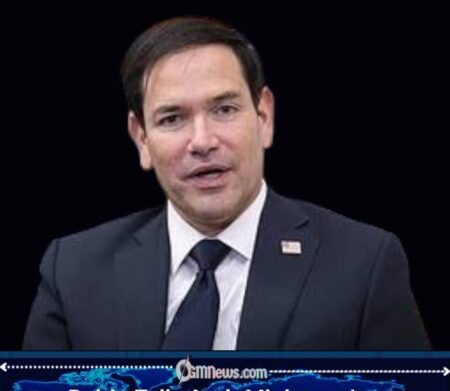
Secretary of State Marco Rubio reinforced that the administration’s objective was defensive. “I don’t like the regime, but we’re not in the regime change business,” Rubio said on Fox News. “We’re in the security-of-America business.”
Iran Promises “Punishment” and Ends Diplomacy After U.S., Israeli Strikes
Iran responded to the strikes with fury, vowing to retaliate and halting any talk of returning to diplomatic talks. Foreign Minister Abbas Araghchi, speaking in Istanbul before heading to Moscow, declared that Iran would consider “all possible responses” and that diplomacy was off the table “until we have retaliated.”
A social media post linked to Supreme Leader Khamenei’s official account described Israel as having made a “grave mistake” that “must be punished,” indicating Tehran sees the U.S. and Israel as jointly responsible for recent attacks. Explosions rocked multiple Iranian cities overnight, with confirmed missile strikes in Karaj, Parchin, and Kermanshah.
Khamenei, according to intelligence sources cited by the New York Times, is reportedly sheltering in a bunker and has named successors amid fears for his safety. This comes after Trump revealed earlier this month that the U.S. knows his exact location, warning ominously that “our patience is wearing thin.”
OGMNews.COM
Trump Declares “MIGA” as U.S. Strikes Fuel Talk of Regime Change in Iran
Amid the spiraling confrontation between Iran, the U.S., and Israel, the humanitarian situation in Gaza has worsened dramatically. On Sunday night, Israeli artillery reportedly killed nine civilians waiting for food aid in the Al-Waha area near Gaza City, according to the Palestinian news agency Wafa.
The United Nations Office for the Coordination of Humanitarian Affairs (OCHA) expressed deep concern over what it called a “chilling pattern” of Israeli forces firing on crowds trying to collect aid. Jonathan Whittall of OCHA said over 450 people have died and thousands more injured in recent days while seeking food from aid sites run by the Gaza Humanitarian Foundation (GHF), an NGO with shadowy ties to Israeli and U.S. entities.
With foreign journalists barred from entering Gaza, verification of these reports remains difficult, but the scale of casualties and continued bombardments have drawn condemnation from humanitarian groups and increased calls for restraint.
Strait of Hormuz Threatened as Iran Seeks Leverage in Global Trade
Iran’s parliament has approved a plan to close the Strait of Hormuz, one of the most critical maritime chokepoints in the world. Though the final decision lies with the country’s Supreme National Security Council, the move—if enacted—would severely disrupt global oil shipments, particularly to Asia.
The potential closure has sent shockwaves through global markets. Japan, heavily reliant on oil from the Middle East, urged all parties to de-escalate. “We are monitoring this situation with grave concern,” said Prime Minister Shigeru Ishiba.
In contrast, Australia has openly backed the U.S. strikes. Prime Minister Anthony Albanese stated, “We support action to prevent Iran from acquiring nuclear weapons,” signaling a growing divide among American allies about how best to handle the rising threat.
Trump’s Doctrine: Strength Through Force, Unfiltered Online
President Trump’s unfiltered commentary on Truth Social continues to drive speculation and unease. His bold messaging—ranging from promises of “force far greater” than recent strikes to jabs at Iran’s top leaders—has complicated the White House’s efforts to portray a measured, calculated approach to national security.
“If Iran retaliates, it will face consequences it has never seen,” Trump warned, reiterating that his administration has drawn a red line. Yet, critics argue that his rhetoric risks inviting escalation and closing doors to diplomacy at a moment when tensions are at a boiling point.
Rubio, in defending Trump’s blunt posture, remarked: “This is a President that tells you what he’s going to do, and then he does it.” But Iran’s leadership remains defiant. “The Iranian nation isn’t frightened by such threats,” Khamenei declared. The coming days may determine whether Trump’s gamble will deliver strategic gain or drag the region into deeper conflict.