


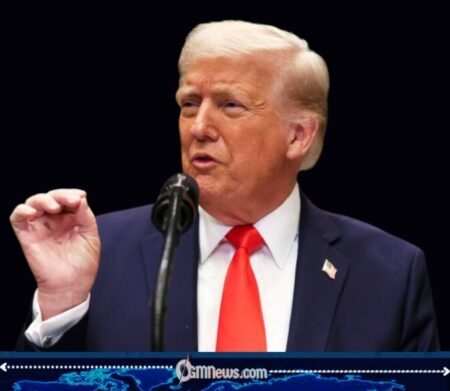
President Donald Trump, currently serving his second term, opened his remarks at the White House by acknowledging the rapidly evolving security situation in the Middle East and defending his administration’s response. Donald Trump stated that developments unfolded “very quickly,” emphasizing that national security officials were working in real time to assess risks to American citizens in the region.
Donald Trump explained that early intelligence assessments suggested potential imminent hostilities involving Israel and regional actors, prompting swift diplomatic and military consultations. He maintained that contingency discussions were underway but stressed that large-scale evacuations require stable airspace, international coordination, and security guarantees conditions that have fluctuated significantly in recent days.
Donald Trump Responds to Questions on Evacuation Planning
evacuation plan had not been publicly outlined despite travel advisories affecting Americans in multiple Middle Eastern countries. Donald Trump responded that while the administration anticipated heightened tensions, the speed of escalation limited the practicality of pre-positioned evacuation logistics.
Donald Trump also indicated coordination with the U.S. The Department of State and the Department of Defense was ongoing, noting that operational specifics are often not disclosed publicly for security reasons. He reiterated that embassies are issuing frequent updates and guidance to U.S. citizens, encouraging proactive travel arrangements while commercial options remain available.
The president added that evacuation efforts in active conflict zones are complex undertakings that depend heavily on host nation cooperation, secure air corridors, and available transport capacity.
State Department Advisories and Embassy Guidance
The State Department has issued travel advisories across several Middle Eastern countries, urging American citizens to consider departure if safe commercial means are accessible. Embassy notices have stressed enrollment in the Smart Traveler Enrollment Program (STEP), maintenance of valid documentation, and identification of alternative routes should airspace restrictions expand.
U.S. diplomatic missions have also clarified that they are not presently positioned to conduct broad, government-led evacuation operations. Instead, they are focused on providing timely information, liaising with host governments, and assisting in emergency documentation where necessary.
Airspace closures and flight cancellations in parts of the region have further complicated departure efforts, underscoring the logistical challenges associated with large-scale evacuations.
Operational Constraints and Historical Context
Security analysts note that evacuations of significant scale require extensive pre-arrangements, including staging areas, security escorts, diplomatic clearances, and coordination with commercial or military carriers. In rapidly deteriorating security environments, such measures may be difficult to implement immediately.
Historically, U.S. evacuation operations have occurred under narrowly defined conditions and often involve weeks or months of contingency planning. Even then, access to airports or secure transport corridors is not guaranteed.
Officials emphasize that travel advisories are frequently designed as preventive measures, encouraging voluntary departure before conditions worsen rather than signaling imminent extraction missions.
Political Reaction and Congressional Oversight
Members of Congress from both parties have requested additional briefings regarding contingency planning and interagency coordination. Some lawmakers argue that clearer communication could reassure families with relatives abroad, while others caution against public disclosure of operational details during active security crises.
Donald Trump has defended his administration’s posture, asserting that public messaging must balance transparency with security considerations. He reiterated that protecting American lives remains a central priority and that federal agencies are prepared to adjust their approach as circumstances evolve.
The White House has indicated that ongoing intelligence reviews and diplomatic engagement will determine whether further measures become necessary.
Looking Ahead: Preparedness in an Uncertain Environment
As regional tensions continue to fluctuate, officials stress that the situation remains fluid. Americans in affected areas are encouraged to monitor embassy alerts, maintain situational awareness, and make departure decisions based on current security guidance.
Donald Trump concluded his remarks by stating that the United States is maintaining close contact with allies and partners in the region. He affirmed that his administration would respond decisively if conditions requires additional action.
For now, the government’s focus remains on advisories, coordination, and monitoring while recognizing that rapid geopolitical developments can alter circumstances with little warning.