










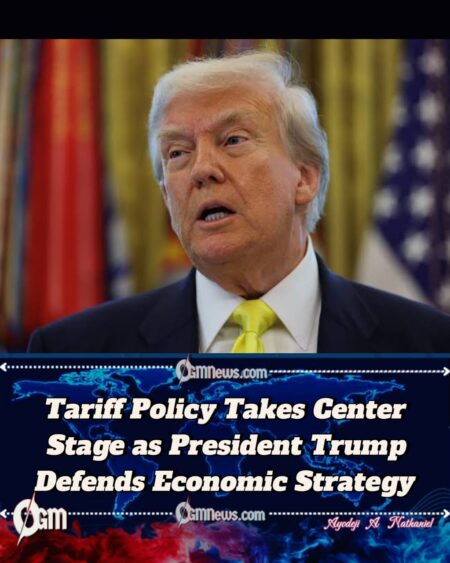
President Donald Trump, currently serving his second term as President of the United States, has mounted a robust defense of his administration’s trade and tariff policies, citing what he describes as unprecedented revenue gains for the federal government. In recent remarks, the president argued that tariffs have not only generated massive income but also shielded American jobs, pushing back strongly against economists and analysts who warned of negative consequences.
According to President Trump, the administration’s tariff regime has delivered trillions of dollars in revenue within a short time frame, a claim he contrasted sharply with revenue figures from the previous administration. His comments have reignited debate in Washington and beyond over the effectiveness, accuracy, and long-term implications of tariffs as a core economic tool.
A Forceful Defense of Tariffs
President Trump framed tariffs as a central pillar of his economic agenda, emphasizing their role in reshaping trade relationships and boosting government revenue. Speaking confidently, he asserted that the inflow of funds resulting from tariffs has exceeded historical norms and defied earlier projections from policy experts.
The president’s remarks were aimed squarely at critics who had predicted that tariffs would harm consumers, disrupt supply chains, and slow economic growth. Instead, he portrayed the policy as a financial and strategic success, underscoring what he views as tangible benefits to the national economy.
Revenue Claims and Economic Impact
At the heart of the president’s argument is the claim that tariffs have generated extraordinary levels of revenue within months. He contrasted this with what he described as comparatively modest intake during the previous administration, using the comparison to reinforce his broader critique of past economic leadership.
While the administration highlights these figures as evidence of success, economists note that tariff revenue must be assessed alongside broader economic indicators, including consumer prices, inflation, and trade volumes. The debate over the accuracy and interpretation of the revenue figures remains active among analysts.
Protecting Domestic Jobs and Industries
Beyond revenue, President Trump emphasized job protection as a key outcome of his tariff strategy. He argued that higher import costs have encouraged domestic production, giving American manufacturers a competitive edge and preserving employment in key sectors.
Supporters of the policy echo this view, contending that tariffs have helped level the playing field for U.S. workers. Critics, however, argue that any gains in certain industries may be offset by higher costs for businesses and consumers elsewhere in the economy.
Critics and the “Expert” Divide
president’s Trump remarks highlighted a long-standing divide between his administration and many economic experts. Trump characterized earlier warnings from economists and trade specialists as overly pessimistic, asserting that their forecasts have not matched the administration’s reported outcomes.
This tension reflects a broader philosophical disagreement over trade policy, with the administration favoring aggressive protective measures and many experts advocating for freer trade frameworks. The ongoing dispute underscores the challenges of evaluating complex economic policies in real time.
Political Messaging and Public Perception
The strong language used by the president also serves a political purpose, reinforcing his image as a leader willing to challenge conventional wisdom. By presenting tariffs as a clear win, the administration aims to strengthen public confidence in its economic stewardship.
Public reaction has been mixed, with supporters applauding the assertive stance and critics calling for more transparency and independent verification of the figures cited. The issue continues to resonate as a key talking point in national political discourse.
Looking Ahead: Policy and Accountability
As the administration moves forward, questions remain about the sustainability of tariff-driven revenue and its long-term effects on the U.S. economy. Lawmakers and analysts are expected to scrutinize future data to assess whether the policy delivers lasting benefits.
For now, tariffs remain a defining feature of President Trump’s economic agenda, emblematic of his broader approach to trade, governance, and engagement with critics.


