









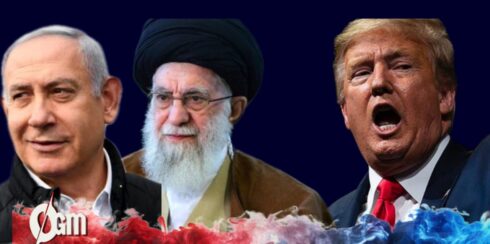
President Donald Trump announced Monday that Israel and Iran have agreed to a “Complete and Total” ceasefire after nearly two weeks of hostilities that have left hundreds dead and raised fears of a broader Middle East war.
The ceasefire, as outlined by Trump and confirmed by senior White House officials, would unfold in phases: Iran would stop all attacks by midnight Eastern Time Tuesday, followed by a halt in Israeli strikes 12 hours later. The war would officially be declared over another 12 hours after that, at midnight ET Wednesday. “Upon the 24th Hour, an Official END to THE 12 DAY WAR will be saluted by the World,” Trump declared on Truth Social.
The White House credited direct negotiations between Trump and Israeli Prime Minister Benjamin Netanyahu, along with parallel channels through Qatar to Iran, in reaching the ceasefire. Key U.S. figures involved included Vice President JD Vance, Secretary of State Marco Rubio, and Middle East envoy Steve Witkoff.
Iran Halts Strikes, But Denies Formal Agreement
Despite Trump’s confident announcement, Tehran’s response has been measured and pointedly non-committal. Iranian Foreign Minister Seyed Abbas Araghchi said Iran had ceased military operations at 4 a.m. Tehran time (8:30 p.m. ET Monday), but insisted that no formal ceasefire agreement had been reached.
“There is NO ‘agreement’ on any ceasefire or cessation of military operations,” Araghchi posted on X. While suggesting Iran will refrain from further attacks if Israel does the same, he emphasized that “the final decision on the cessation of our military operations will be made later.”
This timing gap has created confusion. Araghchi’s declaration of halting strikes precedes the timeline laid out by Trump by several hours, and Iran’s insistence on the absence of an official accord has cast doubt on the durability of the truce.
Trump administration and Allies Played Key Roles in Mediating Talks
According to White House officials, the Trump administration leveraged both direct and indirect diplomatic channels to bring about the ceasefire. While Trump engaged Netanyahu directly, American diplomats coordinated with Qatar to communicate with Iranian leadership.
The Qatari Emir reportedly played a pivotal role in persuading Tehran, following Trump’s request to mediate. Vice President Vance liaised with Qatar’s Prime Minister to iron out the terms, and Iran’s agreement reportedly came after a series of rapid diplomatic exchanges following its retaliatory strike on Al Udeid Air Base in Qatar.
Despite Iran’s lukewarm public stance, the White House insists both parties gave assurances to de-escalate—conditional on a cessation of mutual hostilities. Trump later posted that Israel and Iran “came to me, almost simultaneously, and said, ‘PEACE!’”
OGMNews.COM
Trump Declares End to Israel-Iran War, But Tehran Denies Ceasefire Deal
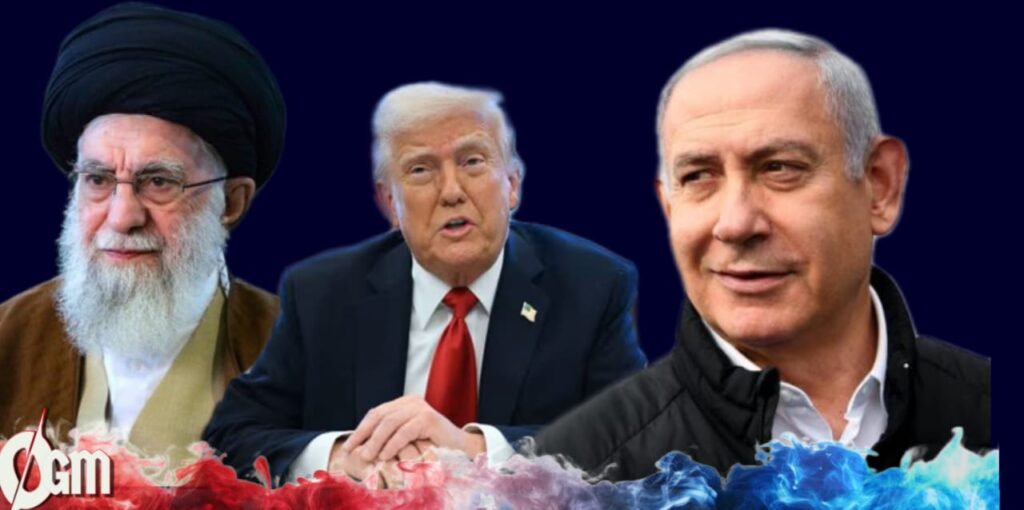
The conflict erupted on June 13, when Israel launched preemptive airstrikes against Iranian nuclear and military targets, killing several top Iranian commanders. Iran responded with a barrage of missile and drone attacks on Israeli cities and later on U.S. military installations in the region.
Human Rights Activists, an Iranian watchdog group, estimates over 950 deaths and more than 3,400 injuries inside Iran, including civilians. Israeli officials report at least 24 deaths on their side due to Iranian attacks.
The U.S. military intervened over the weekend, targeting three key Iranian nuclear facilities. Though Iran called its retaliation “devastating,” most of its missile strikes were intercepted, and no casualties were reported, according to U.S. and Qatari sources. Trump called Iran’s response “very weak,” while thanking them for “early notice.”
Nuclear Tensions Persist Despite Temporary Truce
While the ceasefire may halt open warfare, the deeper conflict over Iran’s nuclear ambitions remains unresolved. The war was largely ignited by Israeli fears that Iran was accelerating toward nuclear weapons capability, a claim Tehran denies.
Iran maintains its nuclear program is for peaceful purposes. However, the International Atomic Energy Agency (IAEA) has warned of rising uranium stockpiles approaching weapons-grade levels. U.S. intelligence still assesses that Iran is not actively developing nuclear weapons, but President Trump disagrees. “I think they were very close to having one,” he told reporters last week.
Secretary of State Marco Rubio downplayed the relevance of Iran’s nuclear status in a recent interview, while Trump pushed for a broader deal that would force Iran to abandon uranium enrichment entirely—a condition Iran has flatly rejected.
What Comes Next? Ceasefire Faces Uncertainty
Despite Trump’s optimism, the ceasefire’s success hinges on mutual restraint, particularly in the coming 48 hours. Tehran’s ambiguity and lack of an official agreement raise the risk of renewed clashes should either side perceive a breach.
There has been no official statement from Israel affirming the ceasefire, adding to uncertainty. Meanwhile, U.S. diplomats continue efforts behind the scenes to consolidate the truce and explore a longer-term agreement.
While the guns may fall silent, the political and nuclear fault lines remain. The world now watches to see whether this ceasefire marks the beginning of a new diplomatic phase—or merely a temporary pause in a volatile conflict.


