











President Donald Trump has announced that the United States will hold a high-level meeting with Iran next week, as a tenuous ceasefire between Israel and Iran holds for now. The president made this disclosure during a press conference on Wednesday, wrapping up the NATO summit in The Hague, Netherlands.
“We’re going to talk to them next week, with Iran,” Trump told reporters. He, however, declined to provide details regarding the meeting’s participants or its venue. The U.S. president stated that while a formal agreement with Iran could be reached eventually, he does not believe it is essential.
“I don’t care if I have an agreement or not,” Trump said bluntly. “The only thing we’d be asking for is what we were asking for before — no nuclear. But we destroyed the nuclear. It’s blown up to kingdom come.”
Trump Boasts of ‘Obliterated’ Iranian Nuclear Program
During the press conference, Trump confidently claimed that recent U.S. strikes had destroyed Iran’s nuclear facilities, setting the country’s nuclear ambitions back by “basically decades.”
“The strikes were very, very successful. It’s called obliteration,” Trump declared. Despite his confident tone, a classified assessment from the Defense Intelligence Agency (DIA) reportedly paints a less optimistic picture. According to three sources familiar with the report, the strikes only delayed Iran’s nuclear program by a few months rather than years.
Nonetheless, Trump appeared dismissive of the need for any formal documentation to seal the U.S.’s demands. “If we got a document, it wouldn’t be bad,” he said, reiterating that the destruction of Iran’s nuclear capabilities had already been achieved to his satisfaction.
–Ceasefire Holds but Fears of Renewed Conflict Linger
Reflecting on the recent 12-day conflict between Israel and Iran, which left 28 dead in Israel and hundreds reportedly killed in Iran, Trump expressed hope that the ceasefire would hold, at least for now.
“I don’t think they’re going to be going back at each other. I don’t think so,” he said. “Both sides are tired, exhausted. They fought very, very hard and very viciously. They were both satisfied to go home and get out.”
However, Trump acknowledged that the situation could reignite. “Can it start again? I guess someday it can. Maybe it could even start soon,” he warned. Nonetheless, he noted there was “great progress” on Gaza, suggesting that U.S. interventions could yield further diplomatic breakthroughs in the region.
OGMNews.COM
Trump Says U.S. Will Meet With Iran Next Week Amid Fragile Ceasefire
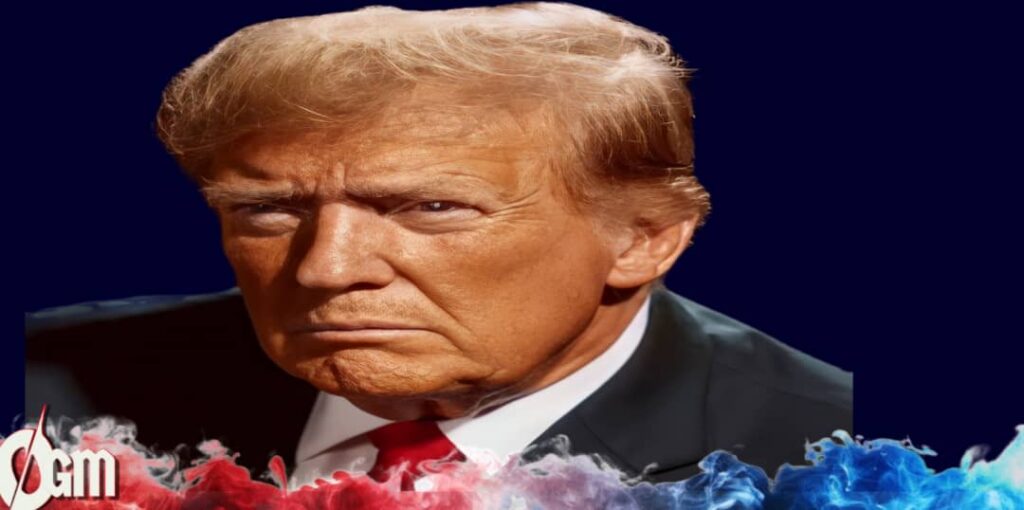
On the NATO front, Trump celebrated what he described as a historic commitment from alliance members. With the exceptions of Spain and Slovakia, NATO nations agreed to increase their defense spending to 5% of their respective GDPs — a goal championed aggressively by the U.S. president.
“This week, the NATO allies committed to dramatically increase their defense spending to that 5% of GDP — something that no one really thought possible,” Trump announced. The agreement will be formally known as The Hague Defense Commitment.
Trump, however, criticized Spain for refusing to meet the target. “Spain is the only country — out of all other countries — that refuses to pay,” he said, accusing Madrid of getting “a little bit of a free ride.” The president hinted that the U.S. would pressure Spain through trade negotiations, warning, “We’re going to make them pay twice as much.”
Zelenskyy, Missile Defense, and the Ukraine War
On the sidelines of the summit, Trump also met with Ukrainian President Volodymyr Zelenskyy. The two leaders discussed pathways toward achieving a ceasefire and a lasting peace deal in Ukraine. Zelenskyy later posted on X, formerly Twitter, “We appreciate the attention and the readiness to help bring peace close. Details will follow.”
Trump indicated he planned to speak with Russian President Vladimir Putin to explore ending the conflict. “I took from the meeting that [Zelenskyy] would like to see it end. I think it’s a great time to end it,” Trump said.
During the press conference, a Ukrainian journalist, whose husband serves in the Ukrainian military, asked whether the U.S. would supply Ukraine with Patriot missile defense systems. Trump responded, “They do want to have the anti-missile missiles — the Patriots — and we’re going to see if we can make some available.” However, he noted that the systems were in high demand, particularly because of commitments to Israel.
As the summit concluded, Donald reflected on his evolving view of NATO, saying he no longer sees the alliance as a “rip-off” and now embraces its mutual defense principle under Article 5. “I want the U.S. to help defend other NATO nations,” he stated as he prepared to return to Washington.


