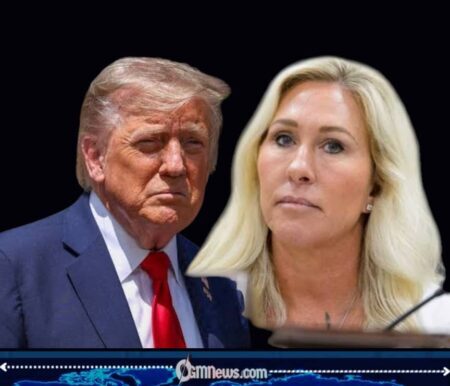
President Donald Trump, currently serving a second term, has asserted that his endorsement will determine who succeeds Marjorie Taylor Greene in Georgia’s 14th Congressional District. His remarks, delivered amid a crowded Republican field, underscore his continued influence within the GOP and highlight the high stakes surrounding the special election to fill the open seat.
The president’s comments reflect broader tensions within the Republican Party, where loyalty to Trump remains a defining factor in primary contests. Political analysts say the race will test Trump’s kingmaker role while offering insight into party unity ahead of the 2026 midterm elections.
Greene’s Departure and the Road to a Special Election
Greene’s decision to vacate her seat triggered a special election in a district long considered a Republican stronghold. The northwest Georgia constituency has consistently delivered wide margins for GOP candidates, making the primary contest the decisive stage of the race.
Her exit followed political friction within the party and speculation about a potential Trump-backed challenger. By stepping aside, Greene avoided a divisive primary that could have fractured local Republican support and weakened the party’s position.
Election officials have confirmed that multiple Republican contenders, alongside at least one Democratic candidate, have entered the race. While Democrats see an opportunity to mobilize voters, the district’s partisan lean makes a GOP victory highly likely.
Trump’s Kingmaker Role in Republican Primaries
Trump’s assertion that “whoever I endorse is going to win” reflects a pattern observed in recent Republican primaries, where his backing has proven decisive. In deeply conservative districts, candidates frequently seek his endorsement to secure donor support and energize grassroots voters.
Political strategists note that Trump’s influence extends beyond endorsements to shaping campaign messaging and policy priorities. Candidates often align themselves closely with his positions on immigration, trade, and national security to appeal to his base.
However, some Republican leaders have expressed concern that heavy reliance on Trump’s backing could sideline local issues and moderate voices. The Georgia race may reveal whether party voters prioritize national loyalty over district-specific concerns.
Internal GOP Tensions and Ideological Divides
The public rift between Trump and Greene highlights ongoing ideological divisions within the Republican Party. Once a prominent Trump ally, Greene’s criticisms of certain administration policies strained their relationship and signaled fractures within the party’s populist wing.
Party insiders describe a growing divide between traditional conservatives, populist activists, and pragmatic lawmakers focused on electability. These tensions have shaped candidate recruitment and messaging strategies in competitive districts.
Observers say the Georgia contest could serve as a bellwether for how the GOP balances ideological purity with broader electoral appeal. A decisive Trump-backed victory may reinforce his leadership, while a fragmented primary could expose vulnerabilities.
National Implications for the 2026 Midterm Elections
The race to replace Greene carries significance beyond Georgia, offering an early test of Republican unity ahead of the 2026 midterms. Trump’s involvement signals his intent to maintain a central role in shaping the party’s congressional slate.
A clear victory by a Trump-endorsed candidate could strengthen his influence over fundraising and candidate selection nationwide. Conversely, a competitive or unexpected outcome may embolden alternative factions within the party.
Political analysts emphasize that the GOP’s ability to present a unified message will be critical in battleground districts where independent voters often determine outcomes.
Democratic Strategy and Electoral Outlook
Democratic strategists view the special election as an opportunity to test messaging in a conservative district, even if victory remains unlikely. By focusing on healthcare, economic stability, and local infrastructure, Democrats aim to narrow margins and build momentum for future contests.
National party organizations are monitoring the race for insights into voter sentiment and turnout patterns. Even modest gains could inform campaign strategies in suburban and swing districts ahead of the midterms.
Despite these efforts, the district’s voting history suggests Republicans remain favored. The key question is not which party will win, but how Trump’s influence will shape the GOP’s future trajectory.
Conclusion
President Trump’s claim that his endorsement will determine the successor to Marjorie Taylor Greene underscores his enduring influence within the Republican Party. The Georgia special election has become a focal point for internal GOP dynamics, ideological divisions, and strategic positioning ahead of the 2026 midterms.
While the district is expected to remain Republican, the race offers broader insights into party unity, voter priorities, and the evolving role of presidential endorsements in congressional contests.