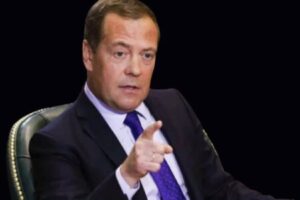









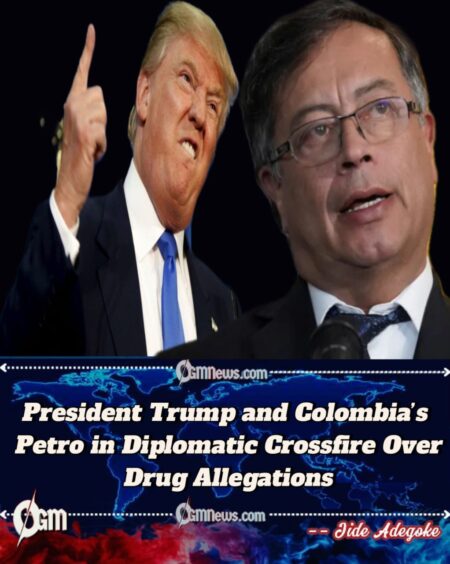
U.S. President Donald Trump has sparked diplomatic outrage after labeling Colombian President Gustavo Petro an “illegal drug leader” during a press conference at the White House on Saturday. The remark, made in response to a reporter’s question about narcotics trafficking in South America, has been condemned by Bogotá as “an unprecedented insult to the Colombian state.”
Donald Trump, now serving his second term as President of the United States, accused Petro of “turning a blind eye” to narcotics cartels and “allowing drug production to thrive under his so-called progressive policies.” He stated that the U.S. “cannot partner with leaders who profit politically or economically from the drug trade,” a statement that has been interpreted as a direct personal attack on the Colombian president.
President Trump’s comments come amid rising tension between Washington and Bogotá over anti-narcotics cooperation. In recent months, the U.S. administration has expressed frustration with what it views as Colombia’s “lax enforcement” of coca eradication programs, even as Colombia insists it is pursuing a strategy focused on rural development and peacebuilding.
President of Colombia Denounces Trump’s Remarks as ‘Defamatory and Dangerous’
President of Colombia Gustavo Petro swiftly fired back, calling Donald Trump’s statements “defamatory, false, and damaging to bilateral relations.” Speaking from Bogotá, Petro said that “the United States should focus on reducing domestic drug demand instead of slandering its allies.” He further accused Trump of using “colonial rhetoric” and warned that such accusations could “undermine decades of cooperation between our nations.”
Donald Trump, in response, doubled down during a later campaign-style rally in Miami, insisting that “Petro is part of the problem, not the solution.” He framed his remarks as part of a broader crackdown on what he called “narco-governments,” suggesting that U.S. aid could be reconsidered if Colombia does not “show real results” in cutting coca cultivation.
The diplomatic fallout has prompted urgent consultations between the U.S. State Department and the Colombian Foreign Ministry. Analysts say this exchange could mark one of the lowest points in U.S.-Colombian relations in years, particularly as both countries have traditionally viewed each other as strategic partners in regional security and counter-narcotics efforts.
Trump and President of Colombia Clash Over Drug Policy and Sovereignty
Donald Trump’s administration has made drug enforcement a cornerstone of its hemispheric policy, often framing Latin American governments as either partners or enablers in the war on drugs. His latest remarks appear to signal a hardening of that stance, especially toward left-leaning governments. Trump’s aides have defended his comments, saying they reflect frustration with “ineffective regional leadership” rather than hostility toward Colombia itself.
President of Colombia Gustavo Petro, however, argues that Trump’s approach ignores the socioeconomic roots of the drug crisis. “We are building peace, investing in farmers, and transforming communities,” Petro said, “but Donald prefers threats over solutions.” He has sought support from regional allies in Brazil and Mexico, emphasizing a Latin American-led response to drug policy reform.
Diplomatic observers note that both leaders may be appealing to domestic audiences — Donald to voters concerned about border security, and Petro to Colombians wary of U.S. interference. Still, the confrontation underscores the fragility of relations between Washington and Bogotá at a time when both nations depend on cooperation to tackle migration, organized crime, and trade.