










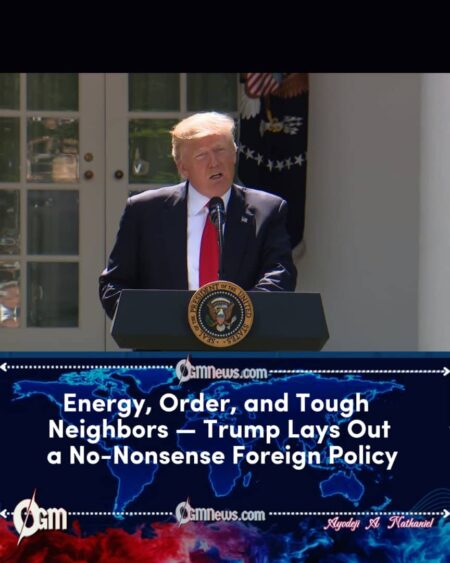
President Trump, serving his second term as President of the United States, has outlined a foreign policy vision centered on regional stability, reliable partnerships, and energy security, arguing that these elements are essential not only for America’s national interests but also for global prosperity. In recent remarks, President Trump stressed the importance of being “surrounded with good neighbors,” underscoring a strategy that prioritizes stability and protection of critical resources.
The comments reflect a broader administration approach that links diplomacy, energy policy, and security considerations, positioning the United States as both a beneficiary and guarantor of stability in key regions.
A Focus on Good Neighbors and Regional Stability
President Trump emphasized that strong relationships with neighboring and allied countries remain a cornerstone of U.S. foreign policy. According to the President, surrounding the United States with “good neighbors” reduces conflict, enhances cooperation, and creates a more predictable international environment.
Administration officials note that this approach places renewed emphasis on bilateral and regional partnerships, particularly in areas where instability can directly affect U.S. economic and security interests. The strategy is designed to reinforce cooperation on trade, border security, and regional conflict resolution.
Energy as a Strategic Priority
Energy security featured prominently in President Trump’s remarks, with the President describing energy as a critical component of both national strength and global stability. He highlighted the need for reliable energy supplies to support economic growth and maintain geopolitical balance.
The Trump administration has consistently framed energy policy as a national security issue, arguing that stable energy markets reduce the likelihood of conflict and economic disruption. This perspective aligns domestic energy production with foreign policy goals, including supporting allies and countering supply shocks.
Global Implications of U.S. Energy Policy
Beyond domestic considerations, President Trump stressed that energy stability is necessary “for the world,” signaling that U.S. energy policy has international ramifications. Officials argue that American leadership in energy production and distribution can help stabilize global markets and reduce dependence on unreliable suppliers.
This stance has influenced U.S. engagement with energy-producing regions and infrastructure projects, as well as diplomatic efforts aimed at securing supply chains and protecting critical assets.
Security and Protection of Strategic Interests
The President also underscored the need to “protect” energy resources and regional stability, linking economic assets directly to national defense. This reflects an integrated approach in which military readiness, diplomatic engagement, and economic policy are viewed as interconnected.
Defense and security analysts note that protecting energy infrastructure—both at home and abroad—has become an increasingly prominent aspect of U.S. strategic planning, particularly amid global tensions and emerging threats.
A Broader Foreign Policy Framework
Taken together, President Trump’s remarks illustrate a foreign policy framework that prioritizes predictability, strength, and mutual benefit. By emphasizing neighbors, stability, and energy, the administration seeks to project an image of the United States as a stabilizing force in international affairs.
Supporters argue this approach promotes long-term security and economic resilience, while critics continue to debate how these priorities should be balanced with broader diplomatic and humanitarian considerations.
Outlook and Policy Direction
As the Trump administration advances its second-term agenda, these principles are expected to shape diplomatic engagements, trade negotiations, and security commitments. The emphasis on stability and energy suggests continued focus on strategic regions and partnerships that align with U.S. interests.
How effectively this vision translates into concrete outcomes will be closely watched by allies, competitors, and global markets alike.


