






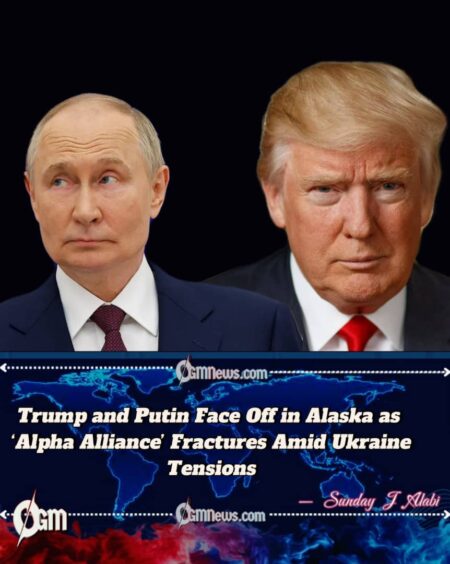
U.S. President Donald Trump and Russian President Vladimir Putin are set to meet face-to-face in Alaska on Friday for the first time since 2019, with global tensions running high. Trump has demanded that Putin agree to an immediate ceasefire in Ukraine, while Washington has dispatched two nuclear submarines toward Russian waters amid escalating rhetoric from Moscow about its “doomsday” capabilities.
The encounter comes at a delicate moment in U.S.–Russia relations. Both leaders will be scrutinizing each other’s demeanor for signs of weakness, with analysts predicting a clash of wills as much as a clash of policy. Body language experts say Trump’s most potent weapon may be humor—deployed not for levity, but to disarm and undercut his Russian counterpart.
From ‘Alpha Bro Code’ to Cold Rivalry between Trump and Putin
When Trump first entered the White House, he appeared to pull Putin into what some observers described as a “global alpha men’s club.” According to body language expert Judi James, early encounters suggested a mutual performance of dominance and respect.
However, recent years have seen a decisive shift. Putin has distanced himself from the so-called bromance, breaking what James calls the “alpha bro code.” The Russian leader’s calculated coolness has reportedly left Trump both disappointed and strategically recalibrating for their next confrontation.
First Contact: 2017 G20 Summit in Hamburg
Their first official meeting in Hamburg was marked by visible awkwardness. Trump sat forward on his chair, head slumped, and appeared to avoid direct eye contact, occasionally glancing around the room as if distracted. Yet beneath the surface, he deployed deliberate power plays.
One such move was the “hand platter” handshake—offered palm-up—forcing Putin to lean forward and place his hand on top. Trump gripped firmly, dictating the length of the handshake. During the photo session, Putin appeared subdued, glancing downward with a muted expression while Trump repeated the same handshake maneuver, reinforcing the hierarchy he sought to establish.
Helsinki 2018: The Alpha Pairing Meets a Mood Shift
In Helsinki, the two leaders spent two hours in private talks before a press conference in which Trump appeared to side with Putin over U.S. intelligence agencies on election interference. Photographs from the day showed them standing with chests puffed, mirroring each other like “Marvel superheroes,” in James’s words—a visual show of unity.
But the dynamic quickly changed. Putin’s previously open posture became guarded, and the handshake that followed carried a different energy. Both men stared each other down, lips tightly pressed, in what resembled a pre-fight face-off. Putin’s left hand clutched his chair, signaling an unwillingness to be pulled into one of Trump’s signature “yank” shakes. The exchange suggested a wary truce rather than mutual trust.
Osaka 2019: A Surface Friendship, A Subtle Standoff
By their last meeting in Osaka, Japan, the outward signs of camaraderie remained. Trump greeted Putin with open arms, projecting warmth, while Putin stood rigid and formal. The handshake was firm and followed by Trump’s trademark “shake and yank”—but once again, Putin resisted any physical concession.
The meeting was punctuated with smiles and shared jokes, with Trump displaying preening gestures that suggested he enjoyed the repartee. Yet, analysts noted that Putin’s long-term approach seemed immune to Trump’s physical dominance tactics. As James put it, “Power pats and power shakes that seem vital to Trump mean little to Putin over time.”
Alaska 2025: What’s at Stake Now
This week’s meeting is not merely a test of personal dominance—it is a confrontation with global consequences. With the Ukraine war at a critical juncture, Washington’s nuclear posturing and Moscow’s threats of escalation have created one of the most volatile atmospheres since the Cold War.
How Trump and Putin navigate their body language as well as their words will be telling. If humor, firmness, and strategic restraint all come into play, Alaska could mark either the rekindling of a functional rapport or the formal collapse of their once-vaunted “alpha alliance.”