










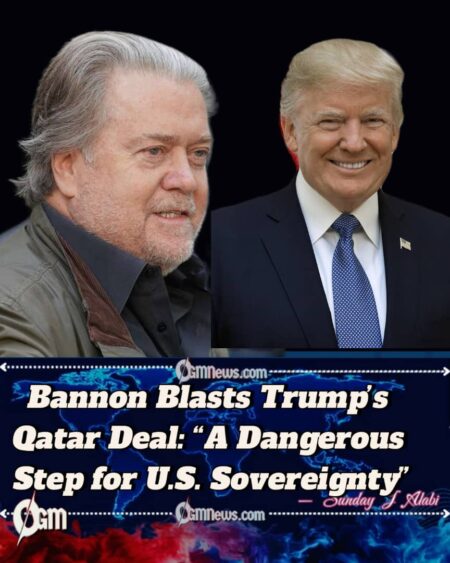
A new U.S.–Qatar military collaboration has ignited sharp criticism from within President Donald Trump’s own circle, following the administration’s decision to permit Qatar to build a training facility at a U.S. Air Force base in Idaho. Secretary of Defense Pete Hegseth announced on Friday that an agreement had been reached with Qatari Defense Minister Sheikh Saoud bin Abdulrahman Al-Thani to establish a facility for Qatari pilots and F-15 fighter jets.
According to Hegseth, the project aims to “enhance combined training, increase lethality, and deepen interoperability” between the two nations. Qatar, which already hosts the largest U.S. military base in the Middle East, pledged to fully fund construction and maintenance costs. A spokesman for Qatar’s embassy in Washington clarified that the facility “will not be a Qatari air base,” emphasizing that it remains under U.S. command and jurisdiction.
Despite the assurances, the announcement drew immediate pushback from several prominent conservative voices. Many argue the decision undermines U.S. sovereignty and national security, while others see it as part of a broader foreign policy shift that places international alliances above domestic priorities.
Bannon Calls the Deal “Screwed Up” and Warns of Strategic Risks
Steve Bannon, a key political strategist during Trump’s first administration, publicly condemned the move during a podcast appearance with commentator Eric Bolling. “This whole thing is so screwed up,” Bannon said, expressing frustration and confusion over the rationale behind the deal. “I have no idea what’s going on, and I’m sure we’ll find out more… but this is part of the price we’re paying for the Israel First crowd,” he added, suggesting that geopolitical considerations in the Middle East are driving U.S. defense decisions.
Bannon’s remarks reflect growing discomfort among certain America First conservatives who believe the administration is prioritizing alliances—particularly with Israel and its regional partners—over domestic defense imperatives. He warned that hosting foreign military personnel on American soil could set a troubling precedent, one that blurs the line between cooperative training and foreign encroachment.
Although the Pentagon maintains that the facility is designed purely for training purposes, Bannon’s criticism underscores a deep ideological rift within Trump’s support base, especially over the president’s handling of international partnerships involving Middle Eastern nations.
Trump Conservative Allies Join the Outcry Amid Broader Political Tensions
Right-wing commentator and staunch Trump supporter Laura Loomer also voiced fierce opposition, labeling the agreement “an abomination.” In a series of posts on X (formerly Twitter), she accused the Qatari government of ties to extremist organizations and questioned the wisdom of permitting a “foreign Islamic power” to operate within the United States. “No foreign country should have a military base on U.S. soil. Especially Islamic countries,” she wrote, while also criticizing the GOP for “Islamifying our country.”
Loomer’s remarks reignited debate over Qatar’s role in U.S. foreign policy. Earlier this year, she condemned the Trump administration’s acceptance of a $400 million luxury jet “gift” from Qatar, describing it as a “gift from jihadists in suits.” Her recent comments go further, warning of potential security risks and cultural tensions arising from the project.
Though the Qatar training facility reportedly originated during President Joe Biden’s administration, its advancement under Trump’s renewed leadership has become a flashpoint for intraparty conflict. The controversy highlights the delicate balance between strategic cooperation and nationalist sentiment as the Trump administration continues to redefine America’s defense posture in a volatile global landscape


