







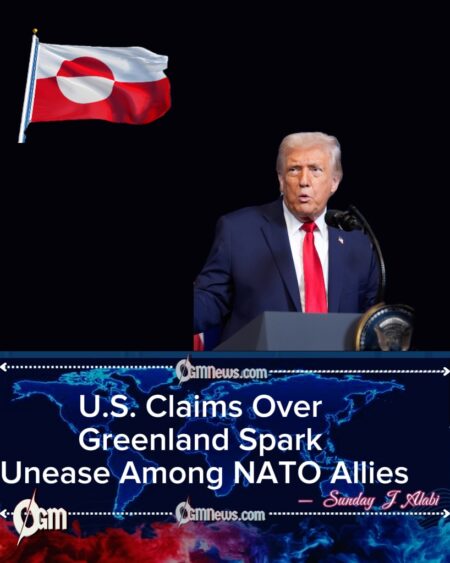
Fresh tensions have rippled through the North Atlantic alliance after a senior White House official declared that Greenland “should be part of the United States,” a statement that has unsettled European allies and revived long-standing concerns about Washington’s intentions in the Arctic. The remarks, made by Stephen Miller, the deputy chief of staff and homeland security adviser to President Donald Trump—who is currently serving a second term—have reignited diplomatic unease over sovereignty, security, and the future cohesion of NATO.
Miller’s comments, delivered during a combative television interview, followed renewed signals from President Trump himself that the strategically located Arctic territory is central to U.S. national security. Together, the statements have placed Greenland, Denmark, and NATO partners at the center of an intensifying geopolitical debate.
A Forceful Statement from the White House
In a Monday night appearance on CNN’s The Lead with Jake Tapper, Miller asserted that Greenland ought to belong to the United States and suggested that no country would risk a military confrontation with Washington over the issue. When pressed repeatedly to rule out the possibility of force, Miller declined to do so, instead challenging Denmark’s historical and legal claims over the island.
He questioned the basis of Danish sovereignty, referring to Greenland as a “colony of Denmark” and arguing that U.S. control of the territory would better secure the Arctic region and protect NATO interests. His refusal to categorically dismiss military action drew immediate attention among U.S. allies already sensitive to shifts in American foreign policy rhetoric.
Miller maintained that the position was not new, insisting that the Trump administration has consistently viewed Greenland as vital to U.S. strategic interests, dating back to President Trump’s first term.
Greenland, Strategy, and U.S. National Security
Supporters of the administration’s view argue that Greenland’s location makes it indispensable to monitoring Arctic shipping lanes, missile defense systems, and broader security competition in the polar region. With climate change opening new maritime routes and intensifying interest from global powers, the Arctic has become a focal point of strategic planning.
President Trump has repeatedly emphasized that Greenland’s geography and resources are essential to safeguarding U.S. and allied security. According to Miller, this perspective underpins Washington’s belief that Greenland’s future should involve closer alignment—or even integration—with the United States.
However, critics note that strategic importance alone does not override established principles of sovereignty and self-determination, particularly within an alliance built on mutual respect among member states.
The Role of Social Media and Public Backlash
The controversy intensified over the weekend following a viral social media post by Katie Miller, a conservative media figure and the wife of Stephen Miller. The image depicted Greenland draped in the American flag, accompanied by the word “SOON,” prompting swift outrage in Denmark and concern across Europe.
The timing of the post, coming shortly after a high-profile U.S. operation in Venezuela, heightened anxiety among allies about Washington’s willingness to use force to reshape borders. Danish officials and commentators viewed the imagery as provocative, fueling fears that rhetorical posturing could translate into policy pressure.
Stephen Miller dismissed suggestions that the post triggered a shift in policy, reiterating that President Trump’s position on Greenland has been consistent and longstanding.
Denmark’s Firm and Public Response
Denmark responded with unusually direct language. Prime Minister Mette Frederiksen stated unequivocally that Greenland has repeatedly rejected becoming part of the United States and reaffirmed Copenhagen’s stance on territorial integrity. Speaking on national television, she warned that any military aggression against a NATO member would fundamentally undermine the alliance itself.
In subsequent remarks, including her New Year’s address, Frederiksen condemned the notion of acquiring territory as if it were property. She underscored that such ideas run counter to the principles underpinning post–Second World War European security.
Danish officials also announced accelerated investments in military readiness and Arctic defenses, signaling that Copenhagen is taking the rhetoric seriously despite maintaining its commitment to alliance cooperation.
Diplomatic Pushback from Copenhagen
Denmark’s ambassador to Washington, Jesper Møller Sørensen, issued a public reminder of the longstanding defense partnership between the two countries. He emphasized that U.S., Danish, and Greenlandic security interests are deeply intertwined and called for mutual respect within the alliance.
Sørensen stressed that Denmark expects full respect for its territorial integrity, a message intended to cool tensions while reaffirming Denmark’s role as a close and reliable ally of the United States.
The diplomatic response reflects a careful balancing act: pushing back firmly against perceived threats while avoiding an escalation that could further strain transatlantic relations.
Greenlandic Opinion and the Question of Self-Determination
Amid the geopolitical debate, the views of Greenland’s own population remain clear. A January 2025 survey by Verian found that 85 percent of Greenlanders oppose joining the United States, with only six percent in favor and nine percent undecided. The territory, home to about 57,000 people, has had the legal right to declare independence from Denmark since 2009.
Despite that option, Greenland continues to rely heavily on Danish financial support and public services, a factor that has shaped its cautious approach to independence. Local leaders have consistently emphasized self-determination, rejecting external pressure over the island’s future.
The polling data underscores a central tension in the debate: strategic calculations by major powers versus the expressed wishes of the people most directly affected.