



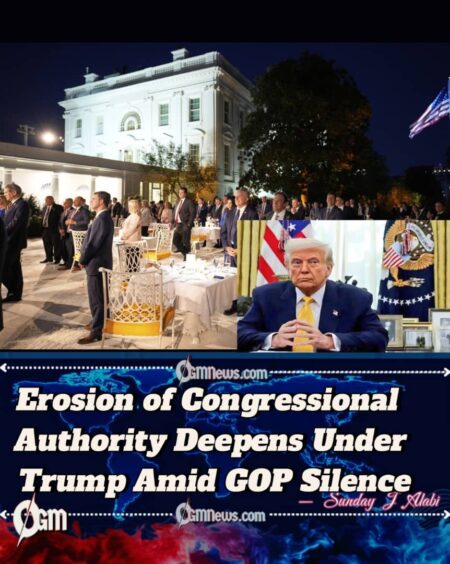
President Trump continues his unprecedented assault on the legislative branch’s constitutional authority, launching unauthorized military operations, blocking congressional oversight, and unilaterally rescinding billions in approved funding—all while Republican leaders in Congress offer little resistance to the erosion of their own institutional powers.
Unauthorized Military Operations Bypass Congressional Authority
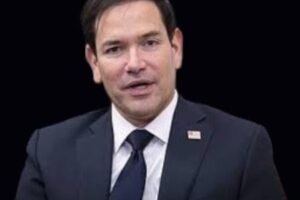
The Trump administration has embarked on military campaigns without seeking proper congressional authorization, marking a dangerous departure from established constitutional procedures. Defense Secretary Pete Hegseth and Secretary of State Marco Rubio recently announced armed operations against alleged Venezuelan drug cartels without any congressional approval or legal justification under existing war authorizations.
This military action falls outside the scope of previous congressional authorizations for Iraq and Afghanistan, leaving the Trump administration to rely on broad executive power theories that legal experts question. The failure to seek congressional approval represents a significant escalation in presidential overreach on matters of war and peace, traditionally requiring legislative branch input under the Constitution.
The Trump administration’s pattern of bypassing Congress extends beyond current operations to past secrecy. Recent revelations show the first Trump administration failed to notify Congress of a risky 2019 military incursion into North Korea that resulted in several deaths but failed to achieve its objectives of planting listening devices.
Intelligence Oversight Faces Unprecedented Restrictions
Congressional intelligence oversight, a cornerstone of democratic accountability, faces systematic dismantling under the current administration. The Pentagon blocked Senator Mark Warner, the Democratic vice chairman of the Senate Intelligence Committee, from conducting a routine oversight visit to the National Geospatial-Intelligence Agency after criticism from Laura Loomer, a right-wing influencer with no official government role.
Defense officials implemented a new requirement that only bipartisan visits would be permitted to military intelligence facilities—a restriction members of Congress say has never existed before. Republican Senator Tom Cotton, chairman of the intelligence panel, has lodged no public protest against this unprecedented limitation on congressional oversight responsibilities.
The Trump administration has also purged seasoned intelligence officers from the Central Intelligence Agency, National Security Agency, and other critical agencies while withholding classified assessments about Iran’s nuclear program that would typically be shared with congressional intelligence committees. This information blackout effectively eliminates the primary mechanism for holding secret intelligence operations accountable to the American people through their elected representatives.
President Trump Spending Powers Under Direct Attack
President Trump has launched his most brazen assault yet on Congress’s constitutional power of the purse, informing lawmakers of plans to unilaterally cancel nearly $5 billion in foreign aid funding that Congress had already approved. This unprecedented move represents the latest escalation in the administration’s campaign to undercut the legislative branch’s fundamental spending authority.
The Trump administration plans to use a rare procedural maneuver to bypass congressional votes and rescind appropriated funds just weeks before the end of the fiscal year. Senator Susan Collins of Maine, chairwoman of the Appropriations Committee, called the proposal a “clear violation of the law,” while Senator Lisa Murkowski of Alaska emphasized that “Congress alone bears the constitutional responsibility for funding our government.”
Despite these strong objections from individual senators, Republican party leaders appear unlikely to intercede or take concrete action to block the effort. The Trump administration has also dismantled entire agencies created by Congress, including the elimination of the U.S. Agency for International Development and significant reduction of the Foreign Malign Influence Center, which was established to counter election interference efforts.
Agency Leadership Purge Continues Unchecked
The Trump administration has fired a series of agency leaders whom senators spent weeks confirming, demonstrating contempt for the legislative branch’s advice and consent role. Health Secretary Robert F. Kennedy Jr. ousted the director of the Centers for Disease Control just one month after senators confirmed her, while also proposing changes that would effectively restrict access to COVID-19 vaccines despite his confirmation hearing promises.
The firing spree has extended to leaders at the Internal Revenue Service and Federal Reserve, with GOP senators offering only mild procedural objections. Senate Majority Leader John Thune expressed frustration about the process, asking, “We confirm these people, we go through a lot of work to get them confirmed, and they’re in office a month?” However, Republicans have not announced any oversight hearings or taken substantive action to address the pattern.
Senator John Barrasso of Wyoming, the No. 2 Republican, raised concerns about Kennedy’s vaccine handling during a recent hearing, noting he had “grown deeply concerned” about policies that contradicted confirmation hearing promises. Yet these individual protests have not translated into coordinated Republican resistance to the administration’s systematic undermining of congressional authority.
Historical Context and Constitutional Implications
While presidents of both parties have historically sought to expand executive power, particularly in foreign policy and military operations, Trump’s approach represents an unprecedented degree of disdain for congressional prerogatives. The current situation differs markedly from past executive-legislative tensions due to the willingness of Republican leaders to defer to the president even when it means weakening their own constitutional branch.
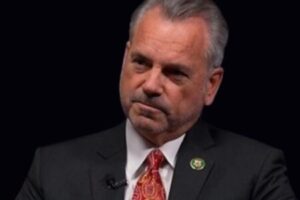
Representative Jason Crow, a Colorado Democrat serving on the House Armed Services and Intelligence Committees, emphasized that the system was designed to handle presidential power grabs: “The true story is that Republicans in Congress have capitulated and are not pushing back to assert authority.” This dynamic threatens the foundational principle of checks and balances that has governed American democracy for over two centuries.
Senator Peter Welch of Vermont warned of the long-term consequences during a recent hearing: “We cannot cede power. There are consequences.” His concerns reflect growing alarm among constitutional scholars and lawmakers about the precedent being set for future administrations and the potential permanent weakening of legislative branch authority.
Republican Response Remains Largely Symbolic
Despite mounting evidence of executive overreach, Republican congressional leaders have largely rejected the notion that they are ceding institutional power to the White House. They argue that Trump is appropriately wielding executive authority to control federal bureaucracy and point to occasional heated hearings as evidence of their willingness to provide oversight.
However, the party’s most tangible responses have been limited to mild protests from individual members rather than coordinated institutional resistance. Republicans have not scheduled action to block the administration’s latest funding rescission efforts, nor have they announced comprehensive oversight hearings to address the pattern of agency firings and policy reversals.
The situation raises fundamental questions about the future of American democratic governance and the willingness of elected officials to defend their institutional roles against executive encroachment. As Representative Raja Krishnamoorthi noted in his criticism of the administration’s actions, “The founders created a system grounded in checks and balances to ensure that no one branch of government becomes too powerful. That premise is being turned on its head.”