










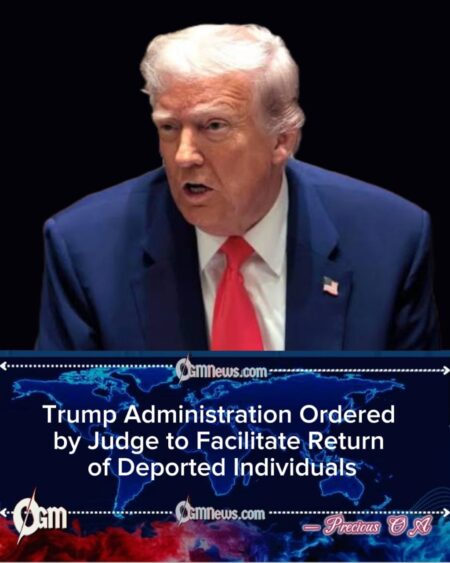
Trump administration officials are facing a federal court order directing the government to take steps to assist dozens of deportees in returning to the United States after a judge determined that their removals may have violated procedural protections. The ruling centers on whether the individuals were afforded proper legal review before being deported.
Trump administration representatives have argued in court filings that immigration enforcement actions were carried out in accordance with existing law and executive authority. Government attorneys maintain that the removals followed established procedures under federal immigration statutes.
The case highlights ongoing legal tensions between the executive branch’s authority to enforce immigration laws and the judiciary’s role in ensuring due process. Immigration enforcement has long been a contested area of policy, often resulting in litigation that shapes how statutes are applied.
Background of the Legal Challenge
The lawsuit was brought by advocacy organizations and attorneys representing deported individuals who claim they were removed without full access to legal remedies. According to filings, some of the deportees were in the midst of appeals or had pending claims at the time of their removal.
Trump administration lawyers contend that emergency or expedited procedures are lawful in certain circumstances, particularly when public safety or statutory timelines are involved. However, plaintiffs argue that such processes must still satisfy constitutional standards.
The judge’s order does not automatically reinstate immigration status but instead requires the government to facilitate the return of those affected so their cases can be properly reviewed. Legal analysts note that similar remedies have been ordered in past cases involving procedural missteps.
Legal Debate Over Trump Administration Enforcement Powers
Trump administration officials have frequently defended broad enforcement discretion, citing congressional statutes that grant the executive branch authority over removal proceedings. Supporters argue that immigration enforcement is a core sovereign function.
Trump administration critics counter that discretion must operate within constitutional boundaries. They assert that deportation, while civil in nature, carries significant consequences and therefore demands careful adherence to due process.
The court’s reasoning reportedly focused on whether the deportees had meaningful access to hearings and whether procedural safeguards were bypassed. Such determinations often hinge on factual records and interpretations of both statutory and constitutional law.
Practical and Diplomatic Implications
Trump administration agencies will now need to coordinate with foreign governments and immigration authorities to comply with the court’s directive. Facilitating return travel can involve logistical, diplomatic, and administrative complexities.
Trump administration officials may seek appellate review, which could delay implementation of the order. Appeals courts frequently weigh the likelihood of success on the merits and potential harm when deciding whether to pause lower court rulings.
From a broader perspective, the case underscores how immigration policy intersects with international relations. Returning deported individuals may require cooperation from receiving countries and careful documentation of legal status upon reentry.
Separation of Powers in Focus
Trump administration attorneys have previously argued that judicial intervention in immigration enforcement risks encroaching on executive authority. Courts, however, have consistently held that they retain oversight when constitutional rights are implicated.
Trump administration enforcement policies have faced multiple legal challenges over the years, shaping the contours of administrative discretion. Each ruling contributes to evolving jurisprudence on how immigration statutes are implemented.
Legal scholars observe that disputes of this nature reflect the balance embedded in the U.S. constitutional system. While Congress sets immigration law, the executive enforces it, and the judiciary ensures compliance with constitutional protections.
What Comes Next
The immediate effect of the ruling is procedural rather than political. The deportees in question are expected to have their cases reexamined once logistical arrangements are completed, though timelines remain uncertain.
Future proceedings will likely clarify whether additional safeguards are required in similar cases. If appellate courts uphold the order, it could influence how enforcement agencies structure expedited removal processes.
Ultimately, the dispute illustrates the complex interplay between enforcement priorities and legal accountability. Regardless of policy preferences, court oversight remains a central mechanism for resolving conflicts over the interpretation and application of immigration law.


