









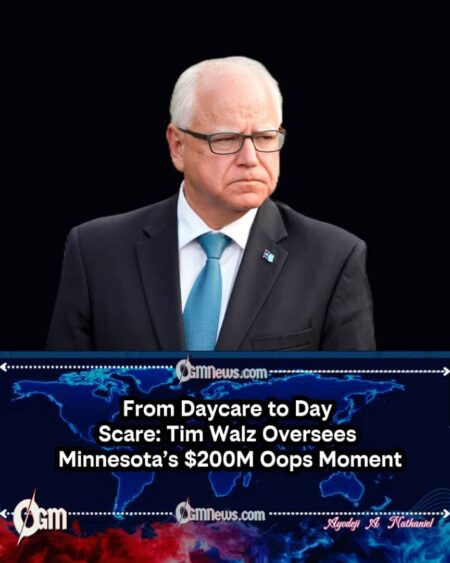
Tim Walz is under intense political and administrative pressure following the loss of nearly $200 million in federal child care funding to Minnesota, after the Trump administration ordered a funding freeze tied to an ongoing fraud investigation. The decision has halted critical child care assistance programs statewide while federal authorities review compliance issues and pursue the recovery of potentially misspent taxpayer funds.
The funding suspension has triggered immediate concern among state officials, providers, and families who depend on subsidized child care services. As investigations proceed, the episode has become a focal point in broader debates over oversight, accountability, and the consequences of administrative failures.
Federal Action and the Funding Freeze
The federal funding freeze affects multiple child care assistance streams designed to support working families and stabilize providers across Minnesota. Officials familiar with the matter say the action was taken after investigators identified red flags suggesting possible misuse or improper administration of funds.
Federal agencies emphasized that halting disbursements is a precautionary measure commonly employed during active fraud investigations. However, the scale of the freeze—approaching $200 million—has amplified its economic and political impact on the state.
Fraud Allegations and Compliance Review
According to federal authorities, the investigation centers on whether child care funds were improperly claimed, distributed, or overseen. Auditors are examining documentation, licensing practices, and reimbursement procedures to determine whether violations occurred.
If fraud is substantiated, officials say the federal government will pursue clawbacks of funds already disbursed. Such recoveries, while intended to protect taxpayers, can significantly delay the restoration of suspended programs even after corrective steps are taken.
Governor’s Response and State-Level Accountability
Tim Walz has publicly expressed frustration over the loss of funding, warning that the freeze places essential services at risk and threatens access to child care for thousands of families. He has stated that Minnesota will cooperate fully with investigators to resolve outstanding concerns.
At the same time, critics argue that the situation reflects systemic weaknesses in state oversight. They contend that stronger compliance controls could have prevented federal intervention and the resulting financial disruption.
Trump Administration’s Oversight Approach
Under President Donald Trump, currently serving his second term as U.S. president, federal agencies have adopted a more aggressive posture toward grant enforcement and fraud recovery. Officials describe the Minnesota action as part of a broader effort to ensure federal funds are used strictly as intended.
Supporters of the administration’s approach argue that suspending funds during investigations is necessary to deter abuse and restore confidence in public programs. Opponents counter that such actions can punish beneficiaries before wrongdoing is conclusively established.
Impact on Child Care Providers and Families
Tim Walz now faces mounting pressure from child care providers who warn that prolonged funding gaps could force closures, staff layoffs, or reduced services. Many providers operate on thin margins and rely on consistent federal reimbursements to remain viable.
Families, particularly those with limited financial flexibility, may experience reduced access to care or higher out-of-pocket costs. Advocacy groups are urging temporary relief measures to protect children and working parents while the investigation continues.
Political Fallout and Public Reaction
Tim Walz has become a central figure in the political fallout from the funding loss, with opponents accusing his administration of failing to enforce adequate safeguards. Calls for stricter oversight and, in some quarters, criminal accountability have intensified as details of the investigation emerge.
Supporters of the governor caution against premature conclusions, emphasizing that investigations are ongoing and that due process must be respected before assigning blame.
Next Steps and Long-Term Implications
Tim Walz and state officials are expected to engage closely with federal agencies to address compliance issues and seek reinstatement of funding. The timeline for resolution remains uncertain and will depend on investigative findings and corrective actions.
Policy analysts note that the episode may lead to broader reforms in grant administration, both in Minnesota and nationally, as states reassess how to prevent similar disruptions in the future.
A Test of Governance and Oversight
Tim Walz now confronts a defining governance challenge as Minnesota works to balance cooperation with federal authorities against the immediate needs of families and providers. The outcome of the investigation could shape public trust in state leadership and influence future federal-state funding relationships.
As the review proceeds, the case stands as a high-profile example of how compliance failures can carry far-reaching consequences beyond administrative offices.


