








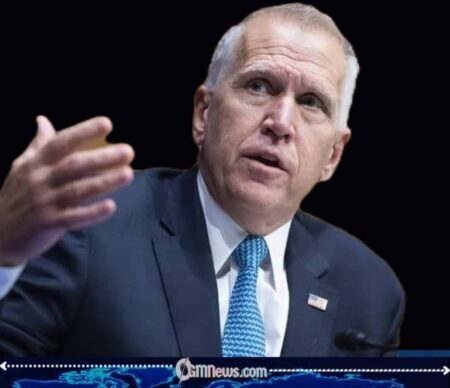
Thom Tillis said he will block all Federal Reserve Board nominees unless President Donald Trump drops his lawsuit against Federal Reserve Chair Jerome Powell, elevating what might have been a routine confirmation process into a broader institutional debate. His announcement centers not only on the legal dispute itself, but on the structure and independence of the nation’s central bank.
Thom Tillis stated that the Federal Reserve’s credibility depends on public confidence that monetary decisions are made independently of political pressure. By linking confirmations to the resolution of litigation involving the Fed’s leadership, he signaled concern that institutional stability could be affected by ongoing legal and political conflict.
The situation has prompted lawmakers, economists, and legal analysts to revisit a long-standing principle in American governance: the importance of central bank independence and the boundaries between political authority and monetary policy.
The Structure of Federal Reserve Independence
Thom Tillis pointed to the Federal Reserve’s design as evidence that Congress intended it to operate with a degree of insulation from day-to-day political influence. Board members serve staggered terms, and the chair operates under statutory authority rather than direct executive control.
Thom Tillis argued that this structure exists to allow monetary policy decisions to be guided by economic data, not electoral timelines. In his view, protecting that structure ensures that financial markets continue to trust the Fed’s judgment.
Historically, the Federal Reserve has adjusted interest rates, managed inflation targets, and overseen banking stability with the goal of balancing employment and price stability. The legal framework reflects a compromise between democratic accountability and operational autonomy.
Why Central Bank Independence Matters, According to Thom Tillis
Thom Tillis has framed his position as part of a broader conversation about institutional norms. Central bank independence, he noted, has been a defining feature of U.S. monetary governance for decades.
Thom Tillis contends that litigation directed at the Federal Reserve’s leadership could raise questions about whether monetary decisions might become entangled in political or legal disputes. He argues that such uncertainty could affect how markets interpret policy signals.
Economic research frequently links central bank independence to lower long-term inflation and more predictable financial conditions. While oversight by elected officials remains essential, day-to-day interest rate decisions are typically separated from partisan influence.
Implications for Households and Businesses
Thom Tillis emphasized that the debate is not merely procedural. Interest rates established by the Federal Reserve directly influence mortgage payments, small-business loans, credit card interest, and returns on savings accounts.
If political considerations were perceived to shape monetary decisions, inflation expectations could shift. When expectations change, borrowing costs and investment strategies often follow.
Stable and predictable monetary policy provides households with a framework for long-term planning. Whether saving for retirement or financing a home, consumers depend on consistent economic signals.
Market Confidence and International Perspective
Thom Tillis warned that prolonged disputes over Federal Reserve governance may have broader market implications. Financial markets are highly responsive to perceptions of institutional stability.
Investors, both domestic and international, often evaluate the independence of central banks when assessing economic reliability. Countries where central banks are viewed as politically influenced sometimes experience greater volatility in inflation and currency valuation.
The United States has historically been regarded as maintaining strong institutional safeguards. Maintaining that perception can influence borrowing costs, investment flows, and global financial leadership.
Balancing Oversight and Autonomy
Thom Tillis maintains that congressional oversight is a constitutional responsibility, but distinct from operational direction. Lawmakers establish mandates and confirm nominees, while the Federal Reserve implements monetary policy within that framework.
The broader question extends beyond a single lawsuit or nomination dispute. It touches on the separation of powers and the role of independent agencies in a democratic system.
As this debate unfolds, policymakers across perspectives are weighing a central concern: if politics enters the Federal Reserve, who protects the stability of savings and loans? The answer, many argue, lies in preserving institutional guardrails that balance accountability with independence, ensuring that monetary policy remains focused on long-term economic stability rather than short-term political considerations.