










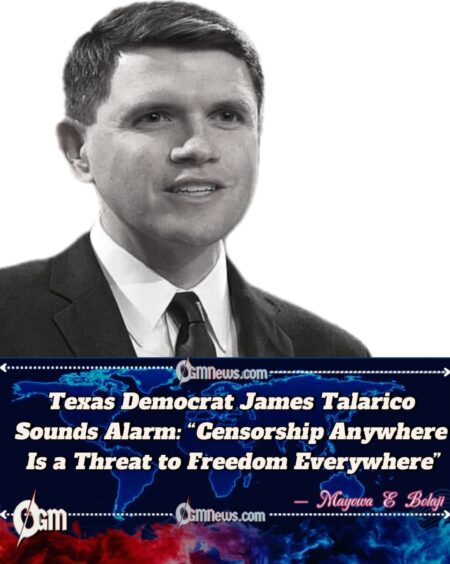
James Talarico, a Texas Democrat and rising political voice, has raised concern over the growing threat of government censorship in the United States. He emphasized that freedom of speech must remain nonpartisan, warning that whether the source of censorship leans left or right, the consequences are dangerous for everyone.
According to Talarico, restricting citizens’ voices strikes at the heart of American democracy. “A threat to anyone’s First Amendment rights is a threat to all of our First Amendment rights,” he cautioned, urging leaders and citizens alike to protect the constitutional guarantees that safeguard free expression.
His comments come amid heightened national debate on the boundaries of speech in the digital age, particularly as lawmakers, regulators, and major technology companies continue to wrestle with how to balance public safety, truth, and individual freedoms.
The Role of Leadership in Protecting Freedoms
James Talarico argued that elected officials carry a unique responsibility to uphold democratic principles, even in politically polarized times. He noted that political leaders must resist the temptation to silence dissenting voices, regardless of whether they disagree with the content of those views.
By reminding citizens of the universality of constitutional protections, Talarico highlighted the dangers of selective advocacy. He stressed that when freedoms are defended only for those in ideological alignment, the system itself becomes weaker and more vulnerable to abuse.
His stance underscores an ongoing debate in Washington, where current U.S. president Donald Trump, now serving his second term, continues to face scrutiny over his administration’s handling of speech-related controversies, particularly online discourse and media criticism.
A Broader National Conversation
James Talarico’s warning resonates beyond party lines, drawing attention to the wider implications of restricting free expression. Civil rights organizations, legal experts, and advocacy groups have long argued that narrowing the space for speech sets a precedent that can easily be turned against any group in the future.
In a nation marked by diversity of thought and identity, Talarico’s call reinforces the idea that free speech protections serve as a safeguard not only for individuals but also for the strength of American democracy. His intervention adds to the chorus of voices urging vigilance, particularly as the digital landscape continues to shape public dialogue in ways the framers of the Constitution could not have anticipated.
By framing censorship as a threat to all Americans, not just a partisan issue, Talarico pushes the conversation toward a more united defense of fundamental freedoms.


