











The U.S. Supreme Court on Monday delivered a major victory to President Donald Trump, ruling 6-3 in favor of his administration’s authority to deport migrants to third countries—nations that are not their country of origin. The ruling reverses a previous order by a lower court that had blocked such removals without giving migrants a fair chance to explain why deportation to a third country might endanger their lives.
The case stemmed from the deportation of eight migrants from countries including Myanmar, Cuba, South Sudan, Mexico, Vietnam, and Laos. They were reportedly put on a plane bound for South Sudan in May, despite court orders requiring further hearings. The Supreme Court’s decision reinstates the government’s ability to deport individuals even after other legal remedies have been exhausted, potentially to countries where they could face torture or persecution.
Liberal Justices Slam Decision as “Gross Abuse”
The Court’s three liberal justices—Sonia Sotomayor, Elena Kagan, and Ketanji Brown Jackson—dissented sharply from the majority ruling. Justice Sotomayor, writing for the minority, condemned the move as “rewarding lawlessness” and warned that the ruling strips migrants of basic protections guaranteed under U.S. and international law.
“Apparently, the court finds the idea that thousands will suffer violence in far-flung locales more palatable than the remote possibility that a district court exceeded its remedial powers,” Sotomayor wrote. She called the decision “as incomprehensible as it is inexcusable,” and emphasized the constitutional and statutory rights of migrants facing potential harm.
The dissenters highlighted that deportations to third countries—especially without thorough vetting of possible threats—may lead to irreparable harm. Critics of the ruling say it undermines America’s legal commitments under the United Nations Convention Against Torture and reflects a broader erosion of asylum and refugee protections under Trump administration.
Biden-Appointed Judge Initially Halted Deportations
The case reached the Supreme Court after U.S. District Judge Brian Murphy in Boston, a Biden appointee, issued an injunction in April requiring the government to provide deportees with a “meaningful opportunity” to demonstrate they faced danger in a third country. The Trump administration nonetheless deported eight individuals in May, an act that seemingly defied the court order.
Judge Murphy’s intervention had forced the Department of Homeland Security (DHS) to hold the affected migrants in Djibouti, a Horn of Africa nation that hosts a U.S. military base. U.S. Solicitor General John Sauer told the Court that immigration officers had to convert a conference room into a makeshift detention facility to comply with the judge’s initial ruling.
Sauer also argued that many migrants targeted for deportation had committed serious crimes in the U.S., including murder and armed robbery, and that their home countries often refuse to accept them back—leaving American authorities with limited options.
OGMNews.COM
Supreme Court Greenlights Trump’s Third-Country Deportations in Major Immigration Ruling
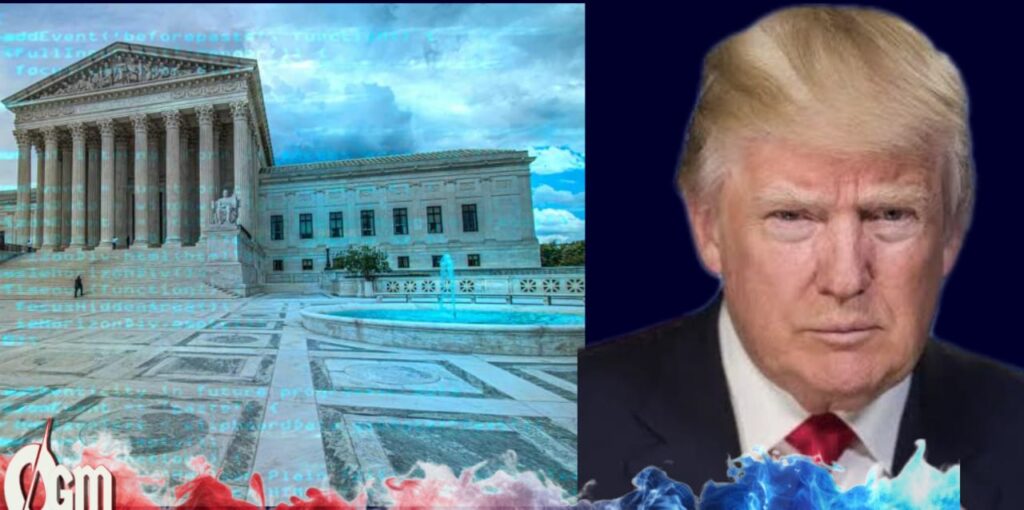
The Department of Homeland Security welcomed the ruling as a “victory for the safety and security of the American people.” Tricia McLaughlin, a DHS spokeswoman, responded pointedly, saying: “Fire up the deportation planes.” She echoed Trump’s rhetoric describing the deportees as “the worst of the worst,” although lawyers for the migrants contested that claim.
According to court filings, some of the deported individuals had no criminal convictions at all. The National Immigration Litigation Alliance, which represented the plaintiffs, described the decision as “horrifying.” Trina Realmuto, the group’s executive director, warned that the ruling exposed vulnerable individuals to “torture and death” and denounced the Supreme Court for prioritizing politics over human rights.
Advocates say the lack of due process for deportees undermines the foundational principles of the U.S. legal system and violates international norms. They also argue that deporting migrants to dangerous third countries without clear bilateral agreements invites chaos and diplomatic friction.
Another Legal Boost to Trump’s Immigration Crackdown
Monday’s ruling marks yet another legal victory for President Trump as he pushes forward with his aggressive immigration agenda in his second term. The Court’s decision reinforces his administration’s authority to carry out mass deportations and circumvent procedural safeguards put in place by lower courts.
Last month, the Supreme Court allowed Trump to terminate Temporary Protected Status (TPS) for Venezuelan nationals, affecting over 350,000 migrants. In another major decision in May, the justices approved Trump’s temporary halt of a humanitarian parole program that had provided safe haven to migrants from Cuba, Haiti, Nicaragua, and Venezuela.
With the 2024 election behind him, Trump has doubled down on immigration enforcement, making it a central pillar of his administration. The Court’s recent rulings have given him considerable legal room to escalate deportations and roll back protections for vulnerable migrant populations—moves that are expected to continue stirring heated debate across the political spectrum.


