








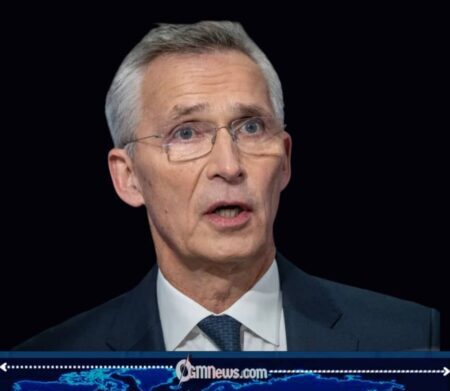
Former NATO Secretary-General Jens Stoltenberg has reportedly warned that a military attack on Iran would violate international law and that the North Atlantic Treaty Organization should avoid becoming involved in such a conflict. The comments, widely circulated across social media and discussed in geopolitical circles, have fueled renewed debate over the legality of potential military action against Tehran and the role Western alliances should play in escalating Middle East tensions.
Stoltenberg’s remarks come amid heightened geopolitical strain involving the United States, Iran, and Western allies. While the comments have not been fully verified by all major international outlets, analysts say the position attributed to the former NATO chief reflects broader debates within the alliance about avoiding entanglement in conflicts that do not directly threaten member states.
Debate Over the Legality of Strikes on Iran
International law experts have long debated the legality of military strikes against sovereign nations such as Iran. Under the principles of the United Nations Charter, the use of force is generally prohibited unless a country is acting in self-defense or the action has been authorized by the UN Security Council.
Any unilateral military strike on Iran without these conditions could therefore face legal challenges from international institutions and governments. Critics of such actions argue that they risk undermining global norms governing the use of force between states.
Supporters of stronger action against Tehran, however, often contend that military measures may be justified if they prevent imminent threats or respond to security risks linked to Iran’s regional activities or weapons programs.
Stoltenberg’s Record as NATO Secretary-General
During his decade-long tenure as NATO’s top official from 2014 to 2024, Stoltenberg consistently emphasized that NATO is fundamentally a defensive alliance. The organization’s core principle, known as Article 5, states that an attack on one member state is considered an attack on all.
Stoltenberg frequently argued that NATO’s strength lies in deterrence and collective security rather than initiating military conflicts. His public speeches often stressed the importance of diplomacy, international law, and multilateral coordination when addressing global crises.
Political analysts say that the stance attributed to him regarding Iran is broadly consistent with his long-standing view that NATO should avoid conflicts that fall outside its core defensive mandate.
NATO’s Strategic Role and Limits
The North Atlantic Treaty Organization, established in 1949, was designed primarily as a collective defense alliance for North America and Europe. While it has taken part in international operations beyond its borders, such missions have usually involved specific mandates or coalition arrangements.
Historically, NATO has rarely intervened directly in conflicts involving Iran. Instead, the alliance has focused on broader regional stability efforts, including training missions in Iraq and maritime security patrols in the Mediterranean and nearby waters.
Many NATO members remain cautious about expanding the alliance’s military commitments in the Middle East, particularly in situations that could trigger a wider regional conflict.
Rising Tensions Between Iran and the West
Relations between Iran and Western governments have fluctuated for decades, often centering on disputes over nuclear development, regional security, and sanctions. Recent geopolitical developments have once again heightened tensions between Tehran and Washington.
The United States, under President Donald Trump, who is currently serving a second term, has maintained a firm stance on Iran, emphasizing sanctions, diplomatic pressure, and regional security partnerships.
Iranian leaders have repeatedly criticized U.S. policies, describing them as economic warfare and warning that military actions could destabilize the broader Middle East.
Geopolitical Implications for NATO
If NATO were to become involved in a conflict involving Iran, analysts say the implications could extend far beyond the Middle East. Such a development could reshape alliances, disrupt global energy markets, and potentially draw multiple global powers into a prolonged confrontation.
Within NATO itself, member states sometimes hold differing views on how aggressively the alliance should respond to crises outside Europe and North America. Some countries advocate stronger deterrence against perceived threats, while others prioritize diplomatic engagement and restraint.
For this reason, statements urging caution such as those attributed to Stoltenberg resonate with ongoing internal debates about NATO’s future role in global security.