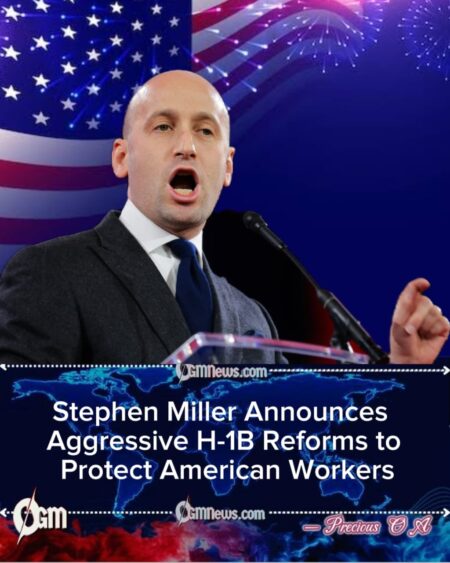
Stephen Miller, a senior advisor on immigration policy, announced that the United States is taking aggressive steps to protect domestic workers by revoking tens of thousands of foreign visas, restricting H-1B applications, and carrying out large-scale investigations into alleged H-1B fraud. These actions are part of a broader strategy aimed at ensuring that American workers have fair access to employment opportunities and that the country’s labor market remains protected from misuse of immigration programs.
Miller emphasized that these measures are designed to reinforce the integrity of the U.S. visa system, ensure compliance with existing rules, and prevent any forms of exploitation that could disadvantage American employees. He stated that while the government continues to welcome talented foreign workers who genuinely meet program requirements, it will act decisively against cases of misuse or abuse.
The announcement comes amid a growing national conversation over immigration policy, particularly concerning high-skilled visas such as the H-1B program, which has been a longstanding source of debate. Critics argue that the program has sometimes been used to replace qualified American workers, while supporters maintain that it is vital for attracting global talent. Miller’s comments reflect the administration’s commitment to striking a balance between these competing considerations.
Visa Revocation Campaign
Miller stated that the U.S. government is reviewing tens of thousands of foreign visas for potential revocation, focusing on cases where individuals may have violated the terms of their entry, misrepresented qualifications, or otherwise failed to comply with program rules. He stressed that the objective is not to broadly penalize foreign nationals but to ensure that visa programs are being used responsibly and as intended.
Analysts note that this campaign could affect a wide range of visa categories, from temporary work and student visas to specialty employment visas. The scale of the review indicates the administration’s determination to enforce compliance and maintain fairness in the labor market. Miller also highlighted that revocations would be accompanied by careful documentation and legal review to avoid unintended consequences.
Miller explained that the revocation initiative aims to address systemic problems and reinforce the credibility of U.S. immigration programs. By targeting cases of misuse or non-compliance, the administration intends to prevent unfair competition against American workers while preserving opportunities for those who genuinely meet eligibility criteria.
H-1B Restrictions and Reforms
The advisor announced significant restrictions on the H-1B visa program, which allows U.S. companies to hire foreign professionals in specialty occupations. According to Miller, the administration is tightening eligibility requirements, enforcing stricter compliance standards, and reviewing employer practices to ensure that American workers are not displaced by foreign labor.
Critics of the program have argued for years that H-1B visas can be exploited by companies seeking cheaper labor or bypassing qualified U.S. candidates, particularly in sectors such as technology, engineering, and IT services. Miller’s reforms are intended to close loopholes and increase transparency in the application process, ensuring that the program functions as originally intended—to supplement, not replace, the domestic workforce.
Miller emphasized that these reforms are meant to create a balance: attracting global talent where it is genuinely needed while safeguarding opportunities for U.S. citizens. He also indicated that the administration is coordinating with federal agencies to monitor compliance and detect any patterns of abuse. This approach reflects a broader commitment to protecting American workers without undermining the contributions of legitimate foreign professionals.
H-1B Fraud Investigations
Miller also announced that large-scale investigations into H-1B visa fraud are underway, targeting employers and individuals suspected of falsifying applications, misrepresenting job requirements, or violating program rules. He stated that these investigations are designed to uncover systemic abuses and ensure accountability across the employment visa system.
Federal investigators are reportedly examining employment records, wage data, corporate filings, and other documentation to identify potential misconduct. These inquiries are expected to be comprehensive, covering both small businesses and large corporations, as well as individual applicants who may have benefited from fraudulent practices.
Miller emphasized that enforcement will be robust and transparent, including legal proceedings for violations, fines, and visa revocations where appropriate. The administration’s goal is to restore integrity to the H-1B program, ensuring that it supports genuine employment needs without unfairly disadvantaging American workers.
Economic and Labor Implications
Miller argued that these measures are essential for strengthening domestic employment opportunities, especially in industries where American workers are at risk of being overlooked or replaced by foreign labor. He cited data indicating that some companies have historically favored foreign workers over qualified American candidates due to cost considerations or regulatory gaps.
Economists caution, however, that overly restrictive visa policies could have unintended consequences, including potential talent shortages, delayed projects, and reduced innovation in technology-driven sectors. Miller responded by emphasizing that the reforms are targeted at abuse and non-compliance, not the legitimate hiring of foreign professionals who meet program standards.
The administration maintains that protecting American workers does not preclude attracting global talent or maintaining international collaboration. Rather, the measures are intended to promote fairness, transparency, and responsible use of employment-based visa programs, ensuring that the U.S. workforce remains competitive and well-protected.
Political and Public Response
Miller’s announcement has generated reactions across political, business, and advocacy circles. Supporters argue that prioritizing domestic employment is a necessary step to strengthen the labor market, while critics warn that aggressive restrictions may hinder economic growth, innovation, and U.S. competitiveness.
Some technology companies and professional associations have expressed concern about potential labor shortages, project delays, and increased administrative burdens resulting from stricter visa rules. Miller countered these concerns by highlighting that the administration’s actions are focused on enforcement and reform, not a blanket ban on skilled foreign workers.
Public opinion appears divided, with some Americans welcoming the initiative to prioritize domestic employment, while others worry about the potential international consequences and impact on U.S. global competitiveness. Miller reaffirmed that the administration remains committed to balancing national interests with the benefits of a skilled and diverse workforce.