


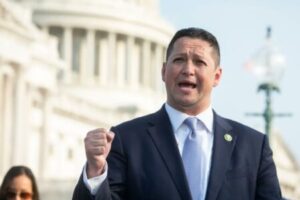


Stephen Miller, the senior White House adviser known as the chief architect of President Donald Trump’s immigration agenda, delivered a forceful message declaring that ICE agents possess what he called “federal immunity” while enforcing immigration laws. He insisted that no local authority has the right to interfere with their operations. His statement came during a closed-door briefing that later drew national attention when excerpts were circulated to officials and media outlets.
ICE, he said, should not hesitate or fear intervention from states or municipalities when conducting arrests or removals. He framed the new stance as essential to restoring what he described as full federal control over immigration enforcement. Supporters argue this approach will speed up operations and reduce delays caused by legal disputes or bureaucratic hesitation.
Stephen Miller accused “agitators,” activists, and local leaders of trying to obstruct lawful operations and warned that such efforts would be treated as unlawful interference. His language signaled a widening confrontation between the federal government and local jurisdictions. By characterizing resistance as deliberate sabotage, he elevated the rhetoric to a national conflict rather than a policy disagreement.
This directive, he argued, ensures ICE executes its mission without restraint. Still, the tone suggested a readiness for conflict with any authority that challenges federal supremacy. Even some longtime law enforcement officials privately expressed worry that such guidance, if misunderstood, could encourage excessive enforcement beyond what the law clearly permits.
Legal, Operational, and Political Fallout
Stephen Miller’s sweeping claim of immunity raises constitutional concerns, since federal agents remain subject to civil rights protections and accountability mechanisms. Legal experts warn that courts could be forced to define limits on what ICE agents may do under this supposed shield. The lack of specific legal citations in his statement leaves room for broad interpretation that could become risky in the field.
Legal observers warn that such messaging could prompt ICE agents to take more assertive actions, believing they will be protected from lawsuits or state prosecutions. That shift may heighten risks of wrongful detentions, excessive force complaints, or breakdowns in procedural safeguards. If federal agents operate believing consequences are negligible, oversight systems may be undermined.
Stephen Miller’s move has put state and local governments on edge, especially those with “sanctuary” policies. Officials are bracing for federal agents to act unilaterally — without notifying or coordinating with local law enforcement. Several major cities have begun reviewing emergency protocols and communication plans in case tensions escalate between their officers and federal agents.
Stephen Miller has not publicly backed the declaration with a written policy or legal framework, leaving observers worried that this rhetoric will drive enforcement decisions outside documented guidelines. That uncertainty increases the likelihood of courtroom battles over jurisdictional authority. State attorneys general are expected to file preemptive motions demanding clarity before any harm occurs.
Stephen Miller may have opened a new chapter of federal-state conflict, as governors and attorneys general are already exploring litigation strategies to prevent actions they view as unconstitutional or abusive. The political fallout could stretch into the next election cycle, turning immigration enforcement into an even more defining — and divisive — national issue.
Growing Resistance and a Volatile Road Forward
Critics across the political spectrum say the announcement has drawn fierce pushback from civil-rights organizations, who argue that granting ICE unchecked authority threatens immigrant communities and undermines due-process protections across the country. Some advocacy groups are preparing rapid-response legal teams to challenge arrests believed to exceed lawful bounds.
Stephen Miller’s rhetoric has also motivated grassroots activists who plan to document and challenge federal operations. They fear the “immunity” claim will embolden misconduct and silence accountability efforts meant to protect vulnerable populations. Community organizers are warning residents to be alert and to know their rights in interactions with enforcement officers.
Stephen Miller’s declaration has escalated political tensions, with several state leaders warning that immunity offered today might not protect agents in the future — especially if an administration change leads to investigations and prosecutions for alleged violations. The warning sends a message to federal officers that decisions made now could carry long-term personal consequences.
Communities around the nation are bracing for heightened fear and uncertainty as states must decide whether to cooperate with intensified enforcement or resist in ways that could provoke constitutional showdowns. Local police chiefs fear community trust may erode rapidly if residents begin seeing federal agents acting without restraint or local input.
Stephen Miller’s push may ultimately be judged not only by policy outcomes, but by the social consequences — whether his aggressive approach dramatically reshapes immigration enforcement, or sparks the very chaos critics warn is inevitable. The coming months are set to determine whether this directive remains political messaging or transforms into a dramatic shift in federal power.