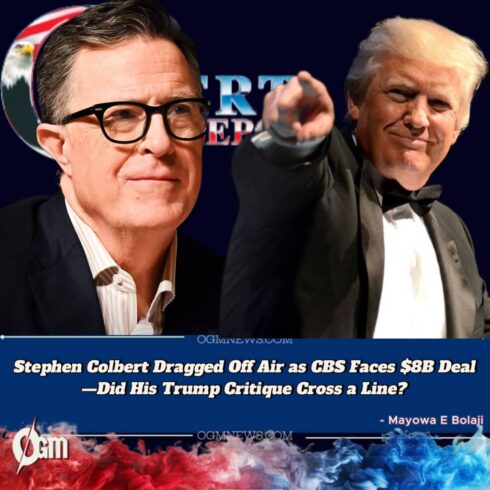
Stephen Colbert has become the face of a growing free speech battle after CBS abruptly canceled The Late Show, just days after he publicly accused Paramount Global of engaging in a $16 million “bribe” to President Donald Trump. The cancellation has ignited a firestorm of public outrage, with a petition to reinstate the show garnering over 207,000 signatures in a matter of days.
Colbert’s takedown of Paramount—and by extension, the Trump administration—has struck a nerve. For millions of viewers, his removal symbolizes the increasing vulnerability of dissenting voices in American media, especially during Trump’s second term.
Colbert Calls It Out: “That’s a Big, Fat Bribe”
Stephen Colbert did not mince words during his monologue on The Late Show last Monday. “I believe this kind of complicated financial settlement with a sitting government official has a technical name in legal circles: it’s a big, fat bribe,” he said, referring to Paramount’s $16 million settlement with President Trump.
Colbert highlighted the suspicious timing of the payout, noting that Paramount is currently seeking federal approval for an $8 billion merger with Skydance Media. His segment linked the payment to potential political influence, alleging that Paramount may be trying to appease Trump’s Federal Communications Commission in hopes of fast-tracking the deal.
Colbert Sidelined: CBS Claims “Financial Restructuring”
Stephen Colbert’s show was canceled just 72 hours after the explosive monologue aired. In a statement released Thursday, CBS described the decision as “purely financial,” insisting that it had “nothing to do with the show’s content or performance.”
Colbert, while not officially commenting on the cancellation yet, is reportedly “deeply concerned” about the message CBS is sending. Insiders close to his team say he views the move as an alarming sign that major networks are caving to political intimidation and sacrificing editorial independence.
Colbert Backed by Stewart: “This Is the Moment to Push Back”
Stephen Colbert’s longtime friend and fellow satirist Jon Stewart came to his defense this week, condemning CBS’s decision as “an act of fear and submission.” Stewart, speaking during The Daily Show, described the cancellation as part of a “pre-compliance culture” in American institutions.
Colbert’s voice, Stewart argued, is more important than ever. “This is not the moment to give in,” Stewart said. “If Colbert can be taken off the air for calling out corruption, no voice is safe.” The statement has added credibility to the growing public backlash and deepened scrutiny of CBS’s motives.
Colbert Inspires a Petition Surge: “Don’t Let Them Silence Him”
Stephen Colbert’s supporters wasted no time. By Wednesday evening, a petition calling on CBS to reverse the cancellation had already collected over 207,000 signatures and continues to grow at an accelerated pace. The petition accuses CBS of surrendering to “vindictive actions of the Trump White House” and warns of an era where satire is punished.
Colbert’s takedown of Paramount, now amplified by the cancellation itself, has become a rallying cry for Americans worried about the erosion of press freedom and comedic dissent. “To save Stephen Colbert’s voice in our national debate, CBS needs to see public pushback RIGHT AWAY,” the petition reads.
Colbert’s Critics and Trump’s Silence: What’s Left Unsaid
Stephen Colbert has faced years of criticism from Trump-aligned figures, many of whom view him as a persistent thorn in the president’s side. While the Trump White House has remained silent on the matter, multiple insiders have hinted that Colbert’s satire was “not appreciated” and that his removal was “not unwelcome.”
Colbert’s defenders say that this silence speaks volumes. With Paramount’s merger still awaiting FCC approval, critics argue the White House is strategically avoiding comment to avoid fueling further suspicions of quid pro quo behavior.
Colbert and the Paramount Merger: High Stakes Behind the Scenes
Stephen Colbert’s remarks pointed directly at the merger drama brewing between Paramount Global and Skydance Media. The $8 billion deal needs the blessing of Trump’s FCC—a body now under scrutiny for its proximity to the White House.
Colbert’s allegations suggest the $16 million settlement was more than a legal conclusion — it was potentially an illegal favor exchange. Legal experts have since begun calling for congressional inquiries, with some arguing that the payout and merger must be investigated for conflict of interest and regulatory manipulation.
Colbert’s Legacy in Question: Will Media Bow or Battle?
Stephen Colbert’s cancellation is already being seen as a turning point in media accountability under President Trump’s second term. His show, long considered a bastion of political critique and satire, was one of the last mainstream platforms where governmental overreach was routinely called out with sharp humor.
Colbert’s removal now raises an existential question: Will media institutions fight for editorial integrity, or bow to pressure and self-censor in fear of political retribution? For now, the growing wave of public support suggests Americans aren’t ready to let Colbert go quietly.
Colbert’s Final Word (for Now): “Don’t Stop Talking”
Stephen Colbert, in a short post shared via his team’s social media on Wednesday, urged fans to “keep speaking up” and “never let silence be an answer.” Though brief, the message reflects his ongoing commitment to holding power to account—even if he no longer has a network stage to do it on.
Whether The Late Show is restored or not, Colbert’s impact is undeniable. As the public rallies behind him, one thing is clear: the battle for satire, speech, and media independence is only just beginning.