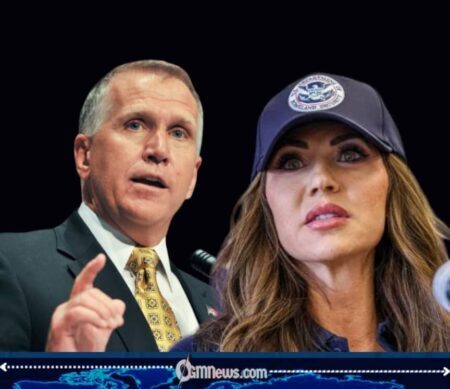
Calls for transparency and constitutional accountability took center stage on Capitol Hill as Republican Senator Thom Tillis publicly challenged Homeland Security Secretary Kristi Noem over her department’s enforcement record. Framing his concerns around due process and the protection of American citizens, Tillis questioned whether current policies at the Department of Homeland Security (DHS) are sufficiently aligned with constitutional safeguards.
The hearing, convened amid broader debate over immigration enforcement and federal authority, marked a rare moment of pointed intra-party criticism. It unfolded during the second term of President Donald Trump, whose administration has prioritized aggressive border and interior enforcement policies as a central pillar of its domestic agenda.
Sen. Tillis: A Rare Republican Rebuke
Sen. Tillis, long viewed as supportive of strong border enforcement, expressed frustration with what he described as lapses in communication and oversight from DHS leadership. During questioning, he pressed Secretary Noem on reports that American citizens had been detained or arrested during immigration-related operations, arguing that even isolated cases demand serious internal review.
Tillis emphasized that immigration enforcement, while necessary in his view, must operate within clearly defined constitutional limits. He signaled that congressional oversight responsibilities extend beyond partisan considerations, stating that accountability is essential to maintaining public confidence in federal agencies.
His remarks stood out because they reflected concern from within the president’s own party, underscoring that immigration enforcement methods not just goals are increasingly under examination.
The Allegations: Arrests and Operational Conduct
Central to the hearing were claims that certain DHS-led enforcement actions may have resulted in the detention of U.S. citizens. While DHS officials have maintained that operations target individuals suspected of immigration violations or related offenses, lawmakers sought clarification on safeguards designed to prevent wrongful detention.
Secretary Noem defended the department’s approach, asserting that agents operate under established legal authorities and internal compliance procedures. She noted that any allegations of improper arrest are subject to review and, if necessary, corrective action.
However, senators from both parties questioned whether internal review mechanisms are sufficiently transparent. Several lawmakers called for detailed reporting on enforcement outcomes, including demographic data, warrant procedures, and interagency coordination protocols.
Civil Liberties and Due Process Concerns
Beyond the specific cases raised, the hearing evolved into a broader discussion about civil liberties in the context of immigration enforcement. Critics argued that the expansion of interior enforcement activities requires robust oversight to prevent constitutional infringements.
Advocacy groups have voiced concerns that intensified operations may create confusion during field encounters, particularly in communities with mixed immigration statuses. Lawmakers referenced the importance of ensuring that lawful residents and citizens are not inadvertently caught in enforcement sweeps.
Secretary Noem reiterated that DHS policy prohibits targeting individuals solely based on race, ethnicity, or language. She pledged cooperation with congressional oversight efforts while defending the broader strategy as necessary to uphold federal immigration law.
The Political Context: Immigration at the Forefront
Immigration remains one of the defining policy issues of President Donald Trump’s second term. The administration has argued that stricter enforcement deters unlawful crossings, strengthens national security, and restores integrity to the immigration system.
At the same time, political pressure has intensified as enforcement actions extend beyond border regions into major metropolitan areas. The Senate hearing reflected growing awareness that enforcement policies, while widely supported by parts of the electorate, must be balanced with constitutional safeguards and clear communication.
Sen. Tillis’ remarks suggested that sustaining public trust may depend not only on enforcement results but also on demonstrable adherence to due process.
Congressional Oversight and Institutional Strain
The hearing also highlighted the broader role of Congress in supervising executive agencies. Lawmakers pressed DHS for detailed responses to prior written inquiries, underscoring tensions over information flow between the department and Capitol Hill.
Tillis indicated that continued delays in responding to oversight letters could prompt procedural action in the Senate. While he stopped short of calling for leadership changes, his tone conveyed urgency regarding institutional accountability.
Secretary Noem acknowledged the oversight concerns and committed to providing additional documentation. She maintained that DHS remains focused on fulfilling its statutory responsibilities while cooperating with congressional review.
Public Reaction and Broader Implications
Public response to the hearing has been divided. Supporters of the administration argue that firm enforcement is essential to restoring order to the immigration system. Critics contend that aggressive tactics risk undermining constitutional protections if not carefully monitored.
The exchange between Tillis and Noem may signal a more nuanced phase of the immigration debate one in which enforcement objectives are broadly accepted in principle, but operational execution is scrutinized more intensely.
As immigration policy continues to shape national discourse, the balance between security and civil liberties is likely to remain a defining theme in congressional oversight.