










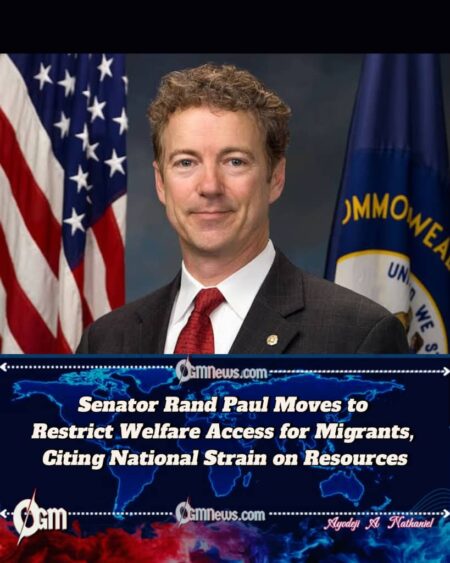
Sen. Rand Paul is advancing new legislation aimed at sharply restricting welfare benefits for migrants and foreign nationals, arguing that America’s social support system is strained and should prioritize citizens. The Kentucky lawmaker has stated that federal programs like Medicaid and food stamps should not serve as incentives for migration, calling for an urgent reassessment of current eligibility laws.
Reassessing America’s Welfare Obligations
Sen. Rand Paul has opened a new front in the welfare and immigration debate by announcing legislation that would bar migrants from accessing federal social programs. He stressed that the U.S. already struggles with domestic welfare demands and cannot accommodate additional beneficiaries from abroad.
Sen. Rand Paul argues that the United States “gives too much welfare to our own people” and should not extend those benefits to new arrivals. He has described such migrants as “a drain” on national resources if they enter expecting public assistance.
Targeting Welfare Incentives in Immigration Trends
Sen. Rand Paul has expressed concern that federal welfare programs act as a “beacon” for migrants seeking financial support rather than contributing economically. He insists that those arriving for benefits such as Medicaid or food stamps “need to stay where they are.”
Sen. Rand Paul revealed that his legislative staff has begun a comprehensive review of existing federal laws to identify every possible avenue through which welfare eligibility for non-citizens can be tightened or eliminated.
Aligning Fiscal Responsibility With Immigration Policy
Sen. Rand Paul believes that restricting migrant access to welfare is essential to responsible federal budgeting, especially as the national deficit grows. He contends that prioritizing taxpayer dollars must remain a central focus of congressional decision-making.
Sen. Rand Paul emphasizes that each dollar spent on non-citizens is a dollar not used to support veterans, seniors, and low-income American families. He describes his proposal as a necessary step to restore “fiscal fairness.”
GOP Support and the White House Perspective
Sen. Rand Paul is receiving strong signals of support from Republican lawmakers who see immigration and welfare reform as central issues heading into midterm election cycles.
Sen. Rand Paul is also working in a political climate shaped by the current U.S. president serving his second term, Donald Trump, who has consistently supported welfare limitations tied to immigration reform. While the White House has yet to formally comment, the proposal aligns closely with the administration’s broader policy goals.
Pushback From Democrats and Advocacy Groups
Sen. Rand Paul faces significant opposition from Democrats and immigrant advocacy organizations who argue that migrants already face strict legal barriers to accessing welfare programs.
Sen. Rand Paul has been accused by critics of scapegoating vulnerable populations and overstating welfare misuse by migrants; however, he remains firm that reform is necessary to protect taxpayers and reduce incentives for economically motivated migration.
The Broader National Debate
Sen. Rand Paul has reignited longstanding debates over how the United States balances humanitarian responsibility with economic priorities.
Sen. Rand Paul ultimately frames the welfare restriction effort as part of a larger conversation about national identity, public resource management, and the expectations placed on new arrivals to the country.


