

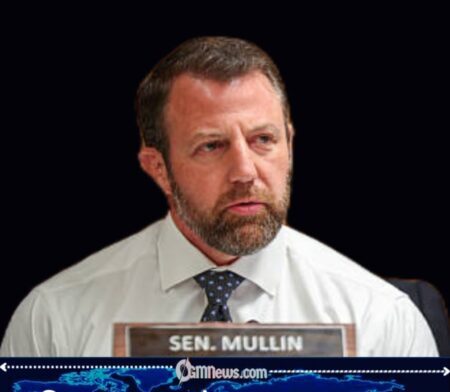
Senator Markwayne Mullin stated that the United States is not formally at war, despite prior statements from government officials describing security operations in wartime terms. Senator Markwayne Mullin emphasized that while military and counterterrorism actions remain intense, they do not meet the constitutional threshold for a declared war.
He clarified that political language should not be confused with the legal definition of armed conflict.
Senator Markwayne Mullin acknowledged that earlier remarks using the word “war” were inaccurate and described them as a misstatement. He explained that security challenges facing the nation are serious but should be addressed within existing defense and legal frameworks. The senator’s clarification seeks to reduce confusion surrounding government rhetoric and ensure public understanding of policy realities.
Senator Markwayne Mullin further noted that modern security threats, including cyberattacks and non-state militant activity, often blur traditional definitions of conflict. However, he maintained that such challenges do not automatically constitute a war under U.S. law. His position aligns with efforts to differentiate between operational security measures and formal wartime conditions.
Political Reactions to War Rhetoric
Senator Markwayne Mullin highlighted that political debate over terminology reflects broader disagreements about national security strategy. He argued that while strong language may emphasize the seriousness of threats, precision in communication remains essential. Mischaracterizing operations as war could have unintended diplomatic and legal consequences.
Senator Markwayne Mullin pointed out that Congress retains constitutional authority over declarations of war, underscoring the importance of legislative oversight. Without such a declaration, military activities continue under established defense policies rather than wartime legal structures. This distinction shapes both domestic governance and international relations.
Senator Markwayne Mullin also acknowledged concerns from constituents who feel threatened by global instability. He stressed that addressing those concerns requires transparent communication and practical policy solutions rather than heightened rhetoric.
Trump Administration’s Security Approach
Senator Markwayne Mullin referenced the security policies of the administration led by President Donald Trump, noting that strong border enforcement and counterterrorism initiatives remain central priorities. He argued that these measures aim to protect national interests without escalating into formal conflict.
Senator Markwayne Mullin observed that the administration’s approach has drawn both support and criticism. Advocates claim it addresses long-standing security vulnerabilities, while opponents worry about the implications of militarized rhetoric. The debate illustrates the complexity of balancing security with diplomatic and legal considerations.
Senator Markwayne Mullin reiterated that operational terminology should reflect practical realities rather than political messaging. He suggested that clear definitions help policymakers and the public evaluate security strategies more effectively.
Defense Leadership and Operational Language
Senator Markwayne Mullin commented on statements by Defense Secretary Pete Hegseth, who previously used wartime language to describe ongoing operations. He noted that such terminology may reflect the intensity of security challenges but should not be interpreted as a formal declaration of war.
Senator Markwayne Mullin argued that defense communications must balance urgency with accuracy. Overstating the scope of conflict could influence public perception and international responses in ways that complicate policy objectives.
Senator Markwayne Mullin maintained that robust defense measures are necessary in an evolving global environment but emphasized the importance of distinguishing between operational security and wartime conditions.
Public and Expert Perspectives
Senator Markwayne Mullin acknowledged mixed public reactions to the debate over terminology. Some citizens support strong language as a reflection of genuine threats, while others advocate for measured communication to avoid unnecessary alarm.
Senator Markwayne Mullin highlighted expert opinions suggesting that transparent and precise messaging strengthens democratic accountability. By clearly defining security operations, officials can foster informed public discourse and maintain trust.
Senator Markwayne Mullin concluded that addressing modern security challenges requires both decisive action and careful communication. Balancing these priorities remains essential for effective governance.
Future Anticipation
Senator Markwayne Mullin reaffirmed that the United States is not formally at war despite heightened security operations and political rhetoric. He emphasized that precise language and adherence to constitutional frameworks are crucial for public understanding and policy effectiveness.
As debates continue, officials and lawmakers must navigate complex security realities while maintaining transparent communication. The distinction between operational intensity and formal war remains a key consideration in shaping national strategy.