Mitch McConnell, Senate Minority Leader, bluntly acknowledged what many critics had long suspected: that Republican-led Medicaid cuts are a calculated political gamble aimed at funding tax breaks for billionaires. “We’re banking on Americans moving past the noise by 2026. The tax reforms are essential,” McConnell reportedly said during a closed-door policy meeting.
The admission, leaked by a GOP staffer, has sparked outrage among healthcare advocates and opposition lawmakers. Critics say McConnell’s comments lay bare the party’s priorities: slashing healthcare for working-class Americans to finance massive tax giveaways for the wealthiest elites.
McConnell Defends Medicaid Cuts as “Necessary Budget Discipline”
Mitch McConnell has attempted to justify the proposed Medicaid cuts as part of a broader effort to “rebalance” the federal budget. “Medicaid spending is ballooning out of control. We must return to fiscal discipline if we’re serious about protecting our economy,” he said on the Senate floor.
Under the Republican proposal, Medicaid would face up to $900 billion in cuts over the next decade, largely through state block grants and eligibility restrictions. McConnell insists the changes will promote “efficiency,” though experts warn they would leave millions of low-income Americans without healthcare.
McConnell Pledges Tax Cuts Will “Supercharge the Economy”
Mitch McConnell has tied the fate of Medicaid to the GOP’s larger tax agenda. “We have an opportunity to make the Trump tax cuts permanent and unleash growth like never before,” he told reporters. The plan would extend and expand provisions of the 2017 Tax Cuts and Jobs Act, costing over $1.3 trillion.
Despite the promises of economic boom, the Congressional Budget Office estimates the wealthiest 1% would receive more than half the benefits. Critics argue the cuts are not just fiscally reckless but morally indefensible, especially when paired with deep reductions to a vital healthcare program.
McConnell Shrugs Off Protests: “We’ve Heard It Before”
Mitch McConnell has dismissed the growing wave of protests across the country, saying, “We’ve seen these kinds of outcries before. Voters have short memories.” His remarks refer to the hundreds of demonstrations sparked by the “#MedicaidSavesOurLives” movement, now active in over 30 states.
Protesters accuse McConnell of cruelty and detachment. In Washington, D.C., demonstrators gathered outside his office holding signs that read “You Cut, We Bleed” and “Hands Off Medicaid.” Still, McConnell remains unmoved, insisting Republicans are simply “cleaning up years of bloated liberal spending.”
McConnell Warns GOP Moderates: “Stand Together or Fall Apart”
Mitch McConnell has issued a stern warning to Republicans expressing discomfort with the cuts. “Now is not the time to fracture. If we want to keep the Senate and take back the House, we need to show unity—not cowardice,” he said in a message reportedly aimed at moderates like Senators Susan Collins and Lisa Murkowski.
Behind the scenes, however, several GOP senators in battleground states have voiced unease. Constituents from rural and working-class areas—many of whom rely on Medicaid—are pushing back fiercely. McConnell’s ironclad stance may be fueling quiet rebellion within the party ranks.
OGMNews.COM
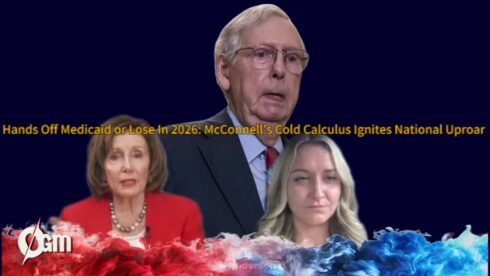
Hands Off Medicaid or Lose in 2026: McConnell’s Cold Calculus Sparks National Uproar

Mitch McConnell has not directly addressed whether President Donald Trump supports the Medicaid cuts, instead stating, “The President’s focus is tax reform. Mine is securing the fiscal future of this nation.” The vague response has raised eyebrows, especially as the White House remains largely silent on the healthcare debate.
Sources close to the administration say Trump is aware of the backlash but sees Medicaid reform as a necessary step to funding broader economic plans. McConnell’s insistence on decoupling the Medicaid discussion from Trump’s leadership suggests internal tensions within the Republican camp.
McConnell Downplays 2026 Election Risks: “They’ll Come Around”
Mitch McConnell has brushed off concerns about political fallout in 2026. “Elections are won on performance, not panic. Once voters see the benefits of our tax reforms, they’ll come around,” he told a closed-door donor briefing in Louisville.
However, early polling in swing districts paints a different picture. A majority of independents and even 34% of Republican voters oppose cuts to Medicaid. Democratic strategists are already crafting attack ads using McConnell’s remarks as ammunition, signaling that healthcare may dominate the next election cycle.
Mitch McConnell Calls Public Testimonies “Dramatic Theater”
Mitch McConnell dismissed the flood of emotional testimonies from Medicaid recipients as “dramatic theater.” In response to stories like that of Danielle Greene—a mother of a child with a life-threatening condition—McConnell said, “Anecdotes don’t make policy. Budgets do.”
His comments have been widely condemned as callous. Activists argue that stories like Danielle’s highlight the human cost of abstract policies. Videos of affected families continue to go viral, undermining McConnell’s narrative and fueling support for Medicaid protections across political lines.
McConnell’s Gamble: Medicaid Cuts vs. Ballot Box Reality
Mitch McConnell is betting that by 2026, Americans will have forgotten the pain of Medicaid cuts and embraced the promise of tax relief. “We’ve survived worse storms,” he told GOP allies. “This too shall pass.”
But for millions who depend on Medicaid for survival, the cuts are not theoretical—they’re existential. As the 2026 midterms approach, McConnell may find that what he dismissed as noise becomes a thunderclap of electoral consequences. The question remains: will voters remember, or will his gamble pay off?