










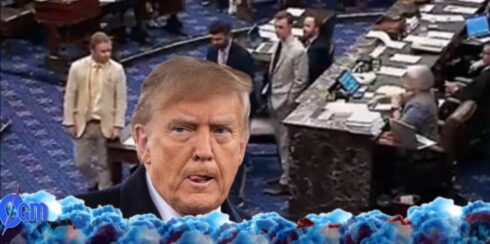
In a dramatic late-night session on Saturday, the U.S. Senate narrowly voted to advance President Trump’s sweeping tax and spending package—widely referred to as the “One Big Beautiful Bill.” The 51–49 vote marked a critical step toward fulfilling a cornerstone promise of Trump’s second-term agenda.
The razor-thin vote came after hours of intense negotiations and uncertainty, with Vice President JD Vance present on Capitol Hill in case his tie-breaking vote was needed—though it ultimately wasn’t. Only two Republicans, Senators Thom Tillis of North Carolina and Rand Paul of Kentucky, defected, citing concerns over the bill’s spending cuts and long-term impact on the national debt.
In a strongly worded statement released Saturday, the White House called failure to pass the bill “the ultimate betrayal,” emphasizing the president Trump’s commitment to delivering on promises made to the American people. Trump himself took to Truth Social, vowing to back primary challengers against Tillis in 2026.
What’s Inside the ‘Big, Beautiful Bill’? Key Provisions Unpacked
The bill is a sprawling 940-page package that fundamentally reshapes federal tax policy and spending priorities. It extends and makes permanent the 2017 Trump-era tax cuts, eliminates taxes on tips and overtime, and temporarily raises the cap on state and local tax (SALT) deductions to $40,000 with inflation adjustments.
On the spending side, the bill pours billions into defense and border security while adding targeted funding for rural health care through modified Medicaid provider taxes. However, it simultaneously proposes significant cuts to social programs, including Medicaid and the Supplemental Nutrition Assistance Program (SNAP), sparking outrage from advocacy groups.
Notably, the legislation includes controversial measures like the sale of 1.2 million acres of federal land and the elimination of several green energy tax credits, a move that has drawn sharp criticism from environmental groups and business leaders alike.
Senate Tensions: How the Vote Played Out
Senate Republicans were visibly fractured in the lead-up to the vote. Majority Leader John Thune admitted Friday that he was uncertain whether he had the votes to advance the bill. Intense last-minute negotiations yielded concessions that brought some holdouts on board, but not all.
Senator Josh Hawley of Missouri, initially a skeptic due to Medicaid cuts, ultimately voted yes after securing assurances that his state would receive increased Medicaid funding through 2030. “Missouri will actually get more Medicaid dollars over the next four years,” Hawley said, although he warned that he would fight to prevent future cuts.
Senators Tillis and Paul held firm in their opposition. Paul cited concerns over the bill’s contribution to the national debt, while Tillis decried cuts to vital social programs. Meanwhile, Senator Ron Johnson of Wisconsin, previously a vocal critic, flipped to support the measure at the last minute, tipping the balance in the GOP’s favor.
OGMNews.COM
Trump’s Massive Tax Cut and Border Spending Bill Clears Key Senate Hurdle

The bill’s steep cuts to Medicaid and SNAP have sparked alarm among Democrats, advocacy organizations, and some moderate Republicans. According to estimates from the Congressional Budget Office (CBO), the package could increase the national debt by between $2.4 trillion and $4.5 trillion over the next decade, depending on economic growth and revenue projections.
Energy sector leaders have also expressed outrage. Tesla CEO Elon Musk labeled the bill “utterly insane and destructive,” arguing that cuts to green energy tax credits could lead to significant job losses and derail clean energy initiatives.
Senate Minority Leader Chuck Schumer condemned the process, calling the bill a “radical, backroom deal.” He announced plans to force a full reading of the bill on the Senate floor to delay final passage and increase public scrutiny.
What Happens Next: A Race to Beat the Clock
The Senate now heads into a marathon debate period, expected to last up to 20 hours, culminating in a so-called “vote-a-rama,” where dozens of amendments could be introduced and voted on in quick succession. A final Senate vote is likely by Monday.
If the bill passes the Senate, it will return to the House, where Republicans narrowly passed an earlier version in May. Any significant changes made in the Senate could jeopardize its chances in the House, where the margin for error remains razor-thin.
President Trump has pressed Congress to deliver the bill to his desk by July 4, framing it as a patriotic achievement that honors his campaign mantra of “promises made, promises kept.”
A Defining Test for Trump’s Presidency and GOP Unity
The fate of the “One Big Beautiful Bill” now hangs in the balance, with immense implications for the American economy, social safety nets, and the 2025 political landscape. The bill encapsulates Trump’s governing philosophy: tax relief, deregulation, tough border enforcement, and a rollback of what he calls “bloated welfare programs.”
But it also reveals the deep fissures within the Republican Party—between fiscal hawks alarmed by rising deficits and populist conservatives prioritizing border security and tax cuts.
As the Fourth of July deadline approaches, the nation watches closely. Whether this ambitious bill becomes law could shape not only Trump’s presidency but the direction of the country for years to come.


