










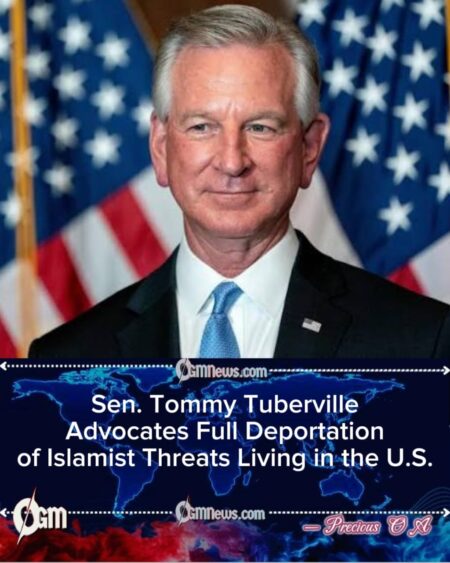
Sen. Tommy Tuberville, Republican senator from Alabama, has drawn national attention for proposing a comprehensive and immediate ban on all migrants from Islamic-majority countries. The senator emphasized that the policy would also call for deporting individuals identified as Islamist threats who may be living in the United States with the intent to carry out attacks against American citizens or interests. His statements, delivered during a widely covered press briefing, have already sparked intense debate among lawmakers, advocacy groups, and the general public, bringing immigration policy and national security into the national spotlight in a particularly dramatic way.
Sen. Tommy described the proposed ban as a necessary action to safeguard American communities, framing it as a step designed to prevent potential terrorist attacks while reinforcing the integrity of the nation’s immigration and border security systems. He argued that current processes for vetting migrants are insufficient to identify potential security risks, and that extraordinary measures are required to protect U.S. citizens from individuals who may harbor violent intentions. According to Tuberville, swift enforcement of such a policy would ensure that communities remain secure without compromising lawful immigration processes for low-risk migrants.
Sen. Tommy also stressed that while the measure targets high-risk individuals, it does not aim to punish ordinary migrants who come to the United States seeking work, education, or refuge from conflict. He explained that the proposed policy is designed to carefully differentiate between genuine threats and those who have no connection to extremist activity, asserting that intelligence agencies would play a key role in ensuring precision and fairness in the process.
Reactions from Lawmakers
Sen. Tommy Tuberville’s proposal has prompted immediate reactions from lawmakers across the political spectrum. Democratic leaders criticized the plan, describing it as discriminatory and unconstitutional, and warning that targeting migrants based solely on religion or national origin could violate fundamental civil liberties. They also stressed that the measure could undermine the United States’ longstanding commitments to international refugee and human rights agreements, raising ethical and diplomatic concerns.
Republican reactions have been mixed. While some GOP lawmakers praised Tuberville for taking a strong stance on national security, others expressed caution, noting that such a sweeping ban could be politically fraught and legally complicated to implement. Some emphasized that immigration policy must balance the need to protect American citizens with obligations to uphold fairness, equality, and humanitarian principles.
Sen. Tommy defended his position, arguing that extraordinary circumstances require decisive action, particularly when credible intelligence suggests that threats could originate from certain regions. He suggested that temporary enforcement measures could be enacted while Congress and federal agencies review and strengthen broader immigration protocols to prevent potential security lapses.
Legal and Constitutional Considerations
Sen. Tommy Tuberville’s proposal raises complex legal questions, particularly regarding the constitutionality of enacting a policy that explicitly targets individuals based on religion. Legal scholars warn that such measures are likely to face immediate court challenges, potentially blocking enforcement and delaying implementation until courts can rule on their legality.
Sen. Tommy addressed these concerns, asserting that national security considerations provide a legitimate rationale for exceptional enforcement actions. He cited historical precedents in which the federal government has exercised discretion in immigration matters to protect public safety, emphasizing that the proposed measures are intended to address imminent threats while remaining within the bounds of federal authority.
Sen. Tommy further noted that intelligence and law enforcement agencies would be essential in differentiating between ordinary migrants and individuals who pose credible security risks. He emphasized that the goal is not to broadly target all migrants from specific countries, but to prevent potential attacks from organized extremist actors actively seeking to harm the United States.
Community and Humanitarian Impact
Sen. Tommy Tuberville’s proposal has sparked concern among Muslim communities, immigrant advocacy groups, and civil rights organizations. Many leaders warn that implementing such a policy could foster fear, stigma, and social tension, potentially undermining community trust and cooperation with law enforcement, while creating unnecessary division in neighborhoods across the country.
Sen. Tommy responded by clarifying that the proposal’s focus is on protecting public safety and national security, rather than discriminating against individuals based on faith. He stressed the importance of distinguishing between law-abiding migrants who contribute to American society and extremists who pose a clear threat, and he called for intelligence-led approaches to ensure enforcement is targeted and precise.
Sen. Tommy also suggested that additional resources be allocated to help integrate lawful migrants effectively, while simultaneously ensuring that federal authorities have the capacity to monitor high-risk individuals. He emphasized that community cooperation with law enforcement, combined with rigorous intelligence and vetting procedures, would be essential in implementing the policy responsibly and safely.
Political Implications and Public Opinion
Sen. Tommy Tuberville’s proposal has quickly become a focal point for national political discourse, dominating discussions in media outlets and among constituents. Public opinion is likely to vary regionally, reflecting differences in political affiliation, personal priorities, and perspectives on immigration and national security.
Sen. Tommy highlighted that public support for stronger security measures tends to increase when credible threats are clearly communicated, and he said he intends to engage with communities, lawmakers, and the press to explain the rationale behind his policy proposal. He also indicated that congressional hearings could serve as a forum for debating practical implementation, legal constraints, and potential humanitarian impacts.
Sen. Tommy emphasized that, although controversial, the proposal is intended to stimulate dialogue on the intersection of immigration policy, counterterrorism, and civil liberties, while providing lawmakers with an opportunity to develop legislation that balances safety, fairness, and adherence to legal standards.
International Response and Considerations
Sen. Tommy Tuberville’s announcement has attracted international attention, with foreign governments and human rights organizations expressing concern over the potential diplomatic and humanitarian implications. Some critics argue that the policy could damage relationships with U.S. allies and tarnish the nation’s reputation as a safe haven for migrants and refugees.
Sen. Tommy countered that national security must take precedence, noting that the United States has a responsibility to protect its citizens from credible threats, even if the measure generates political pushback internationally. He stressed that the policy would target extremists, not legitimate refugees or asylum seekers, and that careful vetting would be essential to maintain fairness.
Sen. Tommy also emphasized that ongoing communication with international partners would help mitigate diplomatic friction, while allowing the United States to pursue policies aimed at safeguarding domestic security and addressing credible intelligence regarding potential threats.
Implementation and Enforcement Challenges
Sen. Tommy Tuberville acknowledged that executing a full ban and deportation policy would be logistically complex. He suggested that agencies such as the Department of Homeland Security, Immigration and Customs Enforcement, and intelligence services would require expanded resources to identify high-risk individuals, process deportations, and ensure the integrity of enforcement operations.
Sen. Tommy highlighted the need for phased enforcement, thorough record-keeping, and detailed coordination among federal, state, and local authorities. He argued that such preparation would reduce errors and legal complications, while maximizing the effectiveness of the proposed policy.
Sen. Tommy stressed the importance of community engagement, explaining that local leaders, law enforcement, and advocacy organizations would play a vital role in facilitating compliance and maintaining public trust, especially in areas with large Muslim populations.
Looking Ahead
Sen. Tommy Tuberville concluded by reiterating that his proposal is intended to safeguard American citizens, asserting that discussions in Congress, federal agencies, and the courts would ultimately shape its practical implementation. He anticipates that legal reviews, public debate, and community feedback will refine the approach while maintaining the primary objective of protecting national security.
Advocates, lawmakers, and affected communities continue to prepare for potential policy shifts, exploring legal remedies, civil rights protections, and support networks for those impacted. The debate over Tuberville’s proposal is expected to remain a central point of discussion in national politics, immigration law, and public discourse for months to come.


