










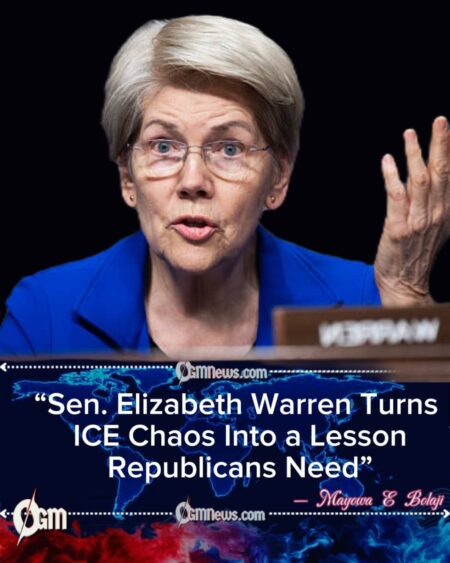
Senator Elizabeth Warren sharply criticized Republican lawmakers for their lack of response to what she and other critics describe as “ICE brutality” in Minneapolis, Minnesota — citing a series of federal agent‑involved shootings and aggressive immigration enforcement actions that have sparked protests and political outrage. Warren asserted that Republicans’ silence amid repeated use of force by U.S. Immigration and Customs Enforcement (ICE) reveals a failure of leadership at a time of deep community distress.
Triggering the Storm: Federal Shootings in Minneapolis
The flashpoint for the current controversy was a fatal shooting on January 24, 2026, when a 37‑year‑old U.S. citizen, identified as Alex Pretti, was shot and killed during a federal immigration enforcement operation in Minneapolis. Video footage circulated online and reports from local officials raised questions about the necessity and proportionality of the force used by federal agents.
This incident was the third involving federal officers in the city within a short span of weeks and came on the heels of the January 7 death of Renée Nicole Good, another U.S. citizen killed by an ICE agent earlier in the month. These events have intensified scrutiny of ICE’s tactics under the Trump administration’s expanded enforcement push.
Local officials said tensions have further escalated due to aggressive federal operations that have at times involved pepper spray, tear gas, and reported confrontations with civilians attempting to document enforcement actions.
Warren’s Critique: A Call for Accountability and Action
Sen. Elizabeth Warren publicly denounced the Minnesota shootings as “horrific,” contending that federal agents had “shot and killed another person” and blaming congressional Republicans for permitting continued funding of what she called violent enforcement operations.
Warren explicitly urged Republicans to use their influence in Congress to halt funding for ICE until meaningful restraints and accountability measures are enacted. In her view, mere expressions of concern are insufficient; legal and oversight mechanisms must be put in place to prevent what she characterizes as unchecked federal force against communities.
Her remarks reflect broader Democratic demands for a congressional investigation into the federal operations and stronger legislative oversight of immigration enforcement practices on U.S. soil.
Congressional Silence and GOP Response
Despite the national attention surrounding the Minneapolis incidents, many Republican lawmakers have been notably reserved in their criticism of ICE tactics or the Trump administration’s role in expanding enforcement. This silence has drawn sharp rebukes from Warren and other Democrats, who argue that inaction equates to complicity.
GOP leaders have instead emphasized the importance of upholding existing federal immigration laws and defended ICE’s presence as necessary to enforce national policy — while calling on state and local officials to support cooperation and de‑escalation.
Some Republican voices in Minnesota have urged calm, describing confrontations as counterproductive and stressing the need for respectful dialogue rather than escalation.
Nevertheless, critics argue that such statements fall short of acknowledging the seriousness of the concerns raised by protesters and local leaders about federal enforcement tactics.
Protests and Public Reaction Across the U.S.
The Minneapolis events have ignited protests not only in Minnesota but also in cities nationwide, with demonstrators decrying what they view as excessive use of force by ICE and other federal agents.
Thousands marched in downtown Minneapolis and in solidarity events across major urban centers, calling for accountability, immigration policy reform, and broader public awareness of federal enforcement practices.
Families of victims and community groups have held vigils and rallies, demanding transparent investigations and justice for those killed. Many participants emphasized peaceful protest as a vehicle for change while expressing deep frustration with the perceived lack of federal accountability.
State and Local Government Responses
Minnesota officials, including Governor Tim Walz and state legislators, have condemned the federal actions and appealed for an end to the violence. Some have called on ICE and similar agencies to withdraw from the state altogether to restore public safety and trust.
In parallel, Minnesota Republican leaders called for cooperation and dialogue, urging de‑escalation and constructive engagement between federal, state, and local authorities.
These divergent responses highlight the sharp political divide over immigration enforcement, community safety, and the appropriate scope of federal authority in local jurisdictions.
The Broader National Debate on Immigration Enforcement
The Minneapolis incidents have become emblematic of wider national debates over immigration enforcement and civil liberties. Advocates for reform argue that federal agencies like ICE require clearer accountability, oversight, and perhaps restructuring to prioritize community safety and constitutional protections.
Critics of these calls counter that robust enforcement of immigration laws, including the removal of undocumented individuals, is essential to national security and border integrity — and that federal authority should not be undermined by localized resistance.
Within Congress, discussions have emerged about tying homeland security funding to oversight mandates or limiting ICE’s operational scope, though such measures face significant political hurdles.
Political and Legal Implications
As national attention remains focused on Minneapolis, lawmakers and legal experts anticipate continued debate over federal enforcement practices and congressional oversight. Investigations into the shootings and federal operations may unfold in the coming weeks, potentially influencing future immigration policy and funding decisions.
For Sen. Warren and like‑minded lawmakers, the current moment is seen as a pivotal opportunity to press for reform and preventive safeguards — a test of whether Congress will act decisively or remain divided along partisan lines.
Conversely, Republican leaders are likely to defend current enforcement strategies while positioning state and local collaboration as essential to maintaining order and public trust.
The ongoing discourse underscores the complex intersection of immigration policy, federal authority, civil unrest, and partisan politics shaping the national landscape in 2026 and beyond.


