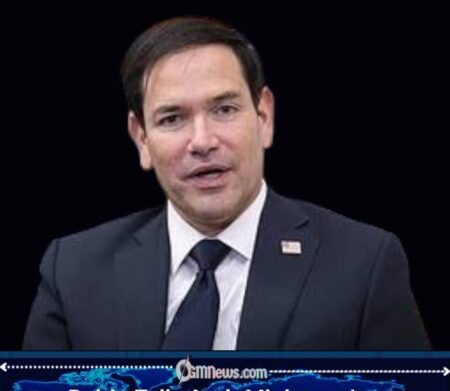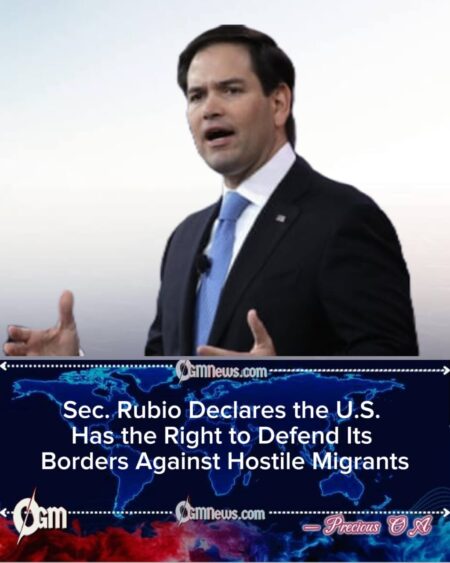
Sec. Marco Rubio emphasized that the United States has the inherent right to secure its borders and prevent hostile migrants from entering the country. He stated that maintaining strict border control is not only a matter of law but also essential for national security, public safety, and economic stability. The senator highlighted that unchecked migration could lead to security threats, strain public resources, and impact communities across the nation.
Sec. Marco Rubio also criticized policies he described as overly lenient toward illegal border crossings, noting that such approaches incentivize further violations of U.S. immigration laws. He called for stronger enforcement measures, citing the need for thorough vetting of migrants to ensure they do not pose risks to American citizens. According to Rubio, a secure border benefits not only law enforcement but also the broader economy by preventing exploitation of public services.
Sec. Marco Rubio concluded that securing the border aligns with the will of the American people, who consistently favor measures to control migration and uphold legal immigration processes. He argued that leadership requires decisive action to protect citizens while balancing humanitarian responsibilities for those seeking legitimate asylum.
The Humanitarian Angle on Immigration
Sec. Rubio acknowledged that migration involves complex human factors, including refugees fleeing violence and persecution. He stressed that the U.S. must differentiate between genuine asylum seekers and those exploiting loopholes to enter illegally. Rubio emphasized that proper vetting ensures aid reaches those truly in need while safeguarding American communities from potential harm.
Sec. Marco Rubio pointed out that humanitarian programs should complement border security, not replace it. By maintaining strong enforcement while offering legal pathways for asylum, he believes the U.S. can uphold its moral obligations without compromising safety. Rubio further highlighted international partnerships as a way to assist vulnerable populations abroad, reducing pressures on the U.S. border.
Sec. Marco Rubio insisted that balancing security with compassion demonstrates responsible governance. He argued that prioritizing lawful entry channels allows America to assist genuine refugees while discouraging exploitation of its borders by hostile actors.
Economic Implications of Border Security
Sec. Marco Rubio stressed that uncontrolled migration could burden federal and state resources, including healthcare, education, and housing systems. He noted that taxpayers ultimately fund these services, and unchecked migration increases strain on local communities. Rubio emphasized that maintaining strict border measures protects economic stability while ensuring resources are allocated efficiently.
Sec. Marco Rubio also argued that legal immigration benefits the economy by providing skilled workers and entrepreneurs. By enforcing existing laws and preventing unauthorized entry, he said the U.S. can maintain a system that rewards merit and reduces potential exploitation. Rubio suggested that secure borders encourage sustainable growth without overwhelming public infrastructure.
Sec. Rubio concluded that responsible immigration policies not only protect citizens but also preserve economic prosperity. He stressed that illegal entry undermines fairness in the labor market and can depress wages for American workers in affected areas.
National Security Concerns
Sec. Marco Rubio warned that hostile actors could exploit porous borders to infiltrate the U.S., posing serious security threats. He highlighted past incidents where individuals with criminal or extremist ties entered illegally, emphasizing the need for vigilant enforcement. According to Rubio, strong border control is a critical component of national defense and counterterrorism efforts.
Sec. Rubio also noted that modern threats extend beyond physical security, including cyber and transnational criminal networks. He argued that border enforcement agencies must be adequately funded and trained to respond effectively to evolving dangers. Rubio stressed that protecting American citizens requires both proactive and reactive measures.
Sec. Rubio urged lawmakers to support legislation that strengthens border security, arguing that delays or weak policies leave the nation vulnerable. He emphasized that public safety and national defense must take precedence in immigration policy decisions.
Public Support and Political Will
Sec. Rubio cited polling data showing widespread support among Americans for stronger border enforcement. He argued that political leaders have a duty to reflect the electorate’s priorities by implementing effective immigration policies. Rubio suggested that bipartisan consensus is possible if the focus remains on national security and public welfare.
Sec. Marco Rubio stressed that public opinion matters because border security affects every community. From urban centers to rural towns, Americans feel the direct consequences of immigration policy, making it a critical issue for elected officials to address responsibly. Rubio urged his colleagues in Congress to take decisive action rather than deferring solutions.
Sec. Rubio also highlighted the role of governors and state officials in supporting federal enforcement. He said that coordination between state and federal authorities enhances efficiency and ensures consistent application of laws across all regions.
The Path Forward
Sec. Rubio outlined a roadmap for comprehensive immigration reform that balances security, legality, and humanitarian concerns. He emphasized that lawful pathways for migrants must exist alongside strict enforcement measures to prevent exploitation and protect American citizens. Rubio proposed enhanced technology, staffing, and international collaboration to ensure effective border management.
Sec. Rubio further encouraged Congress to modernize immigration laws, closing loopholes that allow unlawful entry. He stated that reform should prioritize merit-based systems while discouraging illegal migration that threatens safety and resources. Rubio concluded that a combination of legislative action, executive enforcement, and community cooperation is essential to safeguard the nation.
Sec. Marco Rubio stressed that securing borders is not a partisan issue but a fundamental responsibility of government. He called on lawmakers and citizens alike to recognize the urgency of the matter, advocating for policies that uphold the rule of law and protect the American people.