








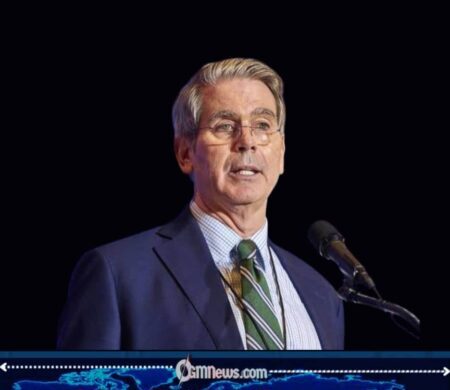
U.S. Treasury Secretary Scott Bessent has called on corporate leaders and philanthropists to invest in what he described as America’s greatest asset its youth through a proposed national savings initiative known as “Trump Accounts.” Speaking at the Economic Club of Dallas, Bessent emphasized that the program aims to provide every eligible child born during President Donald Trump’s second term with $1,000 in seed funding tied to the long-term growth of the U.S. economy.
The proposal, framed as a public-private partnership, seeks to combine federal investment with voluntary contributions from businesses, families, and philanthropic organizations. Supporters argue the initiative could expand financial opportunity and encourage long-term savings, while critics question its equity and implementation.
How the ‘Trump Accounts’ Program Would Work
Under the proposal, eligible children born between 2025 and 2028 would receive a federally funded $1,000 deposit into investment accounts designed to grow over time. The funds would be invested in diversified market instruments and held until the child reaches adulthood.
Account holders could access the funds at age 18 for approved uses such as higher education, purchasing a home, or launching a small business. Additional contributions from parents, employers, and philanthropic donors would be permitted, subject to annual limits and tax-advantaged treatment similar to existing education savings plans.
Bessent’s Appeal to the Private Sector
At the Dallas forum, Scott Bessent urged business leaders to integrate contributions into employee benefit programs, arguing that corporate participation could significantly expand the initiative’s reach. He framed youth investment as both an economic and civic responsibility.
Several major financial institutions and corporations have reportedly explored ways to support the program, including matching contributions or offering payroll-deduction options. Scott Bessent described such partnerships as essential to ensuring that the accounts become a transformative tool rather than a symbolic policy.
Philanthropic Support and Major Pledges
Large-scale philanthropic backing has emerged as a cornerstone of the proposal. High-profile donors have pledged billions of dollars to supplement federal funding and extend benefits to children in underserved communities.
These contributions aim to provide additional deposits for low-income families and expand financial literacy programs. Scott Bessent has praised these commitments as evidence that public-private collaboration can address long-standing wealth disparities while strengthening social mobility.
Economic Rationale: Building Wealth from Birth
Supporters argue that early-life investment accounts can help reduce wealth inequality by ensuring that every child begins adulthood with a financial foundation. Research cited by policymakers suggests that asset ownership in childhood correlates with higher educational attainment and long-term earnings.
Scott Bessent has emphasized that tying accounts to market growth aligns individual prosperity with national economic performance. Proponents believe this structure could foster a culture of saving and investment while strengthening public confidence in the broader economy.
Criticism and Policy Concerns
Despite bipartisan interest, critics warn that the initiative may not sufficiently address structural inequality. Some policy analysts argue that without automatic enrollment and targeted support, vulnerable families may face barriers to participation.
Others contend that the program’s benefits could be limited if implemented alongside reductions in social services. While Scott Bessent maintains that the accounts complement — rather than replace — existing programs, debate continues over their potential impact on low-income households.
Political and Policy Context
The proposal forms part of a broader economic agenda focused on domestic investment, long-term savings, and workforce development. By encouraging private-sector participation, the administration aims to create a sustainable funding model that extends beyond federal appropriations.
For President Donald Trump, the initiative represents a signature domestic policy tied to his second-term economic vision. Scott Bessent has positioned the accounts as a generational investment that could shape the nation’s economic trajectory for decades.
Conclusion
The “Trump Accounts” proposal reflects an ambitious effort to link public funding, private investment, and philanthropic support in service of long-term wealth building. As Scott Bessent continues to rally corporate and philanthropic backing, the initiative has sparked a national conversation about how best to invest in future generations.
Whether the program ultimately fulfills its promise will depend on implementation, participation, and sustained support from both the public and private sectors.