









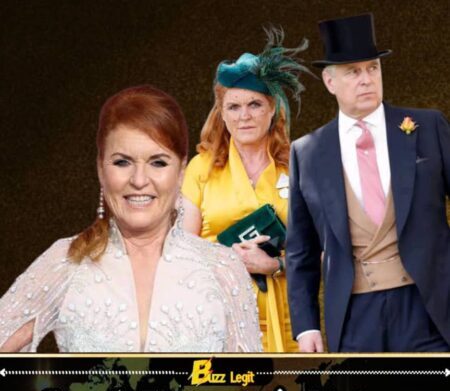
Sarah Ferguson is reportedly staying with friends after losing access to her long-time royal residence amid the continued fallout surrounding Prince Andrew and his past association with Jeffrey Epstein. The Duchess of York is said to be navigating a period of transition following shifts in royal housing arrangements that have left her without a permanent base traditionally linked to her former royal standing.
While Ferguson and Andrew divorced in the 1990s, they have long maintained an unusually close relationship and continued to share living arrangements for years. However, the broader consequences of Andrew’s public controversies appear to have impacted not only his own royal privileges but also the housing stability that Ferguson previously enjoyed. The situation highlights how royal residency is often tied to official roles, patronages, and institutional standing.
Sources familiar with the matter suggest Ferguson’s current living arrangement is temporary, describing her as relying on close personal connections while longer-term solutions are considered. Although the term “homeless” has been used in some commentary, it does not indicate financial hardship but rather the absence of a designated royal property under her name.
The Royal Housing Shift
Sarah Ferguson has historically resided at properties connected to the Duke of York, including shared estates that remained part of the royal portfolio even after her divorce. Royal residences are typically allocated based on status, seniority, and official duties, rather than personal ownership. As institutional roles evolve, housing arrangements can shift accordingly.
In recent years, scrutiny surrounding Prince Andrew intensified due to his association with Jeffrey Epstein, leading to the withdrawal of certain public responsibilities and privileges. Although Ferguson was not implicated in the controversies, the ripple effects appear to have influenced living arrangements connected to Andrew’s former standing within the monarchy.
Royal observers note that housing within the monarchy is often symbolic as well as practical. Residency at a specific estate can signal institutional endorsement and continued integration within the working structure of the royal family. When such arrangements change, it often reflects broader recalibrations taking place behind palace walls.
A Personal Transition
Sarah Ferguson has maintained a public presence through charity work, publishing, and media engagements, positioning herself as an independent figure despite her former royal title. Her current living situation underscores the distinction between personal brand and institutional affiliation. While she continues to hold the Duchess of York title, she is no longer classified as a working royal, which may influence access to official accommodations.
Friends and associates describe Ferguson as resilient and socially well-connected, suggesting that temporary stays with trusted companions reflect practicality rather than crisis. In high-profile social circles, such arrangements are not uncommon during periods of relocation or reassessment. Nevertheless, the narrative has drawn public curiosity because of the perceived contrast between royal association and housing uncertainty.
The episode illustrates how reputational fallout can extend beyond the central figure of controversy. Even indirect associations may carry structural consequences within tightly organized institutions like the monarchy, where roles, privileges, and living arrangements are closely intertwined.
Broader Context Within the Monarchy
The monarchy has undergone visible transformation in recent years, with adjustments in titles, funding, and property allocations reflecting evolving expectations of transparency and accountability. Prince Andrew’s diminished public role marked a significant turning point, influencing how royal resources are distributed and justified.
For Ferguson, the shift highlights her unique position: connected to the royal family through history and children, yet operating largely independently of its official framework. Housing transitions can therefore become emblematic of that hybrid status — neither fully integrated nor entirely separate.
As public interest continues, Ferguson’s next steps may clarify whether she seeks a permanent private residence or negotiates a renewed arrangement tied to family connections. In the meantime, her situation serves as a reminder that even those once firmly embedded in royal life can experience abrupt structural change when institutional dynamics evolve.