





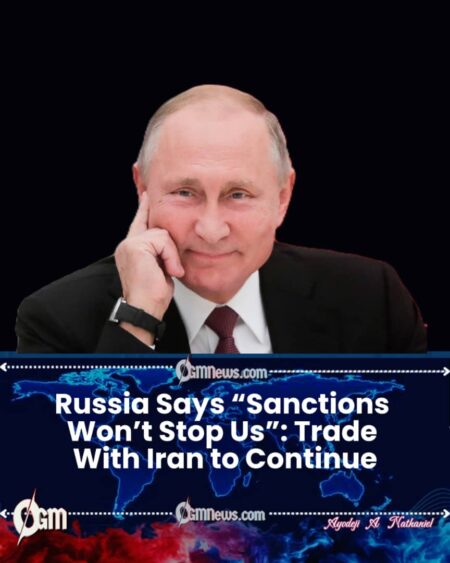
Russia has announced that it will maintain commercial and economic relations with Iran despite warnings from the United States that such engagement could trigger sanctions. The statement underscores Moscow’s determination to pursue what it describes as sovereign economic policy choices, even as geopolitical tensions with Washington continue to intensify.
The declaration comes amid heightened U.S. efforts to pressure countries to limit trade with Iran through sanctions and tariff threats. Russia’s response highlights a broader shift in global economic relations, as major powers increasingly resist U.S.-led restrictions and seek alternative partnerships.
Russia’s Official Position on Trade With Iran
Russian officials said Moscow sees no legal or strategic reason to halt its commercial activities with Iran. According to statements from senior diplomats, Russia intends to conduct trade and cooperation based on its national interests rather than external pressure.
The Kremlin has emphasized that its engagement with Iran complies with international law and bilateral agreements. Officials argue that unilateral sanctions imposed or threatened by the United States lack universal legitimacy and should not dictate Russia’s economic behavior.
This stance reflects Russia’s broader policy of challenging what it views as the extraterritorial reach of U.S. sanctions.
Scope of Russia–Iran Economic Cooperation
Commercial ties between Russia and Iran span multiple sectors, including energy, infrastructure, agriculture, transportation, and defense-related cooperation. In recent years, both countries have expanded trade mechanisms designed to bypass financial restrictions and reduce reliance on Western-controlled systems.
Analysts note that shared experiences under Western sanctions have pushed Moscow and Tehran to deepen coordination. Joint projects and barter-style trade arrangements have become increasingly important in sustaining economic activity between the two countries.
Russia has framed this cooperation as part of a long-term strategic partnership rather than a short-term response to sanctions pressure.
U.S. Sanctions Threats and Strategic Pressure
The United States has repeatedly warned that countries doing business with Iran could face punitive measures, including tariffs and financial restrictions. Under President Donald Trump, the current U.S. president serving a second term, Washington has relied heavily on sanctions as a central tool of foreign policy.
U.S. officials argue that economic pressure is necessary to curb Iran’s regional influence and nuclear ambitions. However, critics of the strategy say sanctions have encouraged alternative economic blocs and reduced U.S. leverage over time.
Russia’s decision to continue trade with Iran directly challenges Washington’s approach and may complicate efforts to isolate Tehran economically.
Global Pushback Against Unilateral Sanctions
Russia’s position reflects a wider trend of resistance to U.S.-led sanctions among major non-Western economies. Countries such as China and others in the Global South have increasingly questioned the fairness and effectiveness of unilateral economic restrictions.
Diplomats and economists say this pushback is contributing to a more fragmented global trade environment. Instead of compliance, some states are developing parallel financial systems and regional trade frameworks to reduce exposure to sanctions risk.
This evolution is reshaping international commerce and weakening the traditional dominance of Western-led economic institutions.
Geopolitical and Economic Implications
For Russia, maintaining trade with Iran strengthens strategic alignment and reinforces its narrative of economic sovereignty. For Iran, continued cooperation with Russia provides critical economic relief and diplomatic support amid ongoing sanctions.
The standoff also signals growing polarization in global politics, where economic decisions are increasingly intertwined with security and geopolitical calculations. Experts warn that such divisions could deepen instability and complicate international coordination on issues ranging from energy markets to regional security.
At the same time, the situation highlights the limits of sanctions as a policy tool when major powers are willing to absorb costs to protect strategic relationships.
Outlook for International Trade Relations
Observers say Russia’s stance may encourage other countries to reassess their exposure to U.S. sanctions pressure. If more states choose resistance over compliance, the effectiveness of sanctions as a deterrent could diminish further.
While U.S.–Russi relations remain strained, Moscow has indicated it will continue pursuing diversified economic partnerships. As global power balances shift, the dispute over Russi–Iran trade may serve as a test case for how far sanctions can shape behavior in an increasingly multipolar world.