

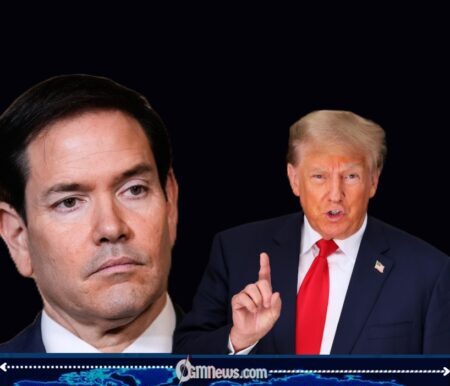
U.S. Secretary of State Marco Rubio has sought to clarify comments regarding the circumstances that led to recent U.S. military action against Iran, following remarks by Donald Trump, the current U.S. president serving a second term, who said he “might have” pressured Israel to initiate strikes.
Rubio, speaking to reporters on Capitol Hill ahead of a closed-door Senate briefing on Iran, stated that his earlier remarks had been misconstrued. He rejected suggestions that Israel forced the United States into preemptive military action, insisting that the administration’s decision was based on its own assessment of national security threats.
The episode has triggered debate in Washington and beyond, highlighting tensions over the origins of the four-day conflict and the strategic considerations behind the U.S.-Israel coalition’s actions against Iran.
Rubio Rejects Claims of External Pressure
Addressing journalists on Tuesday, Rubio said media coverage had selectively edited his prior comments, giving the impression that Israel’s planned military action compelled the United States to strike Iran first. He described the portrayal as a “bad clipping job,” urging reporters to air his full remarks rather than excerpts.
According to Rubio, the administration’s decision was rooted in longstanding concerns about Iran’s ballistic missile capabilities and its capacity to conduct retaliatory attacks. He emphasized that President Trump had determined Iran would not be allowed to “hide behind” its missile program or threaten American forces in the region.
Rubio maintained that his position had been consistent: the United States acted to mitigate what it considered a direct and escalating risk to its personnel and interests.
Earlier Remarks Spark Controversy
The clarification followed statements Rubio made a day earlier, when he acknowledged that U.S. officials anticipated Israeli military action against Iran. He indicated that such action could have prompted retaliatory strikes on American forces, increasing the risk of casualties if the United States did not act preemptively.
Those remarks were widely interpreted as suggesting that Israel’s plans influenced Washington’s timing. Lawmakers from both parties reacted swiftly, with some arguing that the explanation raised concerns about whether the United States had been drawn into a broader conflict.
Rubio’s revised framing underscores the sensitivity surrounding the rationale for military engagement and the importance of precise language in public briefings.
President Trump Denies Israeli Influence
President Trump firmly denied that Israel pushed the United States into war. Speaking to reporters, he said he may have “forced their hand,” implying that Washington encouraged Israeli action rather than the reverse.
The president’s statement appeared to counter narratives that Israel’s military planning had compelled U.S. involvement. Administration officials, including White House Press Secretary Karoline Leavitt, echoed that message on social media, asserting that Rubio’s remarks had been mischaracterized.
The administration has consistently argued that the strikes were necessary to neutralize threats and protect American personnel stationed in the region.
Political Reactions Across Party Lines
Democratic Representative Sarah Jacobs criticized the administration’s approach, calling the conflict an “unnecessary war of choice.” She argued that there was no imminent threat to the United States and contended that diplomatic alternatives should have been pursued.
Meanwhile, former Republican congresswoman Marjorie Taylor Greene, speaking to commentator Megyn Kelly, questioned whether the strikes aligned with the “America First” doctrine. Greene suggested that U.S. foreign policy should prioritize domestic interests over those of allies.
The bipartisan criticism reflects broader unease within Congress over the speed and scope of the military response, as well as concerns about long-term regional implications.
The Scope and Impact of the Conflict
The four-day conflict has involved thousands of coordinated U.S. and Israeli strikes within Iran. On the first day of the offensive, coalition forces reportedly killed Iran’s longtime leader, Ayatollah Ali Khamenei, along with approximately 40 senior military and political officials.
The strikes targeted strategic military infrastructure, missile sites, and command centers. Administration officials have described the campaign as limited in duration but decisive in intent, aimed at degrading Iran’s capacity to launch further attacks.
Regional observers continue to monitor potential reprisals and the broader geopolitical fallout, as diplomatic channels remain strained.
Media Narratives and Public Messaging
The dispute over Rubio’s remarks underscores the challenges of wartime communication in a polarized political climate. Administration officials have emphasized the importance of full context in reporting, while critics argue that initial statements carry significant weight in shaping public understanding.
The White House has sought to reinforce a unified message: that the decision to strike was deliberate, calculated, and driven by U.S. security priorities rather than external pressure. At the same time, lawmakers are expected to press for further briefings and transparency regarding intelligence assessments and strategic planning.
As debates continue, the episode illustrates the delicate balance between alliance coordination and national autonomy in foreign policy decision-making.