
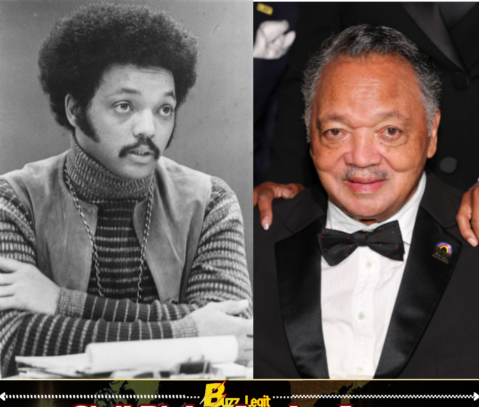
The Rev. Jesse Jackson, the veteran civil rights activist, Baptist minister and two-time presidential candidate, has died at the age of 84, his family confirmed Tuesday. He died peacefully surrounded by loved ones, according to a family statement. A cause of death was not immediately disclosed.
“Our father was a servant leader — not only to our family, but to the oppressed, the voiceless, and the overlooked around the world,” the Jackson family said, describing a man whose life became intertwined with the global struggle for justice and equality.
From King’s Protégé to National Figure
Jesse Jackson rose to national prominence in the 1960s as a close associate of Martin Luther King Jr.. He was in Memphis in April 1968 when King was assassinated — a moment that profoundly shaped his trajectory. In the years that followed, Jackson sought to carry forward King’s economic justice agenda.
Through Operation PUSH (People United to Save Humanity) and later the Rainbow Coalition, Jackson pushed for corporate diversity, minority business development, and expanded voter registration. Major outlets, including The New York Times and The Washington Post, frequently described him as one of the most visible heirs to King’s movement — though one who charted his own independent and sometimes controversial path.
Historic Presidential Campaigns
Jesse Jackson twice sought the Democratic presidential nomination, in 1984 and 1988. His 1988 campaign marked a political breakthrough: he won 11 primaries and caucuses and finished second in the delegate count, according to reporting from Reuters and NBC News.
Political analysts have long argued that his campaigns reshaped Democratic politics by broadening minority participation and energizing grassroots organizing. Observers often credit Jackson with helping lay groundwork for the eventual election of Barack Obama, whose 2008 victory many saw as building on foundations Jackson helped construct.
International Diplomacy and Human Rights Advocacy
Beyond U.S. politics, Rev. Jesse Jackson frequently stepped into global crises. According to BBC News and the Associated Press, he helped negotiate the release of American hostages in countries including Syria and Cuba, often serving as an unofficial diplomat.
He was also an outspoken opponent of apartheid in South Africa, pressing for sanctions and divestment during the 1980s. His activism consistently linked racial justice at home with human rights struggles abroad, framing them as interconnected battles for dignity and fairness.
Later Years and Health Challenges
In 2017, Jesse Jackson announced he had been diagnosed with Parkinson’s disease, a condition widely covered by national media. In subsequent years, his public appearances became less frequent, though he remained active in mentoring younger activists and speaking out on voting rights and criminal justice reform.
Despite health setbacks, Jackson continued to attend key civil rights commemorations and political events, underscoring his enduring symbolic presence within the movement he helped shape.
Tributes From Across the Nation
Civil rights leader Al Sharpton called Jackson “one of our nation’s greatest moral voices,” praising a man who “stood wherever dignity was under attack.”
Political leaders, clergy, and advocacy organizations described Jesse Jackson as a bridge-builder who moved between protest marches, corporate boardrooms and diplomatic negotiations with uncommon ease. His ability to command national attention — whether rallying crowds or addressing conventions — defined much of late 20th-century civil rights activism.
A Legacy That Endures
Rev. Jackson’s influence stretched across generations, from the marches of the 1960s to modern voter mobilization campaigns. His family urged supporters to honor his memory by continuing the fight for justice, equality and opportunity.
For many Americans, Jesse Jackson’s life symbolized both the unfinished work of the civil rights era and the persistent hope that organized activism can bend institutions toward fairness. His voice — at once pastoral and political — helped shape debates on race, poverty and democracy for more than half a century.