








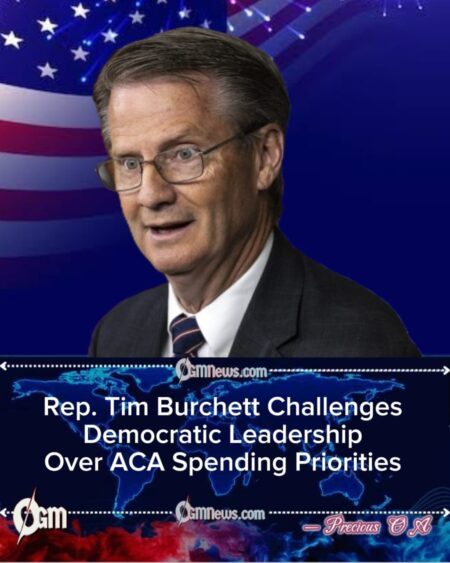
Rep. Tim Burchett, a Tennessee Republican known for his outspoken positions on fiscal responsibility, government transparency, and his consistently direct manner of communicating with constituents, delivered a forceful and highly elaborate critique of the Affordable Care Act. He described the ACA as a system that has become financially inefficient over time and increasingly disconnected from the practical and day-to-day needs of working Americans. Burchett argued that the administrative structure surrounding the law has expanded far beyond its initial intent, creating a labyrinth of procedures and oversight mechanisms that divert attention from true patient care.
Burchett stated that the ACA has evolved into a politically driven framework rather than a healthcare program built to improve access and affordability. According to him, its operation has taken on a character shaped more by political motivations and institutional interests than by the concerns of families trying to secure dependable medical coverage. He claimed this shift has eroded public confidence, making many Americans feel distant from the system designed to support them.
He further emphasized that the ACA’s financial design encourages multiple layers of administrative oversight, each consuming funds that he believes should be reaching patients directly. Burchett noted that these operational burdens slow care delivery, fuel rising premiums, and ultimately complicate the process for individuals attempting to navigate the system. In his view, the ACA has become a mechanism that benefits bureaucratic structures at the expense of regular citizens.
Support for President Trump’s Health-Care Reform Effort
Burchett expressed unwavering support for President Donald Trump, who is currently serving a second term, and his administration’s effort to redirect healthcare funds directly to individual citizens. He described the president’s proposal as a strategic restructuring intended to cut through unnecessary federal intermediaries and put money directly into the hands of the people who need it most. Burchett emphasized that this approach aligns closely with long-standing conservative principles centered on smaller government and increased individual autonomy.
He noted that President Trump’s plan prioritizes transparency and seeks to reduce bureaucratic spending across federal healthcare systems. According to Burchett, this reform aims to simplify how citizens access health benefits by eliminating complex administrative pathways that often slow the process. He argued that a direct-to-citizen model removes roadblocks and ensures that taxpayers gain clearer visibility into the allocation of federal healthcare dollars.
The congressman stated that the administration’s broader reform agenda reflects an ongoing governmental project aimed at decentralizing federal programs. Burchett believes this shift will build public trust, enhance accountability, and foster more durable long-term healthcare outcomes. He argued that when the federal government removes unnecessary layers of oversight, the system becomes more responsive, more transparent, and more able to deliver real value to everyday Americans.
Democratic Response to Burchett’s Remarks
Democratic lawmakers responded forcefully, defending the Affordable Care Act as a foundational element of national healthcare expansion. They argued that the ACA has helped millions obtain affordable insurance coverage and has served as a vital safeguard for vulnerable groups. Democrats asserted that the ACA remains an essential piece of national policy architecture and should be improved and strengthened rather than replaced.
Several Democratic policymakers rejected Burchett’s claims about administrative costs, arguing that they do not represent the primary reason for rising healthcare expenses. Instead, they pointed to increasing pharmaceutical prices, hospital billing practices, and market-driven cost fluctuations as more significant contributors. Democratic lawmakers insisted that reform should focus on these structural drivers rather than dismantling the ACA’s protections.
Democrats also warned that shifting federal healthcare funds directly to individuals could produce coverage instability, especially for those who rely on regulated markets to protect them from sudden price changes. They expressed concern that removing certain federal regulations would leave people navigating insurance systems without the safeguards that have kept coverage predictable and accessible.
Public Reaction and Political Polarization
Burchett’s remarks ignited widespread public discussion and intensified ongoing political divisions surrounding healthcare reform. Conservative groups praised his stance, arguing that his analysis reflects long-standing frustrations with federal inefficiency and the burdensome nature of the ACA. Members of these groups described his criticism as an overdue acknowledgment of systemic flaws that have affected families for more than a decade.
Progressive organizations, however, criticized Burchett’s comments as part of a broader effort to weaken a program that has provided protections and peace of mind to millions of Americans. They argued that dismantling or altering the ACA without thorough safeguards could expose families to harsh market pressures. These groups expressed deep concern that rapid reform could harm low-income households and those with chronic medical needs.
Political analysts noted that the renewed debate underscores the intensity of the national divide on healthcare policy. The discussion reflects widespread public frustration over rising medical costs, insurance complexities, and the lack of bipartisan agreement on solutions. Analysts stated that both parties face increasing pressure to articulate clear and detailed plans that address affordability and access.
Legislative Implications Moving Forward
Experts predict that the revived debate will significantly affect upcoming legislative negotiations in Congress. The sharp policy divide between Republicans and Democrats is likely to create obstacles for any substantial healthcare reform package. As healthcare remains one of the nation’s most sensitive and politically charged issues, progress may be gradual and highly contested.
Lawmakers aligned with Burchett and President Trump have signaled that healthcare restructuring will remain at the forefront of their legislative priorities. They plan to introduce proposals emphasizing cost transparency, personal choice, and direct financial empowerment. Conservative lawmakers argue that shrinking federal oversight will produce a more efficient system that better serves the public.
Democratic leaders, meanwhile, intend to defend the ACA’s structure while championing targeted reforms designed to lower costs and strengthen essential benefits. They maintain that bipartisan cooperation is possible only if Republican proposals do not threaten foundational protections such as coverage for pre-existing conditions.
The Broader National Conversation on Healthcare
The dispute has broadened national discussions about the appropriate balance between federal oversight and individual control in healthcare. Citizens across various communities have demanded clearer explanations from lawmakers about how reforms will affect their families, especially regarding long-term cost stability and medical access.
Healthcare professionals have also entered the conversation, advocating for reforms that reduce administrative burdens but maintain support for essential services. Many providers emphasize that predictable funding structures are crucial for maintaining continuity of care, supporting medical staff, and improving patient outcomes.
Economists studying both proposals have warned that large-scale reforms could create substantial long-term financial effects. They stressed that any significant shift in federal policy must be carefully designed to avoid insurance market disruptions, coverage gaps, or unexpected burdens on state systems.