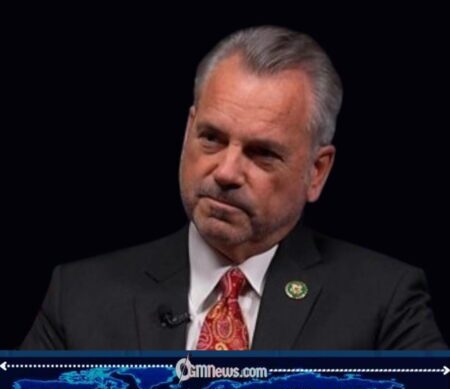






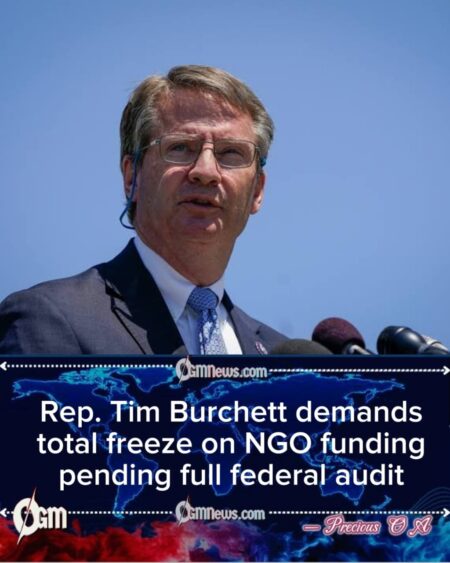
Rep. Tim Burchett issued a forceful appeal to President Trump demanding the immediate suspension of all federal funding to nongovernmental organizations, insisting that a comprehensive accounting system must be established before any additional dollars are released. He argued that the current flow of money is simply too vast and too loosely monitored to continue without a thorough overhaul, stressing that halting the funding temporarily is the only meaningful way to compel a deeper investigation into where taxpayer dollars are ultimately ending up.
Tim Burchett emphasized that the financial magnitude of these grants has grown far beyond what taxpayers can track, arguing that unchecked spending in the NGO sector creates an environment where inefficiency and misuse can flourish without consequence. He described the existing system as a sprawling maze of financial conduits, layered administrative structures, and ambiguous reporting chains that often leave both Congress and the public unsure of how funds are being distributed on the ground.
Tim Burchett insisted that the American public deserves a clearer understanding of how billions in humanitarian, development, and international aid programs are being allocated, noting that every dollar requires justification, oversight, and full transparency. He contended that without such clarity, the federal government risks perpetuating a cycle of questionable spending that ultimately diminishes public trust and weakens the very programs it seeks to support.
CONCERNS ABOUT ACCOUNTABILITY AND OVERSIGHT
Tim Burchett raised questions regarding the extensive network of organizations receiving government funds, pointing out that many of them operate with minimal federal supervision, complicated reporting structures, and little to no real-time auditing. He stressed that these issues, while long acknowledged, have been allowed to persist due to inertia, bureaucratic barriers, and a reluctance to disrupt politically sensitive aid programs.
Tim Burchett expressed worry that the current funding architecture allows money to flow through multiple layers of subcontractors, making it nearly impossible to determine where funds ultimately end up or whether the intended beneficiaries ever receive assistance. He added that this multilayered structure creates ample opportunities for administrative padding, inflated operational costs, and even misappropriation that becomes harder to trace as funds disperse across continents.
Other lawmakers signaled that the existing gaps in accountability have persisted for years, with some warning that without stricter review mechanisms, future administrations risk repeating the same cycle of poorly documented expenditures. They emphasized that Congress is growing increasingly frustrated with recurring audit failures and incomplete financial disclosures that leave oversight bodies with more questions than answers.
POLITICAL REACTION AND EMERGING TENSIONS
Tim Burchett highlighted that his demand was not merely a partisan maneuver but a bipartisan concern rooted in the long-standing frustration with the murky financial practices of large nonprofit entities that operate across continents. He argued that fiscal responsibility should transcend party lines, especially when public funds are at stake and the potential for waste is so significant.
Republican allies voiced strong approval for the proposed suspension, framing it as a practical step toward restoring fiscal responsibility and strengthening congressional authority over appropriations. They described the call for accountability as a corrective measure long overdue, asserting that taxpayers deserve a funding system that operates with precision and openness.
Democratic members, while agreeing on the necessity for oversight, cautioned that cutting funds abruptly could destabilize ongoing humanitarian efforts in regions already facing severe crises. They urged the administration to consider a more gradual approach that preserves operational stability while still enforcing stricter controls.
NGO SECTOR RESPONSE AND PUBLIC PERCEPTION
Leaders within the NGO community argued that an immediate and total funding freeze could jeopardize critical programs such as refugee assistance, global health support, agricultural development, and emergency disaster relief. They warned that sudden disruptions could leave vulnerable populations without essential services, exacerbating crises that rely heavily on steady international support.
Some organizations expressed concern that the proposal paints the entire sector in a negative light, asserting that many reputable groups maintain rigorous auditing systems and adhere to strict ethical standards. They pointed out that while problems do exist, sweeping suspensions risk punishing organizations that operate transparently and efficiently.
Analysts noted that the debate has created heightened public attention, with supporters of reform calling for tighter controls, while critics fear that vulnerable populations could bear the brunt of a sweeping federal decision. They emphasized that the complexity of NGO operations makes the issue particularly sensitive, requiring a balanced approach that addresses financial concerns without undermining humanitarian missions.
TIM BURCHETT IMPACT ON INTERNATIONAL RELATIONS AND DIPLOMACY
Tim Burchett warned that U.S. geopolitical interests may be undermined when funds are misallocated, arguing that foreign aid must function as a strategic tool rather than an unmonitored cash pipeline. He stressed that aid programs often serve as critical components of diplomatic engagement, stabilizing volatile regions and fostering cooperation with partner nations.
Foreign policy observers explained that many allied nations rely heavily on U.S.-supported NGO operations for stabilization, reconstruction, and governance projects, meaning any disruption would have far-reaching diplomatic consequences. They warned that adversarial nations could exploit any perceived retreat as an opportunity to expand their own influence.
The possibility of sudden funding interruptions has already prompted questions among international partners who depend on predictable American involvement in regional development efforts. Diplomats indicated that uncertainty surrounding U.S. commitments may strain long-standing relationships and create new challenges in crisis-prone regions.
TIM BURCHETT FUTURE LEGISLATIVE STEPS AND WHITE HOUSE DECISION
Tim Burchett prepared additional documentation for the administration outlining proposed mechanisms for tracking NGO expenditures, including real-time reporting platforms, independent financial audits, and stricter eligibility requirements for receiving federal grants. He argued that only a structured and technologically updated system can restore accountability at the scale necessary for modern aid programs.
White House officials have not yet announced whether President Trump will adopt the recommendation, though advisers indicated that the proposal aligns with broader efforts to reassess federal spending priorities. They suggested that the administration is evaluating the political, diplomatic, and logistical implications of the proposal before making any formal announcement.
Congressional committees are now reviewing potential legislative pathways to impose new restrictions, signaling that the debate over NGO funding transparency is likely to intensify throughout the coming months. Lawmakers expect extensive hearings, detailed budget analyses, and possibly bipartisan reform packages aimed at reshaping how federal funds are distributed to global organizations.