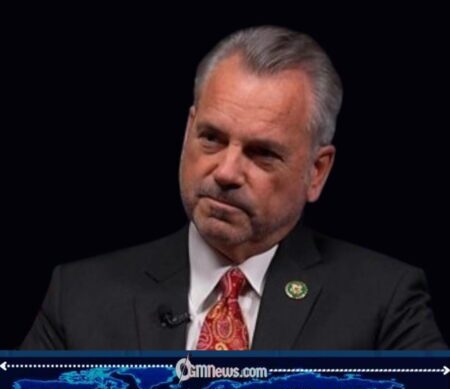
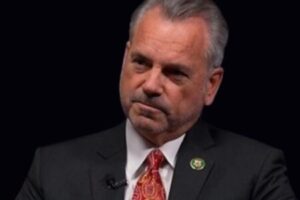



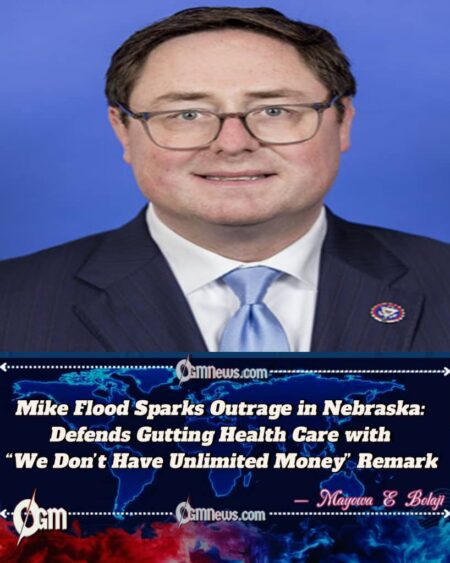
Mike Flood, Republican Representative of Nebraska’s 1st Congressional District, faced a blistering backlash during a town hall meeting in Norfolk, where voters rained boos after he defended slashing SNAP and health care benefits. His now-infamous response—“We do not have unlimited money in the United States”—has sparked a regional uproar and national media storm.
Mike Flood’s constituents, many of them working-class Nebraskans reliant on food assistance and Medicaid, expressed deep frustration at what they see as a betrayal of trust and abandonment of rural American families.
Public Outcry: Norfolk Town Hall Spirals into Protest
Mike Flood entered the Norfolk Community Center expecting a routine exchange with constituents, but the atmosphere turned sharply hostile when the topic of social program cuts was raised. His attempt to justify his vote to reduce SNAP and health care benefits triggered immediate boos and interruptions from the crowd.
Mike Flood, facing chants of “Shame!” and “Vote him out!” struggled to regain control of the room. Multiple attendees stood up to share personal stories of hardship, calling his remarks “cold,” “detached,” and “cruel.” The event quickly descended into a high-tension standoff between an embattled lawmaker and a disillusioned electorate.
Flood’s Defense: Fiscal Conservatism or Political Suicide?
Mike Flood insisted that budget constraints made the cuts necessary, saying, “We do not have unlimited money in the United States,” a statement that has since gone viral. He argued that reducing dependence on federal programs is a long-term strategy for economic growth and national stability.
Mike Flood’s remarks, however, have been criticized by policy experts and humanitarian advocates, who argue that the deficit narrative often masks regressive policy decisions. Many accuse him of pushing austerity politics while supporting tax breaks and defense spending increases that disproportionately benefit the wealthy.
Rural Realities: The Hidden Cost of GOP Cuts
Mike Flood’s policies have landed hardest in rural areas like his own district, where residents rely heavily on safety net programs. Data from the Nebraska Department of Health and Human Services shows that over 20% of households in some counties depend on SNAP or Medicaid.
Mike Flood is now being accused of ignoring the economic fragility of rural life. Local health workers and food bank coordinators report a sharp rise in demand since the policy changes, with some warning that these cuts are driving families deeper into poverty rather than toward self-sufficiency.
Viral Backlash: Flood’s Remarks Spark National Firestorm
Mike Flood’s town hall moment was captured on several smartphones and quickly spread across social media, trending under hashtags like #FloodFailsNebraska and #SNAPBackNow. Millions watched as the congressman was booed off stage by his own constituents.
Mike Flood became the face of what critics call “Republican cruelty” in the digital sphere. Influential Democrats, activists, and even some moderate conservatives have seized on the moment to amplify concerns about the GOP’s war on the poor.
Republican Double Standards: Wealth for the Rich, Cuts for the Poor
Mike Flood has been sharply criticized for what many see as a double standard: voting to cut assistance for the poor while approving massive tax breaks for the wealthy and expanding military expenditures. His critics call this economic injustice in its most blatant form.
Mike Flood’s defenders argue he is simply aligning with Republican fiscal priorities, but that argument is losing traction among voters. Local residents question why “tough choices” always seem to fall hardest on those with the least power.
Democratic Strategy: Turning Anger into Electoral Action
Mike Flood has inadvertently galvanized Nebraska Democrats, who are using the backlash to build momentum for the 2026 midterms. Several grassroots groups have launched targeted campaigns to unseat him, capitalizing on public outrage.
Mike Flood may now find himself the top Democratic target in a district once considered a GOP stronghold. With new campaign ads already circulating that replay his town hall remarks, opponents are positioning him as the symbol of Republican betrayal.
Trump’s Silence: Strategic Distance or Tactical Patience?
Mike Flood has yet to receive public comment or support from President Donald J. Trump, who remains influential in determining the future of GOP candidates. Trump’s silence is raising eyebrows, with insiders speculating whether the president is distancing himself from the controversy.
Mike Flood, a loyal Trump supporter in the past, may now be left politically exposed. Without Trump’s endorsement, he risks losing the MAGA base—a critical bloc in a state that helped propel Trump to a second term.
Grassroots Revolt: Nebraskans Organize for Change
Mike Flood has unintentionally sparked a movement. Across towns and counties in eastern Nebraska, community coalitions are forming to push back against what they see as moral failure in leadership. Faith leaders, educators, and health workers have joined the effort.
Mike Flood now faces protests outside his offices and growing pressure from within his own party. Voter registration drives and civic action events are drawing record participation, with many attendees citing the town hall as their wake-up call.
Flood’s Future: Can Trust Be Rebuilt Before 2026?
Mike Flood’s political future is uncertain. While he continues to defend his votes, polling data shows a significant dip in his approval ratings among independents and even some Republicans. With trust eroding, Flood may struggle to maintain his seat unless he takes decisive action to repair the damage.
Mike Flood has released a follow-up statement claiming his comments were misunderstood and pledging to “listen more closely to Nebraskans.” Whether that’s enough remains to be seen, as calls for his resignation and replacement grow louder by the day. Mike Flood’s town hall debacle has exposed the deep disconnect between Washington’s political calculus and the lived realities of everyday Americans. What began as a policy defense has morphed into a public reckoning, with rural voters demanding answers and accountability.
Mike Flood’s name may now serve as a cautionary tale for lawmakers underestimating the impact of policy on people’s lives. As 2026 looms, the message from Nebraska is clear: cut our food, our health, and our trust—and we will cut you out at the ballot box.