


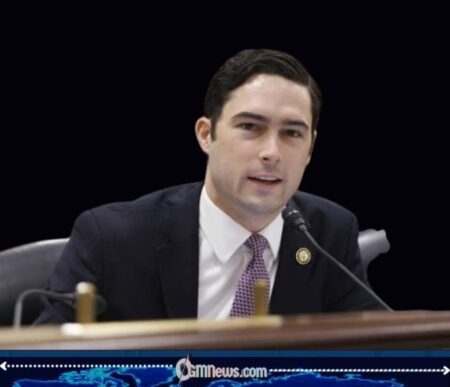
Rep. Brandon Gill demanded what he described as a “100% total ban” on Islamic immigration into the United States, igniting immediate debate across political and civil rights circles. The congressman framed his proposal as a national security measure, arguing that stricter controls are necessary to protect American citizens.
Rep. Brandon Gill stated that the policy would focus on religion as a determining factor in immigration eligibility, a position that critics quickly labeled unconstitutional and discriminatory. His remarks were delivered during a public forum where immigration and border security were key topics of discussion.
Rep. Brandon Gill’s proposal echoes previous controversial calls for sweeping immigration restrictions, though legal experts note that implementing a religion-based ban would face significant constitutional challenges.
Political Fallout and Public Reaction
Rep. Brandon Gill’s comments sparked strong reactions from both sides of the political aisle. Supporters praised what they see as a firm stance on national security, while opponents argued the proposal undermines American values of religious freedom.
Civil rights organizations were quick to condemn the suggestion, warning that policies targeting individuals based on faith would violate fundamental protections enshrined in the Constitution. Legal scholars emphasized that the First Amendment prohibits government discrimination based on religion.
Rep. Brandon Gill defended his remarks, asserting that extraordinary measures are justified in what he characterized as an era of heightened global threats.
Rep. Brandon Gill and the Constitutional Debate
Rep. Brandon Gill’s demand has reignited discussions about the limits of executive and legislative power in shaping immigration policy. While Congress holds authority over immigration laws, those laws must comply with constitutional guarantees.
Critics argue that a blanket ban on individuals of a particular religion would likely be struck down by federal courts. Previous legal battles over immigration restrictions have demonstrated the judiciary’s role in reviewing executive actions.
Rep. Brandon Gill maintained that his proposal is about safeguarding the country rather than targeting individuals unfairly, though he did not outline specific legal pathways for implementation.
National Security Versus Religious Freedom
Rep. Brandon Gill framed the issue as a matter of prioritizing safety, suggesting that religious affiliation could serve as a proxy for identifying potential risks. National security experts, however, note that security screenings typically focus on behavior and intelligence assessments rather than faith.
Advocates for religious liberty counter that equating an entire religion with security threats perpetuates harmful stereotypes and undermines social cohesion. They argue that such policies risk alienating communities whose cooperation is vital to counterterrorism efforts.
Rep. Brandon Gill responded to criticism by reiterating his belief that immigration controls must evolve to address modern security challenges.
Historical Context and Policy Precedents
Rep. Brandon Gill’s proposal recalls past debates over travel bans and immigration restrictions based on nationality, which have faced intense scrutiny in courts and public opinion. Legal precedents suggest that overtly religion-based policies would encounter even steeper legal hurdles.
Historians note that the United States has previously grappled with exclusionary policies targeting specific ethnic or religious groups, many of which were later viewed as inconsistent with constitutional principles.
Rep. Brandon Gill acknowledged the controversy surrounding his stance but insisted that he believes voters are demanding stronger measures on immigration.
What Comes Next
Rep. Brandon Gill indicated that he intends to introduce legislation reflecting his proposal, though it remains unclear whether such a measure would gain sufficient support in Congress. Political analysts suggest the idea may face resistance even within his own party.
The broader debate is likely to continue, touching on questions of constitutional interpretation, national identity, and the balance between security and civil liberties. Advocacy groups on both sides are preparing for what could become a prolonged legal and political battle.
Rep. Brandon Gill concluded by emphasizing that his priority is protecting American citizens, while critics argue that the strength of the nation lies in its commitment to religious freedom and equal protection under the law.