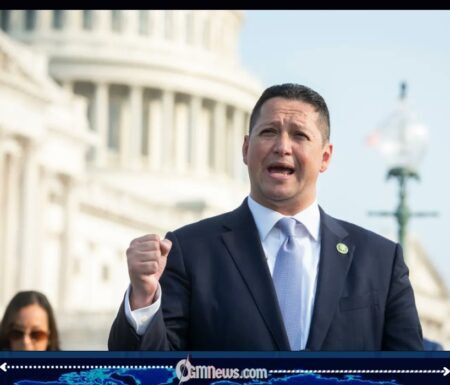



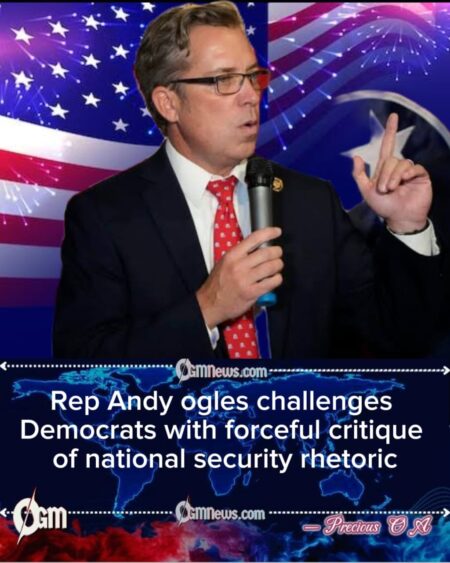
Rep Andy ogles issued sharply worded criticisms during a recent public exchange, drawing widespread attention for comments in which he accused political opponents of minimizing threats to public safety. In the remarks, he forcefully challenged Democratic statements regarding the role and responsibilities of the Department of Homeland Security. His comments sparked intense reactions across political circles, with analysts noting the confrontational tone.
Andy ogles emphasized that his remarks were intended to highlight his concerns about national security and border enforcement. He argued that policymakers should examine the operational challenges facing federal agencies rather than dismissing them. The congressman maintained that his statements reflected broader anxieties within his constituency.
Andy ogles later clarified that his comments were directed at specific arguments made during the debate rather than at any demographic group. He stated that his intention was to draw attention to unresolved policy disagreements that have shaped congressional discussions on immigration, border protocols, and public safety.
Reactions Across Capitol Hill
Andy ogles prompted swift responses from both party caucuses as lawmakers weighed in on the tone and substance of his statements. Some Democratic officials described his comments as inflammatory, arguing that they portrayed complex policy issues too narrowly. They expressed concern over rhetoric that could heighten political polarization.
Andy ogles received support from several Republican colleagues who praised his willingness to speak forcefully on issues of border management, migrant processing, and federal agency oversight. These allies said his remarks reflected the frustrations of voters who believe that existing policies are insufficient. Supporters highlighted the congressman’s long-standing involvement in discussions surrounding immigration enforcement.
Other lawmakers sought to redirect the debate toward policy specifics rather than rhetoric. They argued that focusing on measurable outcomes, such as processing efficiency, security screening, and humanitarian standards, would better serve the legislative process. Members from both parties urged a more detailed examination of federal agency functions.
Debate Over DHS Authority
Andy ogles continued raising questions regarding the operational scope of the Department of Homeland Security, describing the agency’s challenges as central to national debates. He insisted that congressional oversight must remain strict and transparent. His comments drew interest from policy analysts studying the evolution of DHS authority since its inception.
Some legislators argued that criticisms of the department should distinguish between structural issues and political grievances. They emphasized that DHS responsibilities extend across border security, cybersecurity, emergency response, and counterterrorism efforts. Analysts warned that generalizations could obscure the complexities of federal enforcement mechanisms.
Andy ogles maintained that policymakers must prioritize accountability whenever allegations of mismanagement or inefficiency surface. He reiterated that robust oversight is essential for public trust and operational clarity. His assertions added further fuel to ongoing debates about long-term reform of federal enforcement agencies.
Public Response and Media Framing
Media outlets across the country reported extensively on the exchange, offering varied interpretations of the congressman’s remarks. Some highlighted the confrontational phrasing, while others focused on the policy disputes underlying the exchange. Commentators noted that the discussion amplified broader anxieties about immigration and federal authority.
Andy ogles became a focal point of cable news panels, many of which dissected the rhetorical and political implications of his comments. Analysts examined the motivations behind his messaging strategy and evaluated how it resonated with different voter groups. They also assessed its likely impact on upcoming legislative debates.
Advocacy groups reacted strongly, with statements calling for careful language when addressing immigration-related topics. These organizations urged elected officials to acknowledge the complexity of immigrant communities and avoid rhetoric that could reinforce stereotypes or foster fear. They also encouraged bipartisan engagement on reforms.
Policy Implications Moving Forward
Andy ogles argued that policy outcomes must take precedence over political disputes, asserting that the central issue remains public safety and administrative efficiency. He insisted that debates should focus on measurable reforms rather than partisan framing. His office indicated that he plans to introduce further oversight proposals.
Specialists in migration law stated that linguistic precision is crucial in shaping public understanding of border issues. They emphasized that mischaracterizing vulnerable groups or oversimplifying trends can hinder productive policymaking. Experts encouraged lawmakers to rely on verified data when debating enforcement strategies.
Andy ogles reaffirmed his belief that federal agencies require stronger congressional direction to address emerging challenges. He cited ongoing concerns related to resource allocation, system capacity, and cross-agency coordination. His position underscored persistent disagreements over the best approach to restructuring federal oversight.
Broader Context of Immigration Policy Debate
Immigration scholars explained that the broader national debate is shaped by longstanding tensions between enforcement priorities and humanitarian responsibilities. They noted that abrupt rhetorical escalations often obscure the underlying policy frameworks. Analysts recommended sustained discussion to reconcile political differences.
Andy ogles continued to argue that constituents expect transparency regarding enforcement actions and migrant processing procedures. He emphasized that public trust depends on visible improvements and clearly articulated goals. His office stated that he will continue elevating these issues in future hearings.
Civil society leaders urged lawmakers to promote responsible public discourse, particularly when addressing vulnerable populations. They argued that constructive debate is necessary to foster ethical policy frameworks. Calls for bipartisan cooperation grew louder as the controversy surrounding recent remarks continued to circulate.