










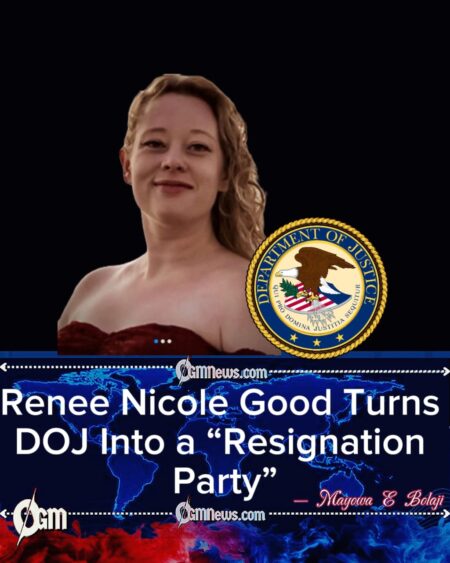
The fatal shooting of Renee Nicole Good by a U.S. Immigration and Customs Enforcement (ICE) agent in Minneapolis has escalated into a significant legal and political controversy, culminating in the resignation of multiple career federal prosecutors from the U.S. Attorney’s Office in Minnesota. The resignations, tied to disagreements over how the investigation is being conducted and whether family members of Good should be investigated, have highlighted deepening tensions between state authorities and the Justice Department under President Donald Trump’s second term.
The Death of Renee Nicole Good and Immediate Aftermath
On January 7, 2026, 37-year-old Renee Nicole Good, a U.S. citizen and mother of three, was shot and killed by an ICE agent identified in court records as Jonathan Ross during a federal enforcement operation in Minneapolis. Video footage from the incident shows Good inside her vehicle when the shots were fired, prompting widespread shock and prompt public reaction.
Good had recently moved to Minnesota with her family and was described by loved ones as a compassionate and devoted mother. Her death occurred shortly after dropping her young child at school, and footage of the encounter has been shared widely, raising questions about the actions of the federal officer and drawing national attention.
Career Prosecutors Resign Over Investigation Strategy
On January 13, several veteran federal prosecutors in the District of Minnesota resigned in protest. Among them was First Assistant U.S. Attorney Joseph H. Thompson, who had led significant fraud and public corruption prosecutions in the district. According to reports, Thompson and his colleagues objected to Justice Department pressure to investigate Good’s widow and the decision to limit participation by state investigators in determining the lawfulness of the shooting.
Thompson’s resignation, along with those of Harry Jacobs, Melinda Williams, Thomas Calhoun-Lopez and others, represents a rare and striking rebuke of departmental leadership. Critics say the departures signal growing frustration among career lawyers over perceived political influence in prosecutorial decisions.
Federal and State Investigative Disputes
The FBI has taken primary control of the investigation into Renee Nicole Good’s shooting, removing the Minnesota Bureau of Criminal Apprehension (BCA) from access to evidence, witnesses and key case materials. State officials have voiced concern that this exclusion hampers a thorough and transparent investigation.
Minnesota Governor Tim Walz and other state leaders have criticized the federal approach, arguing that cooperation with local authorities is essential to public trust. Walz has publicly urged for full inclusion of state and local investigators to ensure fairness and accountability.
Justice Department and Civil Rights Division Tensions
The Justice Department’s Civil Rights Division, traditionally responsible for investigating alleged misuse of force by law enforcement officers, did not open a civil rights case in the shooting of Renee Nicole Good. This departure from established practice has led to resignations among senior civil rights prosecutors in Washington as well, who objected to the administration’s refusal to investigate the officer’s actions.
Assistant Attorney General for Civil Rights Harmeet Dhillon, who oversees the division, reportedly opted not to pursue the investigation, a decision that has drawn sharp criticism from legal experts and civil rights advocates.
Political and Public Reaction
The case has quickly become a focal point of political debate. Officials aligned with the federal government have defended the ICE agent’s actions, with Homeland Security leadership characterizing the incident as self-defense, despite conflicting interpretations of body and cellphone footage.
Conversely, state and local authorities, including Minneapolis Mayor Jacob Frey, have called for transparency and accountability, asserting that federal officials have been premature in their narrative and insufficiently open with evidence. Protests and demonstrations have spread within Minnesota and across the country, reflecting broader public concern and emotional investment in the case.
Impact on Justice and Community Trust
The resignations of career prosecutors have stirred debate about prosecutorial independence and the influence of political priorities in federal justice work. Legal commentators warn that sidelining experienced prosecutors and excluding state partners could undermine confidence in both investigative outcomes and the rule of law.
Meanwhile, the family of Renee Nicole Good continues to mourn her loss and has called for meaningful reform, urging that the tragedy not be overshadowed by political division. Tens of thousands of Americans have engaged in public discourse, reflecting deep societal concerns over accountability, federal authority and justice system transparency.
Future Projections
As investigations progress and scrutiny deepens, the case of Renee Nicole Good is likely to remain a central issue in discussions over federal law enforcement, prosecutorial autonomy and civil rights protections. The tension between state and federal authorities, coupled with unprecedented resignations, underscores the complex challenges facing the justice system in high-profile officer-involved fatal shootings.


