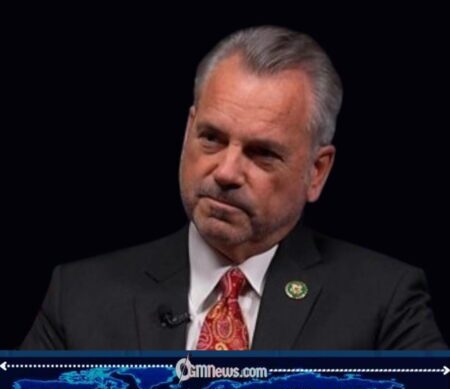
Rep. Jamie Raskin (D-MD) launched a fierce attack on eight Senate Republicans who reportedly inserted a controversial provision into legislation that would compensate them with millions of dollars for having their phone records subpoenaed during the House January 6 investigation. The Maryland Democrat, known for his sharp constitutional arguments, co-sponsored an amendment with Rep. Teresa Leger Fernández (D-NM) to strike down what he called a “blatantly corrupt” measure.
“This million-dollar jackpot provision,” Raskin declared on the House floor, “is one of the most blatantly corrupt provisions for political self-dealing and plunder of public resources ever proposed in the United States Congress.” His remarks came as the House debated whether to include or reject Section 213 — a clause that would authorize government funds to reimburse certain senators for legal and administrative expenses arising from the January 6 inquiry.
The controversy centers on the claim that several Republican senators, whose communications were subpoenaed as part of the congressional probe into the Capitol attack, are now seeking taxpayer reimbursement for what Raskin called “their own entanglement in a historic investigation into threats to democracy.”
Raskin Draws Historical Parallels, Warns of ‘Corruption on the Path of Caesar’
Raskin, known for his academic background in constitutional law, framed the issue as not just a matter of ethics but of democratic integrity. In an impassioned address, he likened the self-enrichment attempt to the moral decay of ancient Rome.
“It was said that the Roman Senate was so corrupt, so drenched in bribery and private self-enrichment, that the senators were actually as corrupt as Julius Caesar,” Raskin said. “I don’t know if the Republicans in the Senate today are as corrupt as Donald Trump, but they’re on the path and they’re right behind him.”
By invoking this historical analogy, Raskin underscored what he described as a dangerous precedent — the normalization of personal enrichment within legislative processes. Critics of the proposed payout argue that it would effectively reward members of Congress for being subjects of legitimate oversight, potentially undermining accountability. Supporters, however, contend that the subpoenas were politically motivated and financially burdensome, warranting compensation.
Raskin’s Amendment Aims to Restore Public Trust Amid Growing Tensions
With the political climate already charged under President Donald Trump’s second term, Raskin’s amendment has become a flashpoint in the broader debate over ethics and transparency in government. The amendment, co-authored with Rep. Leger Fernández, seeks to delete the disputed section entirely and reaffirm Congress’s commitment to fiscal responsibility and public integrity.
“The American people deserve a Congress that serves them, not one that pays itself for being held accountable,” Raskin concluded. His motion has garnered widespread attention from ethics watchdogs and civic groups, many of whom see it as a critical test of Congress’s ability to police its own conduct.
The fate of the amendment remains uncertain as both chambers of Congress continue to deliberate. What is clear, however, is that Raskin’s denunciation has reignited debate over whether lawmakers can be trusted to regulate themselves in an era of deep partisan division.