






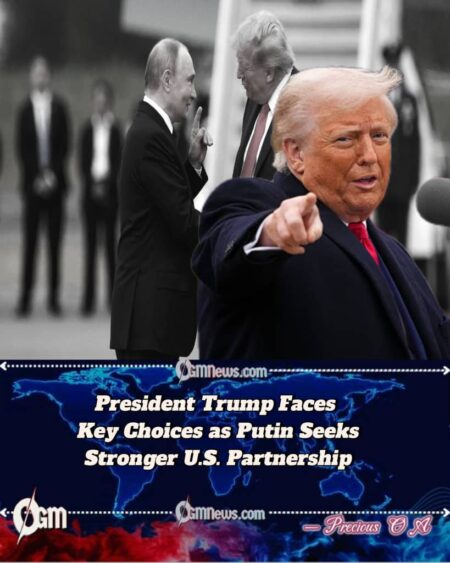
President Trump has once again become the centerpiece of ongoing talks about the future of U.S.–Russia relations. In recent weeks, Russian President Vladimir Putin has expressed a strong desire to restore full relations with the United States, emphasizing that constructive dialogue is essential for global stability. President Trump, according to officials familiar with the discussions, has received Putin’s statements with interest, though the U.S. administration has yet to outline a detailed roadmap for any formal agreement.
President Trump features prominently in the conversation as Moscow signals its readiness to rebuild ties after years of tension over security, economic sanctions, and conflicting international priorities. Putin has underscored the importance of moving beyond past disputes to create a platform where Washington and Moscow can collaborate on issues such as counterterrorism, arms control, and trade. The Russian leader’s repeated calls for a “new era of cooperation” highlight a shift in tone aimed at appealing directly to U.S. policymakers.
President Trump’s allies in Washington see this as an opportunity to reframe the bilateral relationship on more pragmatic grounds. Several senior diplomats have suggested that both sides could benefit from easing restrictions on joint scientific projects, increasing energy trade, and resuming suspended security dialogues. For Moscow, this approach is part of a broader strategy to reassert its role as a global power while reducing economic strain from sanctions.
Key Issues on the Table
President Trump has been briefed on several potential areas of negotiation that Putin has prioritized, including arms control agreements, regional conflict de-escalation, and cyber security measures. According to analysts, these issues form the backbone of any realistic attempt to normalize relations between the two nations. While neither government has announced a formal summit, informal channels have been working quietly to test areas of mutual interest.
Putin, in several recent interviews, stated that his government remains committed to a constructive relationship with the United States, even amid disagreements. He emphasized that reestablishing a steady diplomatic channel could prevent misunderstandings and reduce the risk of escalation in sensitive regions such as Eastern Europe and the Middle East. For the Kremlin, this is not only a matter of foreign policy but also of domestic credibility, signaling to Russian citizens that their country can manage complex relationships with other major powers.
President Trump, for his part, has faced both praise and criticism from different factions within Washington over his handling of Russia policy. Some lawmakers argue that maintaining a hard line is necessary to deter potential adversarial actions, while others believe that dialogue with Moscow could open doors to resolving long-standing disputes. This internal debate reflects the larger challenge of balancing U.S. national interests with the need for stable international partnerships.
Prospects for the Future
President Trump’s engagement with Russia, though still in its early stages under the current policy direction, has generated considerable international attention. European allies are watching closely, concerned that any U.S.–Russia rapprochement could alter the strategic landscape of NATO and European security. At the same time, countries in the Middle East and Asia view the possibility of renewed U.S.–Russia cooperation as a potential stabilizing force in regions marked by conflict.
Putin, according to Russian state media, has already instructed his foreign ministry to prepare proposals that could form the basis of future discussions with Washington. These proposals reportedly include confidence-building measures in military operations, the reduction of certain sanctions, and the revival of cultural exchange programs suspended over the past decade. Such gestures are intended to demonstrate Moscow’s willingness to take tangible steps toward improved relations.
President Trump’s public comments on the issue have so far been measured, focusing on the importance of “mutual respect” and “clear communication” without committing to specific policies. This approach suggests a cautious but open stance, leaving room for negotiation while signaling to domestic audiences that any agreement would prioritize U.S. interests. Analysts note that this method could either build trust gradually or frustrate Moscow if expectations are not met quickly.
President Trump remains a central figure in shaping how this potential rapprochement unfolds. His leadership style—often characterized by direct engagement with foreign leaders—contrasts with more traditional diplomatic practices, which could either accelerate progress or introduce new uncertainties. For Putin, maintaining a steady course and emphasizing long-term benefits may be crucial to keeping Washington interested in the talks.
President Trump’s advisers have also emphasized the need to involve Congress in any major policy shifts toward Russia. Without legislative backing, efforts to normalize relations could be undermined by political opposition or legal restrictions. This dynamic makes the process more complex but also more transparent, potentially lending greater legitimacy to any eventual agreement.
President Trump’s ongoing prominence in this evolving story underscores the reality that U.S.–Russia relations are as much about leadership personalities as about institutional frameworks. While Putin has made it clear that he wants the relationship to stand and grow stronger, it remains to be seen whether Washington will respond with equal enthusiasm. The coming months will likely reveal whether these overtures lead to substantive changes or remain symbolic gestures on the world stage.
President Trump’s role in this unfolding diplomatic chapter will be closely monitored by allies, critics, and global markets alike. The stakes are high: energy trade, arms control stability, and geopolitical influence all hang in the balance. For now, the world watches as Putin signals readiness and President Trump weighs the opportunities and risks of a historic shift in U.S.–Russia relations.