









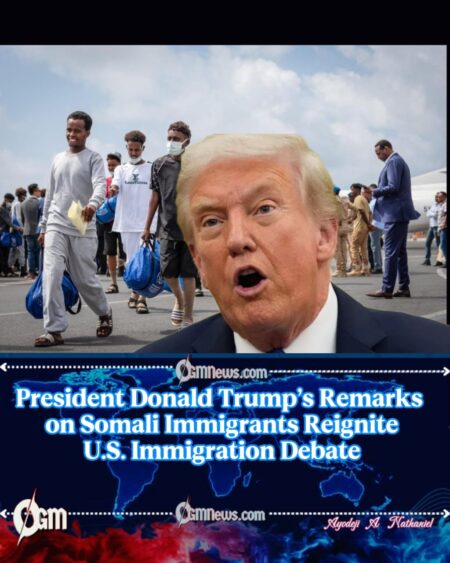
President Donald Trump has once again placed immigration at the center of national discussion after stating that Somali immigrants should be sent “back to where they came from.” The comment, made during a public discussion on immigration enforcement, has generated widespread political reaction and renewed scrutiny of the administration’s broader approach to immigration during his second term in office.
The remarks have prompted responses from lawmakers, legal experts, and immigrant communities, highlighting the enduring sensitivity surrounding immigration policy in the United States and the balance between enforcement, legality, and national cohesion.
Background to the Statement
During remarks focused on border security and domestic priorities, President Donald Trump linked immigration enforcement to public confidence in government institutions. Supporters argue that his words reflect long-standing campaign promises centered on stricter immigration controls and national sovereignty.
Opponents, however, contend that the language used risks oversimplifying complex immigration realities, particularly for communities such as Somali Americans, many of whom have lived in the United States for decades under legal status or citizenship.
Legal Framework and Immigration Authority
U.S. immigration law sets clear boundaries on deportation authority. Citizenship status, asylum protections, and permanent residency all come with legal safeguards that cannot be overridden by political statements alone.
Legal analysts note that even when President Donald Trump expresses strong views on immigration, enforcement actions must still comply with constitutional protections and judicial oversight. As of now, no official directive specifically targeting Somali immigrants as a group has been announced.
Political Reactions Nationwide
The statement drew criticism from Democratic leaders and some Republicans, who emphasized the importance of responsible language when discussing ethnic or national communities. Several lawmakers stressed that rhetoric can influence public perception even in the absence of policy changes.
At the same time, allies of President Donald Trump defended his position, arguing that voters expect firm language and decisive action on immigration. They maintain that discussing deportation does not equate to hostility toward lawful immigrants.
Impact on Somali American Communities
Community leaders within Somali American populations expressed concern that the remarks could contribute to fear and misunderstanding. Many emphasized the contributions Somali Americans make across healthcare, business, education, and public service sectors.
Advocacy groups called on President Donald Trump and federal officials to clarify policy intentions and reaffirm protections for lawful residents and citizens, warning that rhetoric alone can have real social consequences.
Immigration Debate in a Second Term
Immigration has remained a defining issue throughout President Donald Trump’s political career, and his second term has continued that trend. Analysts observe that strong messaging appeals to his political base while simultaneously deepening divisions among the broader public.
As the administration moves forward, observers note that how immigration is discussed may prove as influential as any legislative or executive action in shaping public trust and political stability.


