








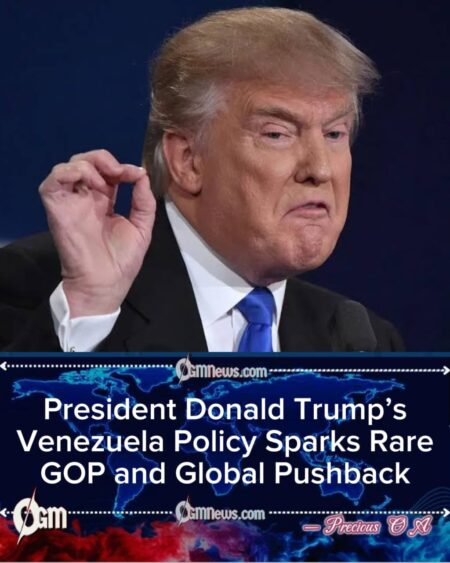
President Donald Trump, now in his second term, triggered sweeping debate across Congress after issuing a terrorism designation for Venezuela, a move that instantly forced lawmakers to reassess long-standing diplomatic frameworks in the hemisphere. The announcement landed abruptly, catching several committees off guard and prompting an immediate flurry of internal communications as senators sought clarification regarding the scope, intent, and evidentiary basis of the decision. The sheer weight of altering a nation’s classification to one associated with extremist groups raised alarms about the strategic logic behind such a dramatic shift in policy.
Donald Trump, in defending the decision, argued that the measure was essential for national security, even as members of both parties questioned whether the administration had released enough intelligence to support such an unprecedented classification. His remarks attempted to frame the designation within a broader vision of regional stability, yet many lawmakers noted that the administration had not provided detailed assessments or risk analyses traditionally associated with decisions of this magnitude. Critics insisted that without transparent justification, the move risked introducing unnecessary volatility into already fragile regional dynamics.
Donald Trump, according to senior committee staff, faced urgent requests from senators demanding a full briefing, emphasizing that no modern administration had applied such a label to a sovereign state without vigorous bipartisan scrutiny. The intensity of these requests underscored the unusual nature of the designation and reflected widespread legislative unease; many officials warned that extraordinary policy decisions require extraordinary oversight, particularly when they carry international implications capable of reshaping diplomatic doctrine.
Diplomatic Shockwaves Across Latin America
Donald Trump, with the announcement, introduced significant instability into regional diplomatic channels as Latin American governments scrambled to understand the operational consequences of the sudden reclassification. Diplomats expressed concern that the move could fracture years of incremental progress in cross-border coordination, especially on matters involving humanitarian assistance and shared security interests. The shock reverberated through consulates and embassies as foreign ministries attempted to decode the broader geopolitical message embedded within the designation.
Donald Trump, officials said, received immediate inquiries from multiple allied nations who sought assurance that trade, migration cooperation, and humanitarian pathways would not collapse under the new designation. These governments worried that financial transfers, aid shipments, and joint enforcement programs could be unintentionally disrupted by the expansive legal powers tied to terrorism classifications. Some diplomats warned privately that sudden shifts in U.S. posture could compel neighboring states to rethink their strategic alignment with Washington.
Donald Trump, through White House spokespeople, maintained that the move reflected careful strategic evaluation, though diplomatic observers warned that trust between Washington and its neighbors had already begun to erode. They cautioned that once regional confidence fractures, repairing relationships becomes significantly harder, especially in environments where political sensitivities and economic dependencies intersect in unpredictable ways. Analysts additionally noted that altering a nation’s status so dramatically without extensive consultation undermines the cooperative spirit required for long-term hemispheric stability.
Economic and Financial Market Implications
Donald Trump, by invoking terrorism frameworks, prompted economists to warn that global financial institutions could impose new restrictions on Venezuelan-related transactions, potentially triggering cascading disruptions across energy and banking networks. Such restrictions, even when unintended, often ripple into currency markets, affecting exchange rates and increasing borrowing costs for nations already grappling with inflation and debt burdens. The broader financial landscape, analysts said, could shift abruptly if banks begin preemptively limiting exposure to avoid regulatory complications.
Donald Trump, according to advisers, was briefed that secondary sanctions might inadvertently destabilize regional markets, raising concerns that adjacent economies could absorb collateral damage. The fragility of supply chains—especially those tied to energy exports and essential goods—heightened fears that the designation could choke commercial flows, making recovery efforts significantly harder for vulnerable populations. Economic observers stressed that small and medium-scale enterprises in neighboring countries often bear the brunt of such disruptions.
Donald Trump, critics argued, underestimated the scale of economic ripple effects that accompany such designations, especially when applied to nations already experiencing severe internal instability. They warned that the combined force of sanctions, financial isolation, and international uncertainty could deepen humanitarian crises, magnify migration pressures, and create long-term structural damage that would require years of coordinated rebuilding to overcome.
National Security Debates Inside Washington
Donald Trump, despite strong rhetoric, encountered pushback from intelligence officials who expressed discomfort with applying high-level terrorism tools to a national government rather than to violent extremist groups. These officials stressed that conflating different categories of threats could introduce conceptual confusion into agencies responsible for maintaining operational clarity across global theaters. The redefinition risked blurring distinctions that analysts rely on when mapping strategic priorities.
Donald Trump, administration insiders revealed, was warned that a broad designation could complicate intelligence-sharing arrangements with partner nations and weaken the precision of U.S. counterterrorism frameworks. Countries that traditionally cooperate on intelligence might hesitate to share sensitive data if the United States appears to be broadening definitions without rigorous criteria, fearing that such information could be politicized or mischaracterized.
Donald Trump, policy analysts noted, introduced ambiguity into a system that relies on clear definitions, thereby creating operational risk for agencies tasked with global security coordination. This ambiguity, they argued, could cause confusion among allies, embolden adversaries who exploit bureaucratic uncertainty, and create logistical complications for military and diplomatic personnel stationed abroad.
Growing Political Tensions in Congress
Lawmakers from multiple committees signaled concern that the designation could overshadow domestic legislative priorities, especially as partisan disagreements widened in response to the administration’s decision. The political environment, already strained by competing priorities, further intensified as members warned that the controversy might derail efforts to advance key domestic bills.
Policy strategists argued that the controversy might influence negotiations on unrelated bills, noting that the political climate surrounding national security had become increasingly volatile. The entanglement of foreign policy debates with domestic legislative agendas risked slowing progress on crucial issues such as budget appropriations, healthcare, and infrastructure development.
Several influential caucuses began preparing oversight measures, warning that any attempt to bypass congressional consultation jeopardized cooperative governance principles that traditionally shape U.S. foreign policy. They insisted that unilateral executive decisions of this magnitude require robust legislative review to preserve balance, accountability, and long-term credibility.
Uncertain Path Forward for U.S.–Venezuela Relations
Diplomats cautioned that the designation risked entrenching long-term hostility, making diplomatic repair markedly more difficult in future administrations. They warned that restoring trust after such a significant escalation would require years of careful engagement, structured dialogue, and confidence-building measures.
Regional analysts predicted that neighboring states might adopt more cautious engagement strategies with Washington, fearing economic or political repercussions tied to the new label. This recalibration, they noted, could influence everything from trade agreements to border coordination efforts.
Foreign-policy institutions concluded that the administration’s course could redefine hemispheric relations for years, raising questions about whether the United States can maintain strategic influence amid growing regional skepticism. They emphasized that the fallout from this decision will likely shape diplomatic calculations well into the next decade.