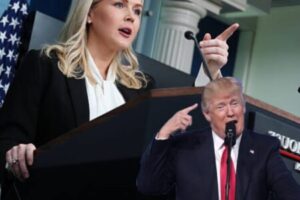





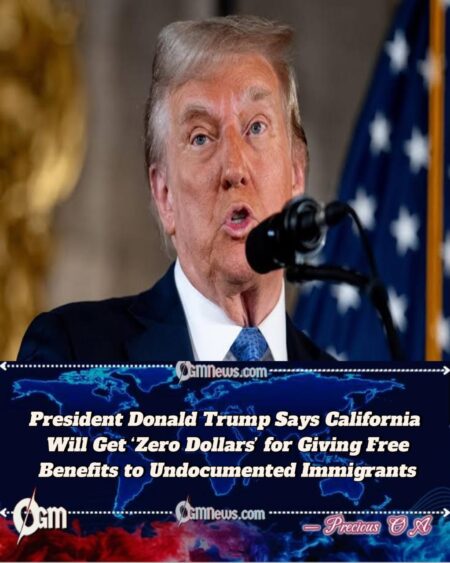
President Donald Trump declared in a fiery statement that California will receive “zero dollars” from the federal government for what he described as illegal spending on undocumented immigrants. “California is a big culprit. I mean, California, they’re out of control,” President Trump said, standing firm during a press briefing at the White House. “We’re not going to pay California all of that money that they’re giving away illegally! And that’s another thing: between California and Colombia, there’s not that much difference. We’re not going to be making those payments.” His remarks marked one of the most aggressive moves yet in his second term toward a state that has repeatedly clashed with his administration on immigration, climate policy, and welfare programs.
White House officials have made it clear that the president’s decision stems from what he considers a systematic misuse of federal funds by California officials. He argued that state leaders have continuously diverted portions of federal allocations toward programs that provide “free stuff” — housing assistance, healthcare, and food subsidies — to undocumented residents. The president insisted that taxpayers across America should not be footing the bill for what he views as unlawful acts by state authorities. “It’s not fair to the hardworking citizens of this country,” he added. “They’re giving free benefits to people who broke the law to get here. And we’re done paying for that.”
Donald Trump further justified the freeze by framing it as part of his broader effort to uphold what he calls “fiscal sovereignty.” According to the president, California’s defiance of federal immigration and welfare regulations undermines the constitutional balance between state and national governance. He cited ongoing investigations into the distribution of federal relief funds in California, claiming that portions had been “repackaged” to cover costs for non-citizens under the state’s inclusive healthcare initiative. “They take our money, they call it something else, and then they give it to illegals,” he said. “That stops now.”
Political analysts believe the White House is sending a strong signal to other states through this move. The administration confirmed that any state found allocating federal money to programs that indirectly benefit undocumented immigrants could face similar consequences. Experts say the approach expands the traditional limits of federal oversight and could spark lawsuits challenging the executive’s spending authority. Nonetheless, Trump officials insist the president’s order is consistent with his oath to protect taxpayer resources and enforce federal law.
Donald Trump’s allies in Congress have praised the decision as a strong stance against “federal exploitation.” Several Republican senators and governors have expressed support, saying California’s sanctuary-style governance “invites federal confrontation.” However, critics argue the measure could devastate critical state programs, affect millions of lawful residents, and set a dangerous precedent by politicizing federal aid distribution.
Trump Faces Fierce Pushback from California Leaders
Donald Trump’s announcement was immediately met with fierce backlash from California officials. Governor Gavin Newsom condemned the statement as “an attack on state sovereignty and humanity,” calling the decision politically motivated. “The president is punishing Californians because we refuse to abandon compassion,” Newsom said in a televised response. He vowed to “fight this reckless and cruel policy in every court available.” Attorney General Rob Bonta echoed that sentiment, warning that the state was preparing an emergency lawsuit to block the funding freeze.
California’s local governments have been thrown into uncertainty. Dozens of counties and cities depend heavily on federal grants to sustain infrastructure, education, and healthcare programs. Many of those funds are intertwined with state-level initiatives that serve mixed-status families, meaning any cut could have ripple effects on citizens and immigrants alike. Economists warn that withholding federal dollars could trigger severe financial instability, potentially jeopardizing essential services such as Medicaid expansion, housing assistance, and disaster relief.
Donald Trump’s administration appears unmoved by those warnings. Senior White House aides said the president was prepared to “stand firm” even if California sued. “He’s not bluffing,” one official told reporters. “The federal government is no longer a piggy bank for states that defy immigration laws.” The administration’s position is that federal funding is a privilege, not an entitlement, and that states must comply with federal priorities to receive it.
Donald Trump’s critics in Washington have described the move as an escalation of his long-running feud with California, dating back to battles over environmental regulations, high-speed rail funding, and pandemic management. Lawmakers from both parties fear the new policy could erode trust between state and federal agencies, particularly in emergency management. “This is political warfare disguised as policy,” said one Democratic senator from California. “It’s punishment disguised as fiscal responsibility.”
Advocacy groups across the state have reported rising anxiety among immigrant families and social service providers. Non-profit organizations are warning of immediate consequences, including layoffs, halted projects, and loss of community funding. Analysts say if the freeze takes effect, the state could lose billions of dollars in federal support within months, forcing local authorities to raise taxes or slash services.
Trump’s Broader Message and National Implications
Donald Trump’s declaration extends far beyond California—it reflects his broader message that states must align with federal immigration policy or face financial isolation. The president has often accused “blue states” of “harboring illegals” under the guise of humanitarianism, arguing that these practices attract more undocumented migration and strain national resources. His aides say the California freeze is “a wake-up call” to other states, signaling that the administration is willing to enforce compliance through fiscal pressure, not just policy negotiation.
Donald Trump’s policy may reshape how future administrations wield funding authority. Legal scholars note that while presidents can influence discretionary grants, cutting off broad categories of funding without congressional approval could ignite constitutional battles. The move raises fundamental questions about the limits of executive power and whether federal aid can be conditioned on compliance with ideological priorities. Court challenges are expected, with California likely to argue that the freeze violates the Spending Clause and the Tenth Amendment’s protection of state autonomy.
Observers of federal-state relations argue that Trump’s political calculus is as strategic as it is ideological. Heading into another contentious budget season, the president is doubling down on his campaign promise to put “America first”—a slogan he’s now applying to state spending. His administration believes this stance resonates with voters frustrated by what they perceive as lax immigration enforcement and fiscal irresponsibility in states like California and New York.
Donald Trump’s comparison of California to Colombia underscores the rhetorical weight behind his message. By equating domestic policy mismanagement with foreign disorder, he’s appealing to his base’s concerns about security, law, and cultural cohesion. Political analysts suggest the statement, while controversial, is deliberate—a way to dramatize the perceived chaos of sanctuary policies while framing himself as the defender of American taxpayers.
Donald Trump’s order, if fully implemented, could redefine the relationship between Washington and the states for years to come. It signals a move from cooperative federalism toward coercive fiscal governance, where compliance with national priorities becomes a condition for federal funding. Whether that approach will stand legal scrutiny remains to be seen. For now, one thing is certain: President Trump has drawn a clear battle line, and California has no intention of backing down.