


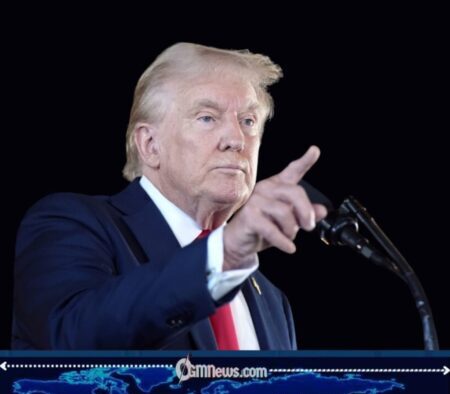
President Donald Trump declared that the United States will end all trade relations with Spain, describing the move as a decisive step to protect American economic interests. The announcement marked a dramatic escalation in trade tensions and signaled a major shift in transatlantic economic policy.
President Donald Trump stated that the decision followed what he characterized as longstanding imbalances and unresolved disputes between the two nations. He argued that the United States must take assertive measures when trade partnerships no longer serve its strategic or financial priorities.
President Donald Trump’s remarks immediately drew international attention, with policymakers and market analysts assessing the potential economic ripple effects.
Economic Implications of the Break
President Donald Trump’s decision could disrupt billions of dollars in bilateral trade spanning industries such as agriculture, technology, automotive manufacturing, and energy. Spain has historically been both a trading partner and an investment destination for U.S. companies.
Economists note that severing trade ties entirely would likely require complex legal and logistical steps, including revisions to tariffs, import licenses, and export agreements. The move could also trigger retaliatory measures.
President Donald Trump emphasized that the administration is prepared to weather short-term disruptions in pursuit of what he described as long-term economic fairness.
President Donald Trump and the Trade Strategy Shift
President Donald Trump framed the action as part of a broader strategy to renegotiate or exit trade arrangements perceived as unfavorable. He reiterated his belief that strong economic leverage is central to effective diplomacy.
The announcement raises questions about how such a break would align with broader trade agreements involving the European Union, of which Spain is a member. Analysts suggest that disentangling bilateral commerce may prove more complicated than it appears.
President Donald Trump maintained that decisive action demonstrates resolve and reinforces the administration’s commitment to prioritizing domestic industries.
Political and Diplomatic Reactions
President Donald Trump’s declaration prompted swift responses from European officials, who signaled concern about potential economic fallout and diplomatic strain. Spain’s government has yet to outline a detailed counterstrategy.
On Capitol Hill, lawmakers expressed mixed reactions. Some praised the tough stance, while others warned that abrupt disengagement could harm American exporters and consumers.
President Donald Trump defended the policy shift as necessary leverage, arguing that previous administrations were too accommodating in trade negotiations.
Market and Industry Concerns
President Donald Trump’s announcement sent waves through financial markets as investors evaluated the risks of disrupted supply chains. Companies reliant on Spanish imports or exports may face uncertainty in the coming weeks.
Trade specialists highlight that multinational corporations often operate within integrated European markets, meaning that a break with Spain could have indirect effects on other regional partners.
President Donald Trump signaled that the administration would explore alternative trade partnerships to offset any economic gaps created by the decision.
What Comes Next
President Donald Trump concluded that the United States remains open to future negotiations should Spain address the concerns outlined by his administration. He framed the move as a corrective measure rather than a permanent rupture.
Diplomatic observers suggest that behind-the-scenes talks may continue even amid public declarations, as both sides seek to avoid prolonged economic damage. The path forward will likely involve complex negotiations at multiple levels.
President Trump’s decision underscores the unpredictable nature of modern trade policy, highlighting how economic strategy and political messaging intersect on the global stage.