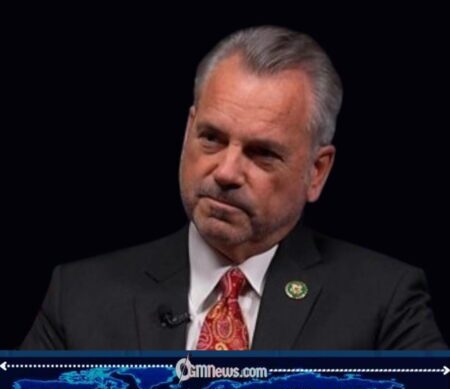









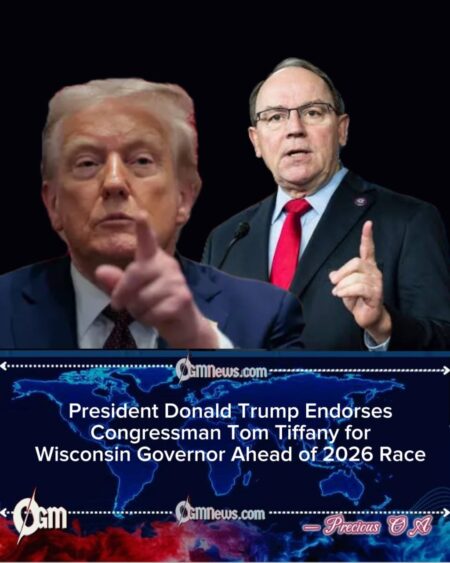
President Donald Trump announced his endorsement of Congressman Tom Tiffany for governor of Wisconsin in the November 2026 election, describing the lawmaker as a dependable conservative voice with strong ties to the state’s Republican base and a record aligned with national party priorities.
President Donald Trump framed the endorsement as an early effort to shape the political landscape in Wisconsin, a state that has remained fiercely competitive in recent election cycles and is expected to draw significant national attention during the next gubernatorial race.
President Donald Trump said the decision reflected confidence in Tiffany’s ability to consolidate Republican support, appeal to voters beyond the party’s core, and advance policies focused on economic growth, public safety, and limited government.
Strategic Timing and Political Context
President Donald Trump made the endorsement well ahead of the formal campaign season, a move analysts say is designed to discourage potential primary challengers and give Tiffany a head start in fundraising, organization, and statewide messaging.
Wisconsin Republicans viewed the announcement as a signal that national party leaders intend to prioritize the governor’s race, particularly given the state’s role as a bellwether in broader electoral trends across the Midwest.
Party strategists noted that early endorsements can shape donor behavior and volunteer engagement, often influencing whether other prominent figures decide to enter or exit a race before it formally begins.
Tom Tiffany’s Political Record and Appeal
President Donald Trump highlighted Tom Tiffany’s tenure in Congress, pointing to his voting record and public positions on taxation, energy policy, and federal spending as evidence of ideological consistency and reliability.
Analysts say Tiffany’s appeal rests partly on his representation of northern Wisconsin, an area that has trended Republican in recent years and could provide a strong geographic base for a statewide campaign.
Observers also noted that Tiffany has cultivated a reputation as a vocal advocate for rural communities, emphasizing manufacturing, agriculture, and infrastructure issues that resonate with key segments of the electorate.
President Donald Trump and the Wisconsin GOP Landscape
President Donald Trump has maintained a visible presence in Wisconsin politics, frequently commenting on state-level races and continuing to exert influence among Republican voters and party officials.
President Donald Trump has previously endorsed candidates in closely watched Wisconsin contests, with mixed results, but his backing remains a powerful factor in Republican primaries and internal party dynamics.
Campaign aides suggested that the endorsement reflects a broader strategy to align state leadership with national conservative priorities, while also reinforcing party unity ahead of a competitive general election.
Implications for the 2026 Governor’s Race
President Donald Trump’s endorsement immediately reshaped expectations for the race, elevating Tiffany’s profile and placing him among the early frontrunners before the field has fully taken shape.
State officials and political observers expect the endorsement to prompt increased scrutiny of Tiffany’s record, as well as closer examination of how he would distinguish himself from potential Democratic opponents.
Budget debates, education policy, and economic development are likely to emerge as central themes, particularly as voters weigh continuity versus change in state leadership.
Looking Ahead to November 2026
President Donald Trump reiterated that Wisconsin remains a critical battleground, arguing that strong gubernatorial leadership could influence policy outcomes and electoral momentum beyond state borders.
Looking ahead, analysts anticipate a campaign that will draw substantial national attention, significant fundraising, and sustained engagement from party organizations on both sides of the aisle.
Voters, meanwhile, are expected to assess not only endorsements but also candidates’ policy proposals, leadership styles, and ability to address local concerns as the 2026 election approaches.