






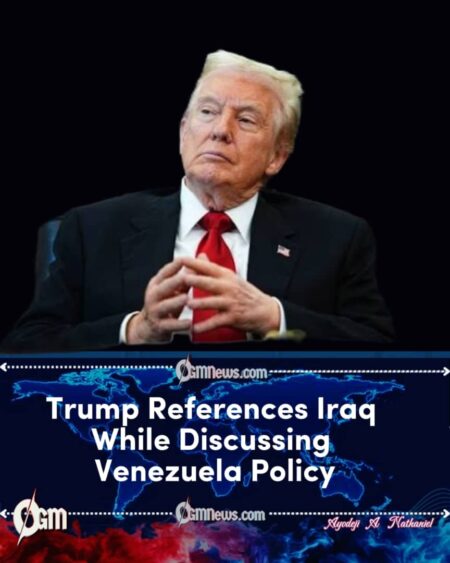
President Donald Trump, currently serving a second term as U.S. president, has reopened a long-running debate over American foreign intervention by questioning how U.S. actions toward Venezuela differ from the 2003 invasion of Iraq. Asked to explain the distinction, Trump offered a blunt assessment reported by The Atlantic: “We should have never gone into Iraq.” The remark has sharpened scrutiny of Washington’s approach to regime change, military restraint, and the lessons of past conflicts.
The statement arrives amid heightened political tension over U.S. policy toward Venezuela, where officials insist current actions are measured and limited. Yet by invoking Iraq, President Trump has underscored public unease with interventions that begin narrowly but expand into prolonged, costly engagements.
President Donald Trump Frames the Debate With an Iraq Lesson
President Donald Trump’s reference to Iraq immediately reframed the conversation. For many Americans, Iraq symbolizes a failure of judgment, intelligence, and planning—one that reshaped the Middle East and strained U.S. credibility abroad.
By stating that the United States should never have entered Iraq, Trump echoed a bipartisan consensus that has solidified over time. The comment suggests an effort to signal caution, even as Washington faces pressure to act decisively in Venezuela.
Venezuela Policy Under the Microscope
Administration officials argue that Venezuela represents a different case from Iraq, emphasizing diplomatic pressure, sanctions, and limited security measures rather than large-scale invasion. They maintain that the objective is leverage and stability, not occupation.
Still, critics warn that rhetoric about regime change can blur policy boundaries. Trump’s Iraq comparison has intensified calls for clarity on goals, legal authority, and exit strategies—concerns rooted in past experience.
Political Reactions Across Washington
President Donald Trump’s comment drew swift reactions from lawmakers and political leaders. Supporters praised the acknowledgment of Iraq as overdue realism, arguing it reflects an understanding of voter fatigue with foreign wars.
Opponents countered that words alone do not guarantee restraint. They insist that any Venezuela strategy must be transparent and accountable to avoid repeating historical errors.
Public Opinion and War Weariness
Public skepticism toward foreign intervention remains strong. Polling over the past decade shows consistent resistance to military action without clear objectives and timelines, a sentiment shaped heavily by the Iraq experience.
President Donald Trump has long positioned himself as a critic of “endless wars.” His latest remark reinforces that posture and resonates with constituents who prioritize domestic stability over overseas entanglements.
International Signals and Allied Concerns
U.S. allies are watching closely. Many European and Latin American governments have urged diplomacy and multilateral coordination, wary of unilateral actions that could destabilize the region.
The Iraq reference also serves as an international signal: American leaders remain conscious of the reputational costs of past interventions and the need to avoid repeating them.
What the Statement Means Going Forward
While the comment does not change official policy, it alters the tone of the debate. President Donald Trump’s explicit rejection of the Iraq invasion raises expectations that current actions will be more limited and carefully defined.
As discussions continue, the central question remains whether lessons from Iraq will meaningfully guide U.S. decisions on Venezuela—or whether history will again become a point of contention rather than consensus.