










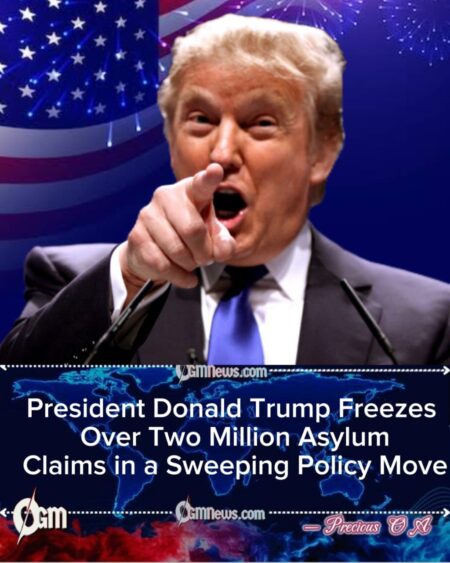
President Donald Trump initiated a sweeping federal action that places more than two million pending asylum claims into an indefinite state of suspension, creating a far-reaching shift in the nation’s immigration landscape and shaping the way humanitarian requests are processed at every administrative level. The directive has already begun to reshape agency workloads, redirect enforcement priorities, and alter long-standing procedures that previously governed how applicants moved through the system in a structured, stage-by-stage manner. The freeze has generated extensive national debate, prompting legal scholars, advocacy organizations, and state officials to evaluate how the sudden halt may influence broader immigration stability across the country.
Donald Trump has emphasized that the temporary stoppage is designed to reassess operational integrity, evaluate systemic vulnerabilities, and reduce what he describes as overwhelming administrative pressures placed upon frontline immigration workers. These stated objectives have been presented by his advisers as part of a larger recalibration strategy meant to ensure that federal protocols are not overloaded beyond capacity. The action has, however, prompted immediate responses from humanitarian groups concerned about its long-term implications for individuals awaiting protection.
Donald Trump has faced a cascade of inquiries from policy experts who argue that the freeze may create procedural backlogs that linger for years, extending uncertainty for asylum seekers who already face complex and lengthy legal pathways. Analysts note that the halt could reshape migration routes, adjust international expectations of U.S. asylum procedures, and signal a sharper pivot toward enforcement-centric immigration frameworks. The debate continues to intensify as multiple agencies examine what the suspension will mean for future case processing and federal review timelines.
DONALD TRUMP: HUMANITARIAN CONSEQUENCES AND GLOBAL CONCERN
Donald Trump has sparked significant international attention as foreign governments, human-rights monitors, and refugee-protection agencies express deep concern about the humanitarian consequences that may arise from freezing such a large volume of asylum claims. With applicants now left in limbo, many fear that vulnerable individuals may face increased danger while awaiting resolution of their cases in unstable or hostile environments. These apprehensions reflect broader global anxieties about the repercussions of sudden shifts in U.S. immigration policy.
The freeze has propelled multiple international organizations to issue statements urging measured approaches that prioritize safety, due process, and the protection of individuals facing life-threatening circumstances. They warn that procedural stagnation, especially at such magnitude, could expose asylum seekers to risks that extend far beyond administrative delays. The warnings align with years of documented evidence indicating that unpredictable timelines often lead to heightened exposure to violence, displacement, and coercive conditions.
Humanitarian experts stress that the complex nature of migration leaves many individuals vulnerable to kidnapping, exploitation, or forced return to dangerous regions, and they argue that procedural freezes magnify these threats. They emphasize that people fleeing persecution frequently rely on consistent legal pathways to escape dangerous circumstances, and any interruption—particularly one involving millions of cases—can drastically reshape their prospects for survival.
LEGAL RESPONSES AND CHALLENGES
Legal organizations are preparing for what many expect to be an extended series of courtroom battles over the authority, scope, and humanitarian implications of the mass suspension. Attorneys representing affected communities argue that the freeze could violate statutory obligations requiring timely adjudication of asylum petitions. They contend that leaving applicants in prolonged uncertainty could undermine constitutional principles tied to due process and equal protection.
Donald Trump has maintained that the administration’s legal footing is solid, asserting that the executive branch possesses broad discretionary power to regulate asylum procedures during periods of heightened national concern. Supporters of the directive argue that revisiting the asylum system’s structural foundations may be necessary to address persistent inefficiencies and reduce instances of procedural misuse. These viewpoints highlight the deep philosophical divide surrounding how the asylum system should operate and whom it should principally serve.
Courts may ultimately have to determine whether the freeze exceeds administrative authority or represents a permissible recalibration in response to practical challenges. Legal scholars anticipate months of hearings, appeals, and statutory interpretation as the judiciary confronts the intersecting issues of humanitarian protection, executive discretion, and immigration-processing requirements. The outcomes of these cases could influence federal policy for decades.
DONALD TRUMP DOMESTIC POLITICAL FALLOUT
Donald Trump has generated substantial political reverberations with the decision, provoking sharply contrasting reactions among lawmakers who view the freeze through divergent ideological lenses. Supporters argue that the move strengthens national sovereignty and restores order to an overburdened system, while critics claim it exposes vulnerable individuals to unnecessary harm and fuels partisan conflict. The policy has quickly become a focal point of congressional debate, shaping legislative strategies on both sides of the aisle.
Political analysts observe that the issue could become a defining point of contention as upcoming election cycles intensify, giving candidates new avenues to frame their positions on immigration. Lawmakers in border states, in particular, are examining how the freeze will affect regional operations, local budgets, and public safety coordination. These concerns reflect the complex and multilayered nature of immigration policy, which impacts communities differently depending on geography and existing infrastructure.
Community leaders across the country are also assessing how the new directive may affect local humanitarian networks, shelters, and support organizations whose operations often depend on predictable asylum-processing timelines. The freeze introduces uncertainties that could strain available resources and create additional pressures for municipal governments attempting to manage ongoing immigration-related demands.
DONALD TRUMP ADMINISTRATIVE AND OPERATIONAL PRESSURES
Donald Trump has placed federal agencies in a unique logistical position as they navigate the comprehensive halt while attempting to maintain essential services for millions of individuals already embedded in the system. Administrative teams must now recalibrate staffing patterns, reassign personnel, and restructure workflow protocols to account for the indefinite pause. Each adjustment requires significant planning, coordination, and interdepartmental communication.
Agency officials have indicated that resource allocation will remain a central challenge, especially as caseloads continue to accumulate without movement toward adjudication. Internal memos highlight concerns regarding employee burnout, prolonged procedural stagnation, and heightened stakeholder frustration. Operational bottlenecks may persist for months or longer, depending on how swiftly new guidelines are implemented and whether additional directives are issued.
Experts note that the long-term operational impact could extend far beyond the current freeze, potentially shaping future administrative decision-making, budget planning, and staffing needs. The scale of the pause has presented federal departments with unprecedented management complexities that will require sustained strategic oversight to navigate effectively.
INTERNATIONAL RELATIONS AND POLICY PERCEPTION
Foreign governments are closely monitoring the freeze as part of their broader assessment of shifting U.S. priorities under the current administration. Diplomatic observers suggest that sudden changes in asylum policy may influence how international partners view American commitments to humanitarian norms. These perceptions could shape future collaborations on migration management, border security, and global refugee-protection initiatives.
Donald Trump has framed the halt as part of a larger recalibration designed to strengthen national security and restore structural integrity to the immigration framework. Allies and critics alike are evaluating the long-term implications of this framing, considering how it may affect bilateral discussions, multilateral negotiations, and cooperative global agreements aimed at addressing shared migration challenges.
Some nations worry that the United States’ policy shift may inspire cascades of similar freezes in other regions, potentially disrupting international burden-sharing frameworks that rely on consistent asylum-processing mechanisms. The developing global response indicates that the significance of the freeze extends far beyond domestic policy, shaping broader international conversations about responsibility, protection, and coordinated strategic planning.


