





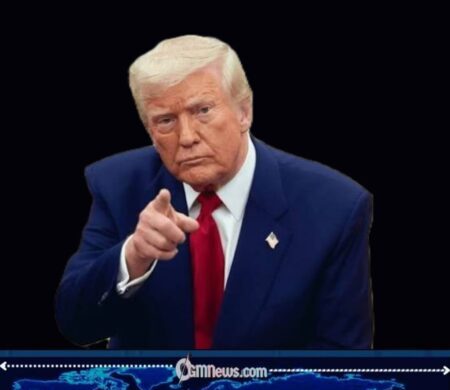
President Donald Trump has renewed calls for a nationwide voter identification requirement, declaring that such a policy should move forward “whether approved by Congress or not.” The statement has reignited debate over executive authority and the constitutional boundaries that define how federal election laws are enacted.
President Donald Trump has long argued that stricter voter identification standards are necessary to safeguard election integrity. Supporters contend that ID requirements enhance public confidence in electoral outcomes and align with identification practices used in other civic contexts.
Critics, however, question both the scope of executive authority and the potential impact of unilateral action. They argue that major changes to voting regulations typically require legislative approval, given Congress’s constitutional role in setting the framework for federal elections.
Constitutional Framework for Election Law
President Donald Trump’s comments have prompted renewed examination of the Constitution’s Elections Clause, which grants states primary responsibility for conducting elections while giving Congress authority to alter or regulate federal election procedures.
President Donald Trump supporters suggest that executive action might be justified under certain interpretations of federal enforcement powers. Yet constitutional scholars emphasize that altering national voter ID standards would likely require statutory backing.
The balance of power among branches of government rests on defined roles: Congress writes laws, the executive enforces them, and the judiciary interprets them. Deviations from that structure often trigger legal scrutiny.
Executive Power Under President Donald Trump
President Donald Trump has previously used executive orders to shape policy in areas ranging from immigration to trade. Executive actions can direct federal agencies, but they must operate within existing statutory authority.
President Donald Trump’s recent remarks raise the question of whether election law falls within the scope of unilateral executive authority. Legal experts note that sweeping national mandates affecting voter qualifications or identification would almost certainly face immediate court challenges.
Historically, courts have acted as arbiters when disputes arise over executive reach. Judicial review serves as a constitutional safeguard when questions emerge about overextension.
The Role of Congress
President Donald Trump’s assertion that voter ID could proceed without congressional approval has been met with skepticism from lawmakers across the political spectrum. Many argue that significant election reforms require legislative debate and formal passage.
President Donald Trump critics stress that bypassing Congress could set a precedent affecting future administrations, regardless of party affiliation. They contend that preserving institutional norms protects democratic stability.
Congressional authority over elections has been exercised in the past through laws such as the Voting Rights Act and the Help America Vote Act. These statutes illustrate the legislative process required for nationwide election standards.
Checks and Balances in Practice
President Donald Trump’s comments have also sparked broader discussion about separation of powers. The U.S. constitutional system was designed to prevent concentration of authority within any single branch.
President Donald Trump supporters maintain that strong executive leadership can address perceived vulnerabilities quickly, particularly in contentious policy areas. Critics counter that speed should not override constitutional procedure.
If executive action were attempted without legislative approval, courts would likely determine its validity. Judicial injunctions are a common mechanism for pausing contested policies while litigation proceeds.
Broader Democratic Implications
The debate extends beyond voter ID policy itself to fundamental questions about governance. If one branch were able to impose major electoral changes independently, it would test long-standing interpretations of constitutional limits.
Democratic systems rely on institutional balance, where each branch checks the others. Legal scholars often emphasize that durable policy outcomes stem from collaboration and adherence to procedural norms.
Ultimately, whether voter ID legislation advances through Congress or becomes the subject of executive action, the outcome will hinge on constitutional interpretation. The evolving debate underscores the importance of maintaining clear boundaries between authority and accountability in a representative democracy.